The Role of Evidence in Building a Strong Industrial Accident Case
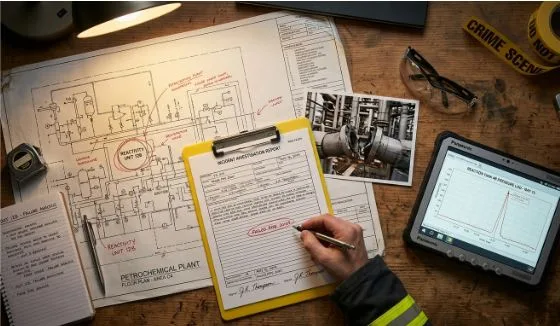
Close to 3 million people are injured in workplace accidents annually, and a catastrophic plant failure is especially damaging, changing everything in an instant, leaving workers to deal with severe injuries and overwhelming medical bills. Securing fair compensation depends entirely on the quality of the evidence gathered immediately after the incident. Texas industrial facilities operate under strict safety regulations, yet corporate legal teams routinely attempt to shift blame onto injured workers to protect their bottom lines.
Proving liability requires transforming a chaotic workplace disaster into a clear, undeniable timeline of company negligence. Without a meticulous collection of physical facts, digital logs, and witness testimonies, a legitimate claim can easily be dismissed as an unavoidable accident.
Image Source: Google Gemini
Reconstructing the Incident Through Workplace Records
Industrial operations generate massive amounts of data every single second, and this information serves as the foundation for proving corporate fault. Companies are legally required to maintain strict documentation regarding machinery operations, employee training, and safety compliance protocols. When an explosion or mechanical failure occurs, these archives often contain the exact data that proves a company knew about a hazard but chose to ignore it.
An internal investigation must secure these documents before they are altered, misplaced, or destroyed under the guise of standard corporate data retention policies. Gathering logs, internal communications, and maintenance history helps establish whether a company prioritized production speed over basic human safety.
If you want to protect your rights, you can learn about your plant accident claim to understand how these complex corporate documents are leveraged in a legal fight. The more reading you do, the easier it will be to understand the next steps.
A successful case relies heavily on specific categories of corporate documentation that paint a clear picture of workplace conditions:
- Plant maintenance logs often reveal that critical safety valves or backup systems went completely unserviced for months
- Internal safety audit reports frequently show that upper management ignored repeated warnings from their own risk assessment teams
- Black box data and automated control system archives provide an unalterable digital timeline of the exact moments leading up to a failure
Securing Physical Proof and Third-Party Testimony
The immediate aftermath of an industrial disaster is often a race against time, as companies work quickly to clean up the site and return to normal operations. Physical evidence left at the scene, such as warped metal, blown valves, and failed safety gear, must be documented and preserved immediately. Environmental testing data capturing toxic gas levels or chemical pressure spikes can conclusively demonstrate that a facility was operating outside of safe parameters.
Equally important are the accounts of the people who were on the ground when the disaster occurred. Eyewitness testimonies from co-workers, contractors, and nearby residents provide a human perspective that corporate data logs simply cannot capture. These statements are most reliable when taken immediately after the event, before corporate pressure or fading memories distort the facts.
Turning Technical Data Into Legal Accountability
When an industrial accident case goes to court and negotiations ensue, the sheer volume of technical data can easily overwhelm a jury. This is where specialized engineering and forensic experts become indispensable to a legal team. These professionals reconstruct the event using advanced computer modeling, metallurgical analysis, and regulatory frameworks to explain exactly how a company’s shortcuts caused the disaster.
Legal strategy relies on these expert evaluations to connect corporate negligence directly to the victim’s physical injuries. For instance, forensic engineering analysis can definitively determine whether a blast was caused by a manufacturing defect or by plant management’s failure to perform routine maintenance. By translating complex industrial processes into clear, understandable terms, these specialists ensure that corporate defendants are held accountable for the specific safety violations they committed.
Protecting Your Legal Rights After a Plant Disaster
Navigating the aftermath of a severe workplace injury requires more than just filling out standard incident reports and waiting for an insurance company to do the right thing. Corporate entities employ teams of defense lawyers whose primary goal is to minimize payouts and deflect blame away from the company.
Building an unassailable case requires immediate, aggressive action to preserve critical site evidence, lock in witness statements, and obtain internal company records. If you were injured in a plant blast or refinery accident, an industrial explosion injury attorney can help secure key evidence before it disappears and build a claim against the responsible parties. Reviewing educational resources on an industrial injury law blog can provide valuable insight into how evidence is organized to defeat common corporate defense tactics.. Our site is packed with legal advice and guidance for all sorts of scenarios, so read more of our posts before you go.