The songs that bring three generations onto one dance floor
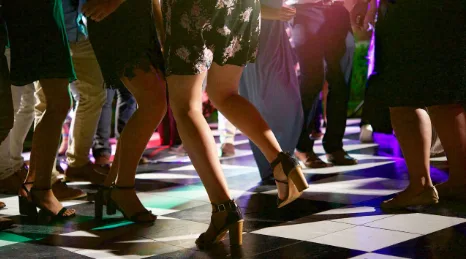
There is a particular kind of moment that happens when the right song begins. A grandmother recognizes the opening notes before her grandchildren do. Someone’s father abandons his conversation halfway through a sentence. The younger guests may not know every lyric, but they know enough to follow everyone else toward the dance floor.
For a few minutes, age stops determining who belongs where.
This is one of music’s most interesting social powers. Most entertainment is divided by generation. People watch different shows, follow different celebrities, and spend time in separate corners of the internet. Music can be just as divided, yet certain songs escape their original era and become shared cultural property.
A song can carry more than one memory
People rarely hear a familiar song as a collection of notes. They hear the place where they first encountered it, the person who introduced it to them, and the period of life it came to represent.
The same recording can therefore carry completely different associations for different listeners. One person remembers hearing it on the radio when it was new. Another remembers a parent playing it in the car. Someone younger may associate it with a movie, television series, viral video, or cover version released decades later.
When those people hear the song together, their private memories briefly overlap. They are not responding to exactly the same experience, but the music gives them a common language.
That is why a familiar song can change the mood of a room so quickly. It does not need an explanation. The opening rhythm is enough.
Some music refuses to stay in its decade
Most popular songs remain strongly connected to the period in which they were released. Their production, slang, and cultural references make their age immediately apparent. Other songs continue to circulate so widely that they gradually lose the limitations of their original decade.
They appear at family gatherings, sporting events, school dances, films, restaurants, festivals, and neighborhood parties. People who were not alive when the music was recorded still learn when to sing, clap, or anticipate the chorus.
Motown is an obvious example. Its catalog belongs to a particular place and period, but many of its strongest songs remain remarkably easy for mixed-age audiences to enter. The melodies are immediate, the rhythms encourage movement, and the emotional themes require little cultural translation.
Disco, classic soul, funk, rock, and early pop have produced similar survivors. More recent music can join this category too, although only time reveals which songs have genuine staying power and which merely enjoyed a season of constant exposure.
Younger listeners are not musical blank slates
It is easy to assume that younger guests will respond only to current music. In reality, their listening habits are often less chronological than those of previous generations.
Streaming platforms place a new release beside a recording made 40 years earlier. Film soundtracks introduce older artists to new audiences. Short-form videos can return a forgotten track to circulation with little regard for its original context. A teenager’s playlist might jump across six decades without treating that variety as unusual.
This does not mean every old song will connect with a young audience. Familiarity still matters, and some selections feel more like historical demonstrations than invitations to participate. But age alone is no longer a reliable way to predict what someone knows.
The more useful question is whether the song has continued living outside its original moment.
Recognition is only the beginning
A recognizable song may attract attention, but recognition alone does not keep people engaged. The performance, timing, and mood of the room still matter.
A song introduced too early can fall flat because people are not ready to participate. The same song played later, after the room has relaxed, can become the highlight of the night. Music works in sequence. Each selection influences how the next one will be received.
Live performers have a particular advantage because they can observe the audience while the event is happening. An experienced Boston wedding band can notice which rhythms are bringing people forward, which age groups are participating, and when it is time to shift styles. That responsiveness matters at any celebration where the audience includes relatives, friends, and colleagues who would not normally share the same playlist.
The strongest performances do not simply reproduce familiar music. They make it feel immediate again.
The best transitions are based on feeling
Moving between decades can sound awkward when songs are arranged only by year. A 1960s selection followed by an early-2000s hit may look incoherent on paper. On the dance floor, however, the transition can feel natural if the songs share a compatible rhythm, tempo, or emotional energy.
This is where musical sequencing becomes more interesting than selecting a list of favorites. A successful progression may connect songs through percussion, bass lines, vocal intensity, or the way their choruses invite participation.
The audience does not need to understand why the transition works. People simply continue moving.
A poorly timed change has the opposite effect. The room may go from a joyful sing-along to something so unfamiliar or rhythmically different that everyone pauses. Even an excellent song can empty a dance floor when it arrives without preparation.
Shared songs are often simple in the right ways
Music that unites a room does not have to be musically basic, but it usually gives listeners an easy point of entry. A memorable opening, steady groove, repeated phrase, or unmistakable chorus allows people to participate quickly.
This accessibility should not be confused with dullness. Many enduring songs are inventive, beautifully arranged, and performed with exceptional skill. Their sophistication supports the experience without demanding that listeners analyze it.
Participation is the key. A room full of people singing one imperfect chorus together can be more memorable than hearing a technically impressive song that leaves everyone standing still.
Not every meaningful song needs everyone’s approval
Some music belongs to a specific relationship rather than the entire room. A song may matter because it was played during a family road trip, shared between close friends, or associated with someone who is no longer present.
These selections serve a different purpose. They do not have to fill the dance floor or appeal to every generation. Their value comes from the people who understand the reference.
A good musical experience makes space for both kinds of songs. There are personal choices that tell a story, and communal choices that invite the room into it. The most memorable gatherings move between the two.
The dance floor becomes a temporary community
People arriving at a large celebration may have little in common beyond knowing the hosts. They come from different cities, professions, age groups, and social circles. Conversation can bridge some of those differences, but music can do it without requiring an introduction.
When several generations respond to the same song, the dance floor becomes a temporary community. People imitate one another, laugh at familiar gestures, exchange places, and join groups they were not part of earlier in the evening.
The song eventually ends, and everyone returns to their separate lives. Still, the shared moment remains. Years later, people may not remember the decorations or what they ate. They often remember who began dancing first, which song brought everyone else over, and how the room felt once nobody wanted to sit down.