The Strategic Evolution of Spatial Logistics: Mobile Halls as Operational Buffers
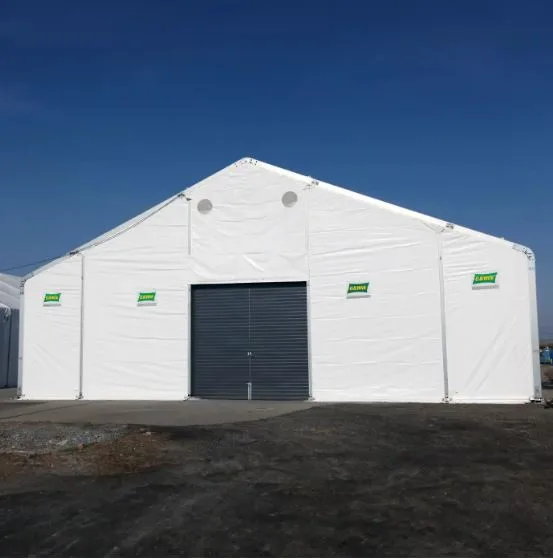
Modern supply chains operate under a regime of permanent volatility where demand signals fluctuate with unprecedented speed and delivery cycles continue to compress. Traditional logistics infrastructure, characterized by rigid, permanent structures, often struggles to synchronize with these rapid shifts in market dynamics. When a fixed warehouse reaches its physical limit, the resulting congestion triggers a cascade of inefficiencies that impact everything from internal transport flow to overall lead times. Operational managers are increasingly recognizing that the constraint of square footage should not be a static barrier to growth or a reason for bottleneck formation. Instead, spatial capacity must transform into a variable resource that can be scaled in alignment with actual throughput requirements rather than historical averages.
Infrastructure Modularity and Material Flow Efficiency
The shift toward modularity in industrial infrastructure reflects a deeper understanding of how physical space dictates material flow efficiency. Fixed facilities require long-term capital commitments and lengthy permitting processes, which often lag behind the immediate needs of a scaling production line or a surging logistics hub. By decoupling storage capacity from permanent construction, firms can mitigate the risk of over-investment during downturns while maintaining the agility to capture sudden market opportunities. This strategic maneuver allows companies to treat their physical footprint as an elastic asset, ensuring that infrastructure supports, rather than dictates, the pace of operational execution.
Addressing Inventory Buffering and Capacity Constraints
Integrating mobile halls into a logistics network directly addresses the fundamental challenge of inventory buffering during peak cycles. When influxes of raw materials or finished goods exceed the nominal capacity of a primary facility, the resulting overflow typically forces managers into costly third-party storage arrangements or inefficient off-site staging. Mobile structures provide a localized solution that keeps inventory within the immediate operational perimeter, thereby reducing drayage costs and maintaining tight control over stock visibility. This proximity ensures that high-turnover items remain accessible, preventing the “dead time” associated with retrieving goods from remote auxiliary locations.
Hybrid Storage Strategies and Risk Mitigation
Effective inventory management in high-variance environments necessitates a departure from strict just-in-time models toward more resilient, hybrid strategies. The availability of on-demand space allows for the strategic build-up of safety stocks without compromising the layout of the core production area. By utilizing specialized temporary structures from providers such as OBWiik to expand the operational footprint, companies can implement robust contingency plans against global supply chain disruptions. This flexibility transforms the warehouse from a simple storage box into a dynamic tool for risk mitigation, where the cost of additional space is weighed against the potential losses incurred by stockouts or production halts.
Process Recalibration and Operational Integration
The deployment of mobile infrastructure necessitates a sophisticated recalibration of internal logistics processes and labor allocation. It is a misconception to view a mobile hall as a standalone “plug-and-play” asset; rather, its installation triggers a reconfiguration of internal transport routes and functional zoning. For instance, the introduction of a temporary cross-docking zone requires the adjustment of forklift pathways and the synchronization of WMS (Warehouse Management System) protocols to account for new storage bins. Managers must also consider the human element, ensuring that staffing levels are optimized to handle the increased volume handled within the expanded perimeter.
Financial Fluidity and Capital Expenditure Optimization
Capital allocation remains one of the most compelling arguments for adopting mobile spatial solutions over traditional masonry or steel-frame buildings. The ability to move from a capital expenditure (CAPEX) model to an operating expenditure (OPEX) model through leasing or short-term installation significantly improves a company’s liquidity position. This financial fluidity is particularly critical in sectors like construction or seasonal manufacturing, where the need for covered space may be intense but short-lived. By shortening the implementation timeline from years to weeks, firms can achieve a much faster return on investment and avoid the depreciation burdens associated with permanent real estate.
Managing Seasonality and Variable Volumes
In environments defined by high seasonality—such as agricultural processing, retail distribution, or large-scale event logistics—the mobile hall functions as a pressure valve. In these contexts, the cost of maintaining a permanent facility sized for peak capacity is economically non-viable for most of the year. Mobile solutions allow for a “lean” baseline of permanent infrastructure that is supplemented only when data-driven demand forecasts indicate a coming surge. This targeted application of resources ensures that the company is not paying for empty air during the off-season, optimizing the total cost of ownership across the entire logistics lifecycle.
Achieving Competitive Edge Through Structural Flexibility
Ultimately, the role of mobile halls in modern industry is defined by their capacity to absorb uncertainty without compromising operational standards. They serve as a bridge between the immediate demands of the warehouse floor and the long-term strategic goals of the executive suite. As global trade continues to face systemic shocks and shifting consumer behaviors, the winners will be those who view their infrastructure as a fluid component of their value chain. The transition toward adaptive, modular spaces is not merely a trend in construction; it is a fundamental requirement for any organization aiming to maintain a competitive edge in a world where speed and flexibility are the primary currencies of success.