The Ultimate BBQ Thermometer Guide: Perfect Doneness, Every Time
Great barbecue is not just about good seasoning, quality meat, or a powerful grill—it’s about temperature control. Whether you are grilling steaks, smoking brisket, slow-roasting ribs, or cooking chicken, temperature is the single most important factor that determines taste, texture, juiciness, and food safety. This is where a BBQ thermometer becomes an essential tool for every serious griller and backyard cook.
Master the art of grilling with our BBQ thermometer guide—your ultimate resource for perfect doneness, food safety, and consistent results. Learn how to choose the right thermometer, use it correctly, and achieve juicy, flavorful BBQ every time with confidence and precision.
This complete BBQ thermometer guide will help you understand why thermometers matter, the different types available, how to choose the right one, and how to use it properly for perfect results every time.
Why a BBQ Thermometer Is Essential
Many people still rely on guesswork—cutting into meat, checking color, or pressing it with tongs. Unfortunately, these methods are unreliable and often lead to dry, overcooked, or undercooked food. A BBQ thermometer removes uncertainty and replaces it with accuracy.
Key benefits of using a BBQ thermometer include:
- Perfect doneness – Cook meat exactly to the ideal internal temperature
- Food safety – Prevent undercooked poultry and meat-related illnesses
- Better texture – Avoid dry, tough, overcooked results
- Consistent results – Repeat success every time you grill
- Professional-level control – Cook like a pitmaster, not a guesser
A thermometer turns BBQ from guesswork into precision cooking.
Understanding BBQ Temperature Basics
Different meats require different internal temperatures for both safety and quality. For example:
- Chicken: Must be fully cooked to avoid bacteria
- Beef: Can be safely eaten at various doneness levels
- Fish: Requires careful temperature control to avoid dryness
- Pork: Needs proper cooking for safety and tenderness
A thermometer allows you to hit the exact temperature sweet spot, ensuring food is safe, juicy, and delicious.
Types of BBQ Thermometers
There are several types of BBQ thermometers, each designed for different cooking styles and preferences.
- Instant-Read Thermometers
These are handheld digital thermometers that give a quick temperature reading when inserted into meat.
Best for:
- Grilling steaks
- Checking doneness quickly
- Fast temperature checks
Pros:
- Quick readings
- Portable
- Affordable
- Easy to use
Cons:
- Not for continuous monitoring
- Probe Thermometers (Leave-in Thermometers)
These thermometers stay inside the meat while cooking and display real-time temperature.
Best for:
- Roasting
- Smoking
- Long cooks
- Oven BBQ
Pros:
- Continuous monitoring
- No need to open the grill
- Accurate tracking
Cons:
- Wires may limit movement
- Wireless and Bluetooth Thermometers
These advanced thermometers connect to your phone and allow remote monitoring.
Best for:
- Smoking
- Long BBQ sessions
- Multi-meat cooking
- Hands-free monitoring
Pros:
- Remote access
- Alerts and notifications
- App-based tracking
- Multi-probe support
Cons:
- Higher cost
- Battery dependence
- Grill and Smoker Thermometers
These measure the grill or smoker temperature, not just the meat.
Best for:
- Maintaining consistent heat
- Smoking control
- Temperature zones
Pros:
- Better heat control
- Stable cooking environment
Cons:
- Does not measure meat temperature directly
How to Choose the Right BBQ Thermometer
Choosing the right thermometer depends on your BBQ style and cooking habits.
Ask yourself:
- Do I grill or smoke more often?
- Do I cook large cuts of meat?
- Do I want phone connectivity?
- Do I prefer simple or smart tools?
- Do I cook for family or large groups?
Key features to consider:
- Accuracy – Precise temperature readings
- Response time – Fast measurement speed
- Heat resistance – Suitable for high-heat grilling
- Water resistance – Easy cleaning
- Probe quality – Durable and food-safe
- Display clarity – Easy to read in sunlight
- Connectivity – Bluetooth/WiFi (optional)
Proper Use of a BBQ Thermometer
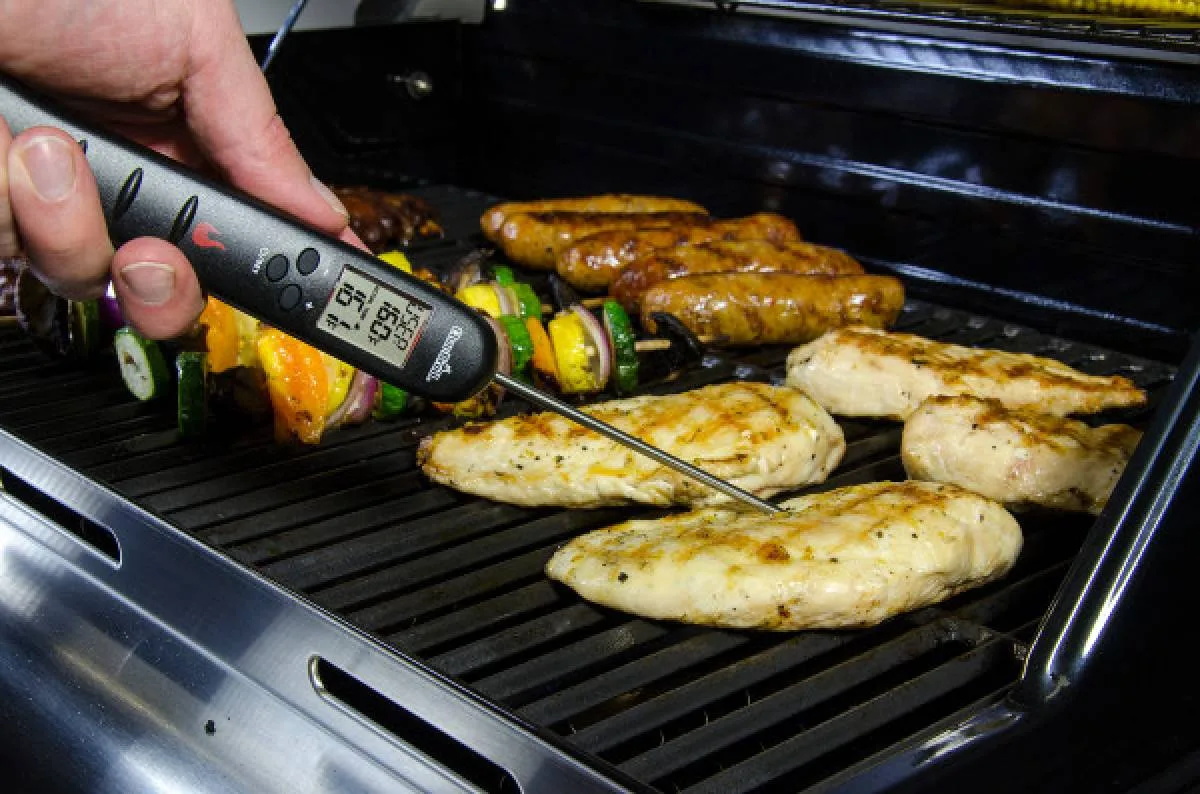
Even the best thermometer won’t work well if used incorrectly. Proper placement is crucial.
Correct placement tips:
- Insert into the thickest part of the meat
- Avoid bones and fat pockets
- For poultry, check the thickest part of the breast and thigh
- For burgers, insert sideways into the center
- For roasts, place probe in the center mass
This ensures accurate internal temperature readings.
Ideal Internal Temperatures (General Guide)
While preferences vary, these are commonly accepted temperature ranges:
- Beef steak: Rare to well-done range
- Chicken: Fully cooked and safe
- Fish: Flaky and moist
- Pork: Tender and safe
- Lamb: Juicy and flavorful
Using a thermometer lets you customize doneness to your personal preference instead of guessing.
The Science Behind Great BBQ
Temperature control affects:
- Protein structure – Determines tenderness
- Moisture retention – Prevents dryness
- Fat rendering – Enhances flavor
- Collagen breakdown – Creates tenderness in slow cooks
Low-and-slow smoking, for example, depends entirely on stable temperature control. Without a thermometer, consistent results are nearly impossible.
Common BBQ Mistakes a Thermometer Prevents
A good BBQ thermometer helps avoid:
- Overcooking expensive cuts of meat
- Dry chicken breasts
- Tough brisket
- Burnt exteriors and raw interiors
- Food safety risks
- Inconsistent results
It saves money, time, and frustration.
Cleaning and Maintenance Tips
To keep your thermometer accurate and hygienic:
- Clean probes after every use
- Avoid submerging electronic units
- Store in a dry place
- Replace batteries regularly
- Calibrate if necessary
- Avoid bending probe wires
Proper care extends the life of your device and ensures accuracy.
BBQ Thermometers for Different Cooking Styles
For Grilling
- Instant-read thermometer
- High heat resistance
- Fast response time
For Smoking
- Multi-probe thermometer
- Wireless monitoring
- Grill + meat temperature tracking
For Oven BBQ
- Probe thermometer
- Long cable
- Heat-resistant design
For Professional BBQ
- Multi-sensor systems
- App integration
- Alarm settings
- Cloud monitoring
BBQ Thermometer Myths
Myth 1: You can tell doneness by color
False. Color is not reliable and varies by meat type.
Myth 2: Experience replaces a thermometer
Even professionals use thermometers.
Myth 3: Thermometers ruin meat
False. Proper placement causes minimal damage.
Myth 4: They’re only for beginners
Top pitmasters rely on temperature tools daily.
Why Every BBQ Lover Needs One
A BBQ thermometer is not just a gadget—it’s a core cooking tool. It improves quality, safety, and confidence. It transforms cooking from stress into enjoyment.
With a thermometer, you:
- Cook with confidence
- Serve safe food
- Impress guests
- Improve consistency
- Master temperature control
- Elevate your BBQ skills
Conclusion
A BBQ thermometer is the most important tool in any grill master’s arsenal. It removes guesswork, ensures safety, improves flavor, and guarantees perfect doneness every time. Whether you are a beginner or a seasoned pitmaster, using a thermometer is the difference between “okay BBQ” and exceptional BBQ.
From instant-read thermometers to wireless smart probes, there is a perfect thermometer for every cooking style and budget. Choosing the right one and using it properly will completely transform your grilling experience.
Great BBQ isn’t about luck—it’s about control, precision, and temperature mastery.
And every great BBQ journey starts with a reliable thermometer.