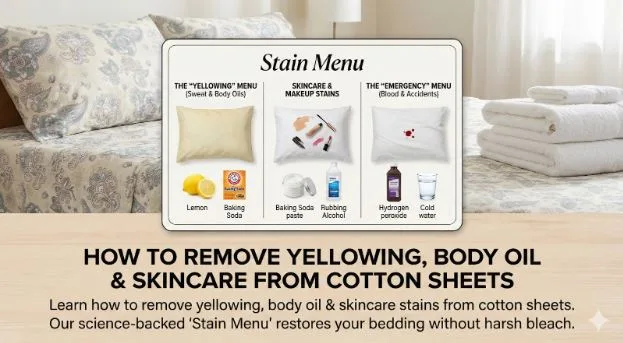
The Ultimate Stain Menu: How to Remove Yellowing, Body Oil, and Skincare from Cotton Sheets
Even the most luxurious sheets aren’t immune to life’s messes. Whether it’s the gradual yellowing on one side of the bed or a last-minute mascara smudge, stains happen.
Stains aren’t a sign of carelessness; they’re simply a part of living.
The problem isn’t the stain itself, but the guesswork that follows. We often grab whatever’s under the sink.
We use hot water when cold is needed. This can result in set-in stains, weakened threads, or whites turning a dull gray.
We reach for bleach when an enzyme soak would work better without damaging the fabric.
This “Stain Menu” is a science-backed guide to treating common bedding stains. It focuses on eco-friendly methods that are gentle on your cotton sheets.
“At Feather & Stitch NY, we craft our Cotton Bed Sheets for longevity. With the right care, they can stay pristine for years. This guide is your first step toward protecting that investment.”
The “Yellowing” Menu: Sweat & Body Oils
Understanding the Science of Sebum Oxidation
The yellow stains on your sheets are caused by a mix of sweat, dead skin cells, and natural oils from your body. When these residues bond with the cotton fibers and aren’t fully removed in the wash, they build up. Over time, chemical reactions like oil oxidation and protein denaturation cause the yellow color you see.
Prevention Tip: Washing your sheets weekly is the single most effective way to prevent yellowing. Regular laundering removes oils before they have a chance to oxidize and bond with the cotton fibers.
The Recipe: Enzyme Soak + Baking Soda
Once yellowing has set in, a standard detergent cycle will rarely be enough. A focused method is required to tackle both protein-based stains like sweat and dead skin, as well as the underlying oxidized oils.
- Step 1: Pre-Soak with Enzyme-Based Detergent
- Fill a large basin or bathtub with warm water (30-40°C / 86-104°F).
- Add an enzyme-based or biological laundry detergent.
- Enzymes break down proteins, targeting sweat and skin cell residue that cause yellowing.
- Soak sheets for 30 minutes to 2 hours (up to 4 hours for deep-set stains).
- Avoid water hotter than 60°C (140°F) as it destroys the enzymes.
- Step 2: Baking Soda Booster
- Add half a cup of baking soda to the wash cycle with your regular detergent.
- Baking soda helps lift oils, neutralize odors, and soften water for better detergent performance.
- Step 3: Natural Whitening Hack with Lemon Juice
- For white sheets, add a quarter cup of lemon juice to the wash cycle.
- Alternatively, create a lemon juice soak with half a cup of lemon juice in a bucket of warm water. Soak sheets for 1 hour before washing.
- Citric acid acts as a mild bleaching agent to restore brightness but can weaken cotton fibers over time.
- Use this method sparingly (no more than once per month) and avoid hot water.
- Long-Term Whitening Option
- For frequent brightening, use oxygen-based bleach as a safer alternative for white cotton sheets.
Skincare Product Discoloration
Modern skincare routines are doing wonders for our skin — but they can be remarkably destructive to our bedding. The culprits are specific active ingredients that react chemically with cotton fibers.
If you’ve woken up to a fresh skincare stain on your pillowcase, the most critical rule is this: use cold water immediately. Hot water accelerates the chemical reaction that causes discoloration to bond with the fabric. Cold water, applied as soon as possible, can help flush the product out of the fibers before the reaction progresses.
Retinol, benzoyl peroxide, and alpha hydroxy acids (AHAs) are among the most common offenders.
Benzoyl peroxide is particularly aggressive because it acts as an oxidizing agent. The moment it touches fabric, it removes color, leading to permanent white or pale pink marks. This is a true bleach stain (color loss), not a discoloration that can be treated.
Note: Orange or rust stains on bedding are usually from iron in hard water or self-tanners, not benzoyl peroxide. Treat with iron removers or enzyme soaks.
Retinol and AHAs are more likely to cause gradual yellowing or fading that may not be immediately obvious.
To protect your bedding, let skincare products fully absorb for 20-30 minutes before getting into bed to reduce transfer. Using a silk or sateen pillowcase on nights you use strong products is another practical solution.
Our 300 Thread Count Classic Percale Sheets Set offers a crisp, cool sleep surface durable enough for regular washing. Still, allowing skincare to fully absorb before bed is the best line of defense against permanent discoloration.
Makeup Stains on Pillowcases
- Foundation, Mascara, and Lipstick Stains:
- These are noticeable but relatively easy to treat if addressed before they dry and set.
- Baking Soda Paste Method:
- Mix 2 tablespoons of baking soda with water to form a thick paste.
- Apply the paste directly to the stain and gently work it into the fabric with your fingertips or a soft toothbrush.
- Let it sit for 15–20 minutes, then rinse with cold water before washing the pillowcase.
- Hydrogen Peroxide for Stubborn Stains:
- Use 3% hydrogen peroxide for tough stains, such as red lipstick or waterproof mascara.
- Apply a small amount directly to the stain and let it sit for 5–10 minutes to break down the pigment.
- Always test on a hidden area first, as hydrogen peroxide can lighten certain fabrics. Best for white or light-colored cotton.
The “Emergency” Menu: Blood & Accidents
Blood Stain Removal
Blood stains follow a simple but unforgiving rule: temperature determines everything. The proteins in blood begin to coagulate and bond with fabric fibers when exposed to heat — a process similar to what happens when you cook an egg. Once “cooked” into the fabric, a blood stain becomes nearly impossible to fully remove.
The Golden Rule: Always use cold water, and act immediately. Run cold water through the back of the fabric (not the front) to push the stain out of the fibers rather than driving it deeper.
For stubborn stains on white sheets, try oxygen-based bleach. For any lingering marks, use an oxygen-based (non-chlorine) bleach after treating the stain with hydrogen peroxide. Unlike chlorine bleach, it won’t damage cotton fibers. Add it to your wash cycle according to the product’s instructions.
- Deep Cleaning: The “Laundry Stripping” Method
- You’ve washed your sheets consistently. They smell fine.
- But they feel stiff, look dull, and seem to carry a faint grayness that detergent doesn’t touch.
- This buildup combines detergent residue, fabric softener, hard water minerals, and body oils that regular washing can’t remove.
- Laundry stripping is the solution. This deep-cleaning soak draws built-up residue out of the fabric, leaving it clean at a fiber level, not just surface-clean. The murky water at the end is proof of what your washing machine has been missing.
Here is the full method:
- Fill a bathtub with the hottest water your fabric care labels allow. Before you do, check the care labels. Most cotton sheets can handle hot water, but certain treatments or weaves might need cooler temperatures.
- Add a mixture of one quarter cup washing soda, one quarter cup borax laundry booster, and half a cup of your regular laundry detergent. Stir to dissolve.
- Submerge your sheets fully and allow them to soak for a minimum of 4 hours. Stir occasionally. You will see the water change color — from cloudy to brown or gray, depending on the level of buildup.
- Drain the tub, move the sheets to your washing machine, and run a rinse-only cycle. Add one cup of white vinegar to the rinse to neutralize leftover residue from the washing soda and borax. This will balance the pH, leaving your cotton sheets soft and clean.
How Often? Laundry stripping is not an every-week practice. For most households, washing every 3 to 6 months works well—or whenever sheets start feeling heavy, stiff, or dull, even after regular cleaning.
Best Practices for Cotton Sheet Maintenance
- Always read the care label. Most cotton sheets follow standard care guidelines, but some weaves or finishes may require special attention. Checking the label first protects your sheets and keeps any warranties valid.
- Avoid chlorine bleach. Chlorine bleach whitens by breaking down cotton fibers, which leads to thinning, holes, and roughness over time. Instead, use gentler, eco-friendly alternatives like enzyme-based detergents or oxygen bleach. These will whiten your sheets without causing damage.
- Use hypoallergenic cleaning methods. Fragrances and surfactants in conventional detergents can irritate sensitive skin. Choosing fragrance-free, hypoallergenic options ensures your bedding is truly clean and comfortable.
Investing in quality bedding like Feather & Stitch NY’s Cotton Bed Sheets means investing in better sleep. Protect that investment with gentle, effective care that extends the life of every thread.
Frequently Asked Questions
How do I get old yellow stains out of white sheets?
Set-in yellow stains need more than a standard wash. Start with laundry stripping to remove built-up residue, then use an oxygen bleach treatment. For tough stains, try an enzyme pre-soak followed by a lemon juice whitening soak before washing.
Can I use vinegar and baking soda together?
You can mix vinegar and baking soda, but you shouldn’t. When combined, they neutralize each other and lose their cleaning power. For best results, use them separately: baking soda in the wash to deodorize and remove stains, and vinegar in the rinse to soften fabric and balance pH.
Why do my pillowcases turn yellow?
Pillowcase yellowing happens when sebum and dead skin cells oxidize over time due to residue not being fully washed out. To avoid this, clean your pillowcases weekly using an enzyme-based detergent designed to remove protein residue.
Final Thoughts
Stains don’t have to be permanent, and the key is to act quickly with the right method. Use enzyme-based detergent for protein stains, baking soda or borax as boosters, lemon juice for whitening, and oxygen bleach for tough spots. These simple tools can effectively and gently handle all bedding stains.
The goal of this guide is not just cleaner sheets — it’s sheets that last longer, feel better, and continue to give you the quality of sleep you paid for. Every treatment here is chosen with that in mind: effective enough to do the job, gentle enough to preserve the fabric.
When you’re ready for new bedding, check out the durable, luxury options at Feather & Stitch NY. They’re crafted to last and designed to stay beautiful with proper care.