These New Pain Management Techniques Will Blow Your Mind
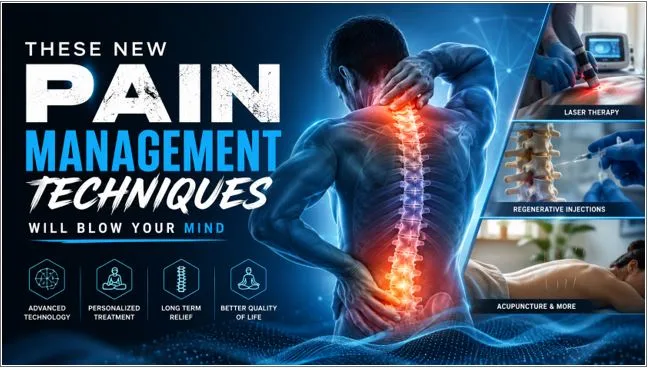
I spent a few days going through medical journals, FDA press releases, and a bunch of clinic reports before sitting down to write this. “New pain management techniques” gets thrown around online way too loosely, usually without anyone bothering to explain what actually changed and why it matters. Turns out a fair amount has changed, especially in the last year or so.
Below is what turned up, along with where each part came from.
A Non-Opioid Painkiller That Actually Works
This is the one I’d start with, honestly.
Back in January 2025 the FDA approved a drug called suzetrigine, sold under the name Journavx. The International Association for the Study of Pain called it the first entirely new class of pain medication approved in the U.S. in over two decades. Not a tweaked formula. Not another opioid dressed up differently. An actual new mechanism of action.
Here’s the part that got me though. Yale Medicine’s write up explains that Journavx never touches the brain’s reward system at all. It blocks a sodium channel called NaV1.8 sitting way out in the peripheral nervous system, stopping pain signals before they even get a chance to reach the brain. Opioids don’t work that way they bind directly to receptors in the brain, which is exactly why they can create that euphoric feeling, and eventually, dependence.
Suzetrigine just skips that whole step. No high. No craving. None of the addiction mechanics opioids carry with them.
Vertex Pharmaceuticals, the company behind it, ran trials comparing it against a placebo and against the opioid Vicodin, using patients recovering from things like bunion removal and tummy tuck surgery. Northwestern Medicine’s Dr. Steven Cohen described the approval as a genuinely significant moment for how acute pain gets treated. What stuck with me was his other point that acute pain, when it’s poorly managed, is often the exact thing that pushes people toward long-term opioid dependence to begin with. This drug is aimed squarely at breaking that cycle before it starts.
For now it’s only approved for short-term acute pain, not chronic conditions. Vertex is already running trials for diabetic nerve pain and sciatica though, so give it time.
Spinal Cord Stimulators That Actually Pay Attention
This next one’s a little more technical. Bear with me.
Spinal cord stimulation itself isn’t new implanted devices sending electrical pulses to interrupt pain signals have existed for years. What’s new is closed-loop stimulation, and the difference matters more than it sounds like it should.
Older devices, the “open-loop” kind, just blast a fixed level of stimulation no matter what your body’s doing at that moment. Problem is your spinal cord doesn’t respond the same way at all times. Sit down, stand up, cough, roll over in bed your body’s response to the stimulation shifts constantly. Which means a setting that felt fine while sitting could barely register once you stood back up.
A 2026 systematic review in Pain Practice dug into closed-loop systems that measure evoked compound action potentials essentially, real-time feedback pulled straight from the spinal cord then adjust stimulation on the fly to keep the effect steady. Relief for chronic back and leg pain came out more predictable and longer-lasting. There was also a noted drop in opioid use among patients dealing with persistent spinal pain syndromes.
A separate review, this one in Expert Review of Neurotherapeutics, described basically the same shift and pointed out a specific flaw in older devices fixed-output stimulation often lands below the threshold needed to actually engage the right nerve pathways in the first place. Closed-loop systems fix that.
Researchers at Stony Brook Medicine went through years of clinical evidence on this in a paper published in Biomedicines and landed in roughly the same place. These implants can now essentially self-correct in real time instead of running blind on one static setting.
Regenerative Medicine Using Your Own Body to Fix Itself
This is probably the category that gets hyped up the most online. For once though, some of that hype is earned.
Platelet-rich plasma therapy, PRP for short, along with bone marrow-derived treatments, work by pulling healing components out of a patient’s own blood or bone marrow and injecting that concentrate straight into the damaged tissue. A 2026 clinical overview from Altus Spine and Joint Pain Care notes that newer processing and delivery methods have made these injections a lot more precise than earlier versions used to be, which translates into faster tissue response and results that are more consistent from patient to patient.
The goal here isn’t numbing pain. It’s actually repairing what’s causing it in the first place, whether that’s a degenerative disc, arthritic joint, or damaged soft tissue, using material the body already recognizes as its own.
It’s not going to fix everyone, and honestly it’s still building out a longer-term evidence base compared to something like medication. But for patients trying to sidestep surgery, it keeps coming up more and more in these conversations.
No Two Patients Feel Pain the Same Way
Feels obvious once someone says it out loud. In actual clinical practice though, it’s a fairly recent shift.
A 2026 clinical review out of Sonoran Pain & Spine gets into how providers are now pairing genetic testing with AI-assisted algorithms to shape treatment around a patient’s actual biology, not just a diagnosis written on a chart. Take two people with the identical injury they can process medication totally differently, react to nerve blocks in their own way, and honestly feel pain at completely different intensities. Personalized medicine is basically an attempt to stop pretending everyone’s the same case.
On top of that, wearable sensors track posture and movement now, and apps let providers check on a patient’s progress remotely between visits. It’s less about one flashy standalone device and more about providers just having way more data available than they did three or four years back.
Neuromodulation and Nerve Ablation for More Targeted Relief
For chronic pain that hasn’t budged with more conservative treatment, a handful of newer minimally invasive procedures are picking up steam.
Radiofrequency ablation uses focused heat to disrupt the specific nerves carrying pain signals. Genicular nerve ablation for knee pain and basivertebral nerve ablation for certain kinds of vertebral back pain both come up constantly in recent literature, according to a 2026 overview from the California Pain Institute. Recovery is usually much faster than traditional surgery, and relief can stick around well beyond what medication alone tends to offer.
There’s also early work happening in gene therapy for pain, treatments aimed at modulating pain signaling directly in the brain’s pain centers without touching the reward pathways tied to addiction. Still very early-stage. Not something you’ll find at a typical clinic yet. But it’s a decent sign of where research is actually heading.
What This Means If You’re the One Actually in Pain
If your pain hasn’t budged no matter what you’ve tried, this stuff isn’t just theory.
A Pain Specialist in New York working with these newer tools has genuinely more to offer today than five years ago, and I don’t just mean more medication choices. I mean entirely different categories of treatment regenerative, device-based, genetically informed, take your pick.
Same story further out in the boroughs. A Pain Specialist in Queens treating chronic back or joint pain now has access to closed-loop devices, regenerative injections, non-opioid medication, options that flat out didn’t exist a few years ago.
If the injury happened on the job, this matters even more. Workers Comp Providers are leaning into these newer, better-documented treatment paths instead of defaulting straight to opioids, partly because insurers themselves are pushing providers toward approaches with better outcomes on paper and lower long-term liability.
And if it’s specifically your back or spine, it’s worth asking a Back Pain Doctor NYC patients actually trust whether any of this closed-loop stimulation, PRP, nerve ablation, whatever actually applies to your case. Not everything fits every diagnosis. A good provider tells you straight when something doesn’t apply instead of pushing whatever’s newest just because it’s newest.
One Honest Note Before You Get Too Excited
I’ll say this plainly. Some of what’s above is still catching up to its own hype. Closed-loop stimulation has strong review data, sure, but it’s still a fairly young field overall. Gene therapy for pain is mostly early-phase research right now, nowhere close to your average clinic. Suzetrigine is only approved for acute pain at the moment, not chronic that could change, but it hasn’t yet.
Still, the direction is real. Pain treatment as a whole is moving away from “here’s an opioid, come back if it doesn’t work” and toward options that are more targeted, better documented, and in a lot of cases non-addictive by design. Worth knowing about whether you’re dealing with pain right now or just paying attention to where medicine’s headed next.
Sources
- International Association for the Study of Pain: FDA approval of suzetrigine (Journavx)
- Yale Medicine: how suzetrigine blocks pain signals differently from opioids
- Vertex Pharmaceuticals newsroom: official JOURNAVX approval announcement
- Northwestern Medicine: Dr. Steven Cohen’s commentary on the suzetrigine approval
- UCHealth: clinical Q&A on Journavx with Dr. Rachael Rzasa Lynn
- Pain Practice (Wiley), 2026 systematic review: efficacy of closed-loop spinal cord stimulation
- Expert Review of Neurotherapeutics, 2026: advances in closed-loop spinal cord stimulation
- Biomedicines (Stony Brook Medicine researchers): closed-loop SCS mechanisms and clinical evidence
- Altus Spine and Joint Pain Care: 2026 overview of regenerative and PRP-based treatments
- Sonoran Pain & Spine: 2026 overview of personalized pain medicine and wearable tech
- California Pain Institute: 2026 overview of neuromodulation, ablation, and gene therapy approaches
A quick note: none of this is medical advice, just information gathered from public research and reporting. Talk to a licensed healthcare provider before deciding what’s actually right for your own condition.