Three Questions Every Leader Should Be Able to Answer on Camera
There are three questions that will come up in almost every leadership interview, board conversation, or media appearance. If you can’t answer them clearly and authentically, you’ve got a problem. Not because you don’t have the knowledge, but because you can’t articulate yourself clearly when put on the spot.
Question 1: What’s Your Leadership Philosophy?
If you genuinely can’t articulate how you lead, people will struggle to follow you. It’s that simple, really.
Steve Jobs had absolute clarity on this: “We’re here to make a dent in the universe.” That wasn’t just a nice soundbite he came up with for a keynote. It was the actual lens through which he made every decision, hired every person, designed every product.
Research shows that leaders who can clearly articulate their leadership philosophy are significantly more likely to successfully align their teams around strategic objectives. That’s the difference between everyone actually pulling in the same direction and everyone doing their own thing whilst calling it teamwork in meetings.
Your leadership philosophy doesn’t need to be profound or particularly original, it just needs to be yours, and it needs to be clear enough that you could explain it to anyone.
Question 2: What’s the Biggest Lesson You’ve Learned?
This is where authenticity really matters, and where most people get it wrong. Studies have found that leaders who share genuine stories about failure and learning are perceived as significantly more relatable than those who only discuss successes. People don’t trust perfection; they trust growth.
The mistake most executives make here is either being too vague or too guarded, refusing to discuss any real failures because they think it makes them look weak. Neither approach works particularly well.
You need a specific story about a time you got something genuinely wrong, what you learned from it, and how it actually changed your approach going forward. Not just “I learned to listen more” but a real example where not listening cost you something and you had to sort yourself out. That’s what people remember, and more importantly, that’s what makes them believe you’re capable of handling future challenges.
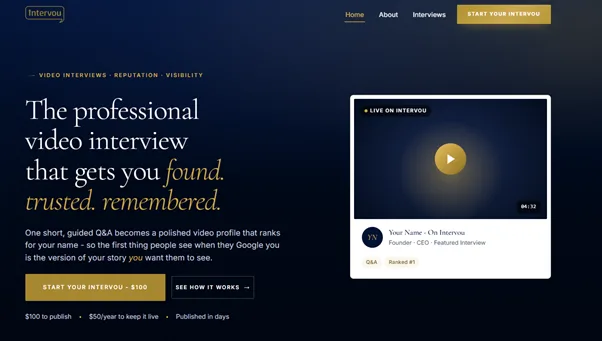
Platforms like Intervou are useful for practising this kind of response because you can record yourself answering and actually hear whether you sound authentic or not.
Question 3: What’s Your Vision for Your Industry?
Simon Sinek built an entire framework around this with “Start With Why.” Leaders who can articulate their purpose and vision for the future don’t just manage the status quo; they actually inspire people to move toward something better.
Many executives talk about their company’s vision all day long because they’ve presented it dozens of times at town halls and investor meetings. Yet, ask them about their vision for the entire industry, where things are actually heading, and what needs to fundamentally change? Suddenly they’re much less certain, much more hesitant. That’s a problem.
Research shows that CEOs who regularly articulate clear industry perspectives receive significantly more speaking invitations and board opportunities than their peers. That’s because demonstrating you can see beyond your own company’s immediate concerns signals strategic thinking at a genuinely higher level. It shows you’re not just focused on your quarterly targets.
Your industry vision doesn’t need to be revolutionary or predict some massive disruption that nobody else has spotted. It needs to be thoughtful. Where are the real challenges everyone’s avoiding discussing? What opportunities is everyone missing because they’re too focused on incremental improvements? These are the questions that separate executives who manage well from leaders who actually shape their fields.
Why This Matters
Preparing for these questions isn’t about memorising scripts word for word until you can recite them perfectly. It’s about actually thinking through your answers properly until you can discuss them naturally, like you’re just chatting with someone over coffee about things you genuinely believe. Record yourself using Intervou, watch it back, even though that’s always slightly uncomfortable. Do you sound like someone who knows what they believe and why? Or do you sound like someone who’s never actually considered these questions properly?
The people watching can tell the difference, and increasingly, they’re making significant decisions about your career based on what they see in those few minutes on camera.