Timber Flooring Melbourne: The Choices That Decide How Your Floor Looks and Lasts
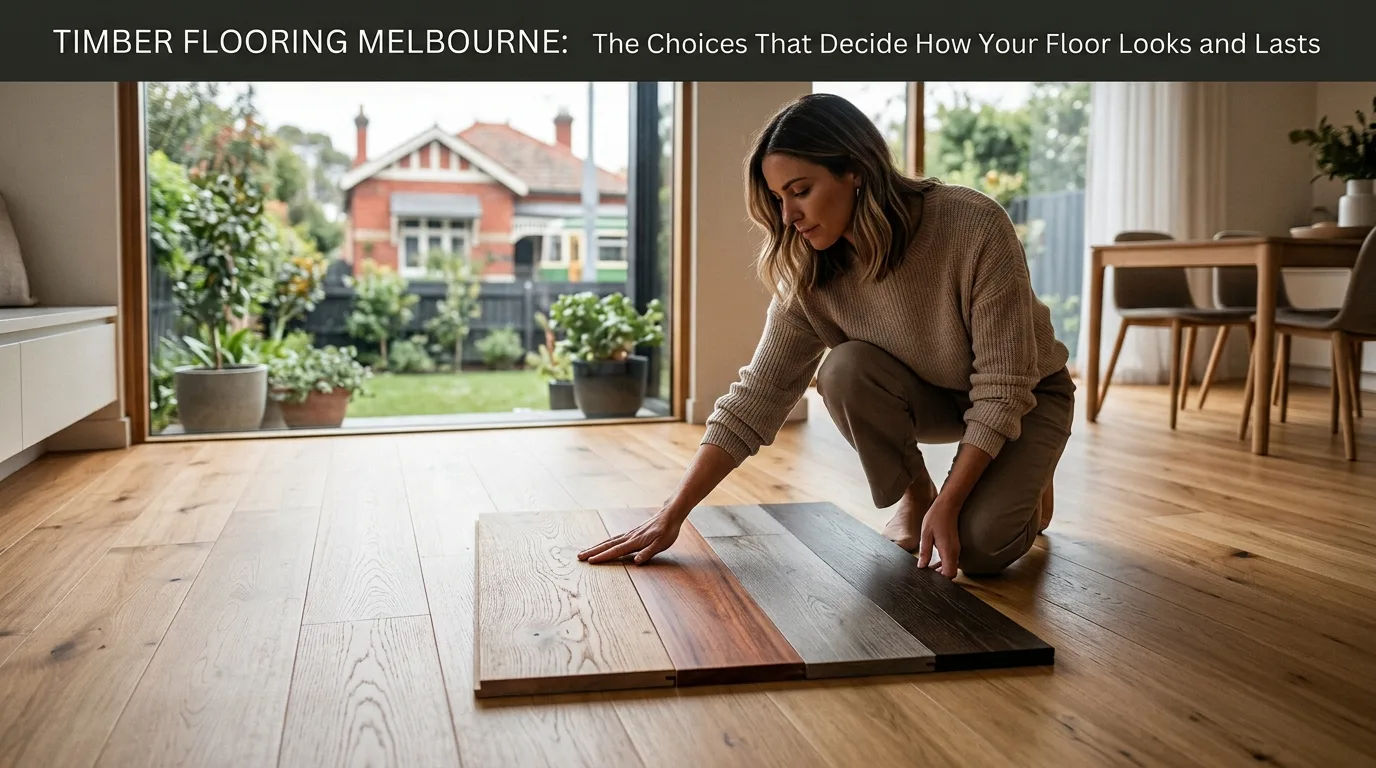
Choosing timber flooring in Melbourne comes down to five decisions that matter far more than most people realise: construction, grade, board size, finish and tone. Get those right and the floor looks considered and lasts for decades. Get them wrong and even expensive timber can feel dated within a few years. For most Melbourne homes in 2026, the safe starting point is engineered European Oak, and from there the styling choices are yours to make.
If you have already weighed up the different types of timber flooring Melbourne offers, this guide takes the next step: the specifications and styling calls that separate a floor you love from one you tolerate.
Start With Construction
The first decision is engineered or solid, and in 2026 the picture is clear for most homes. Engineered boards have a real timber wear layer over a stable plywood core, which handles Melbourne’s humidity swings, sits happily over concrete slabs and works with underfloor heating. A typical spec is a 14mm board with a 3 to 6mm real-timber wear layer, and a thicker wear layer means the floor can be sanded and refinished later.
Solid timber still earns its place in heritage homes on timber subfloors, where authenticity matters and the floor may be refinished many times across its life. But for apartments, slab-on-ground builds and open-plan renovations, engineered is usually the practical answer.
Grade Is About Character, Not Quality
One of the most misunderstood parts of buying timber is grade. Grade describes appearance, not how good the timber is. A higher grade is not a better floor, just a different look.
Prime or Select grade has minimal knots and even, uniform colour, giving a calm, refined surface that suits minimalist and contemporary interiors. Feature or Rustic grade shows natural knots, grain movement and colour variation, which brings warmth and character and works beautifully in period homes and relaxed, lived-in spaces.
There is a practical bonus to character grades. All that natural variation hides day-to-day wear, so a dropped key or a pet’s claws blend into the floor rather than standing out. For busy households, that is a genuine advantage.
Board Size Changes the Whole Room
Board dimensions are the spec people most often underestimate. Width in particular shapes how a room reads.
The contemporary default sits around 190 to 260mm wide and 1800 to 2200mm long. Wide boards show more grain, create fewer join lines and make a room feel larger and more cohesive. Narrow boards, by contrast, can look busy and dated, with all those extra seams breaking up the floor.
Wide planks suit both small and large rooms, opening up compact spaces and giving big rooms a clean, premium feel. Some homeowners take it further and mix board widths for a more expressive, characterful floor, though that works best when it suits the architecture rather than simply following a trend.
Finish: Lacquer or Oil
The finish decides how the floor feels underfoot and how much upkeep it needs, so this is a lifestyle choice as much as an aesthetic one.
UV lacquer forms a hard, sealed layer that sits on top of the timber. It is highly durable, resists spills and needs little more than routine cleaning with a pH-neutral product. The look is uniform and contemporary, with a controlled sheen that stays consistent over time. Worth knowing: the UV in UV lacquer means the coating was cured with ultraviolet light during manufacture, not that the floor resists sun fading later.
Oiled and hardwax-oil finishes work differently. The oil soaks into the timber fibres rather than forming a surface film, feeding the wood and enhancing its grain from within. The result is more organic and tactile, closer to raw timber. The trade-off is maintenance, since oiled floors need periodic re-oiling, often yearly in high-traffic areas. The upside is that a damaged patch can usually be repaired on the spot without sanding the whole floor. Lacquer suits people who want a floor that mostly looks after itself; oil suits those who love the living character of timber and do not mind caring for it.
Why Gloss Is Gone
If you still picture glossy timber as the premium look, 2026 has moved on. High-gloss floors have essentially left the mainstream, for a simple practical reason: gloss shows every footprint, scratch and speck of dust.
Matte and satin finishes now dominate almost every product category. They soften reflections, let the natural grain show through, hide daily wear and, as many people notice, photograph far better. This is not a passing trend so much as a permanent shift driven by how floors actually live in a home.
Texture reinforces the same direction. Brushed and wire-brushed finishes remove the softest part of the grain to leave a subtly textured surface that adds depth, improves slip resistance and disguises wear. Hand-scraped and distressed textures push further into rustic and heritage territory, while a smooth surface stays formal and minimal. The texture you choose should match the character of the room.
Colour and Tone in 2026
Colour is where current trends are clearest, and the headline is warmth.
Natural warm oak is the single biggest colour trend, a golden-brown tone with visible grain that is neither too light nor too dark. Alongside it, soft honeys, caramels and amber tones are leading the palette, and mid-tones have become the safe-luxury choice for their balance of sophistication and approachability. Among Australian species, Blackbutt brings a warm pale-to-golden tone, while Spotted Gum and its distinctive wavy grain are returning strongly in premium renovations. Warm walnut delivers depth where a room wants contrast.
Just as telling is what is on the way out. The cool blue-grey floors that defined the 2015 to 2020 period now look dated, and many of those homes are being renovated back toward warm tones. For a coastal feel, bleached and whitewashed finishes remain popular, but the broad direction across Melbourne is warm, natural and grounded rather than cool and grey.
Do Not Skip Acclimatisation
This is the least glamorous decision and one of the most important. Melbourne’s climate is hard on timber. Dry winters under ducted heating can push indoor humidity below 40 percent, while humid summers can send it above 70 percent. Timber naturally expands and contracts across that range.
Boards need to acclimatise to the room’s conditions before they are laid, especially when the space is drier or more humid than wherever the timber was stored. Skipping this step is a common cause of cupping, gapping and squeaking down the track. Engineered timber copes with the movement far better than solid, which is another reason it dominates in local homes, but acclimatisation still matters for both.
See It in Your Own Light Before You Commit
A small swatch under showroom lighting tells you very little. Timber undertones shift dramatically depending on the light in your actual room and the colours around them.
Before ordering, place full-size planks in the room where they will go and look at them across several days, in morning and evening light, against your walls, cabinetry and furniture. A tone that looked perfect on a sample board can read completely differently once your own light and furnishings are in play. This one habit prevents the most expensive regret in flooring.
Common Mistakes to Avoid
A few recurring errors trip people up. Choosing gloss over matte dates a floor quickly and shows every mark. Picking a cool grey tone locks in a look that is already on the way out. Going too narrow on board width makes a floor feel busy and cheap. Skipping acclimatisation invites movement problems. Judging colour from a small swatch rather than full planks in your own light leads to mismatched undertones. And underestimating subfloor preparation means even a beautiful floor can fail. Avoid those six and you are most of the way to a floor that lasts.
Frequently Asked Questions
What is the best timber flooring for a Melbourne home? For most homes, engineered European Oak is the strongest all-round choice. It handles Melbourne’s seasonal humidity swings, works over concrete slabs and underfloor heating, comes pre-finished and offers the widest range of colours and finishes.
What is the difference between Prime and Feature grade? Grade refers to appearance, not quality. Prime or Select grade is uniform with minimal knots for a clean, minimalist look, while Feature or Rustic grade has knots, grain movement and colour variation for a warmer, more characterful floor that also hides wear well.
Should I choose an oiled or lacquered finish? Lacquer is a hard, sealed surface that is durable and low maintenance with a consistent sheen. Oil penetrates the timber for a more natural, tactile feel but needs periodic re-oiling. Lacquer suits busy, low-upkeep households; oil suits those who value timber’s living character.
What board width looks best? Wide boards, roughly 190 to 260mm, are the contemporary standard. They show more grain, create fewer join lines and make rooms feel larger, whereas narrow boards can look cluttered and dated.
Is grey timber flooring still in style? Cool blue-grey floors have dated significantly and are being replaced with warm tones. The leading 2026 direction is warm natural oak, along with honeys, caramels and mid-tones.
Why does timber flooring need to acclimatise before installation? Melbourne’s humidity swings between dry, heated winters and humid summers, and timber moves with that change. Letting boards equilibrate to the room’s conditions before laying reduces the risk of cupping, gapping and squeaking later.
Are matte finishes better than gloss? For most homes, yes. Matte and satin finishes hide scratches, footprints and dust, let the grain show through and photograph better, which is why gloss has largely left the mainstream in 2026.