TOCCAY Expands Its Carbon Wheel Range for Road and Gravel Riders
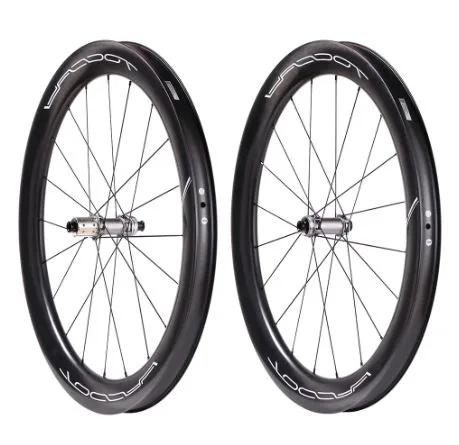
The direct-to-consumer cycling market has been one of the more active corners of performance retail over the past few years, with newer manufacturers increasingly competing against established names on engineering transparency rather than brand heritage alone. The latest development in that space comes from TOCCAY carbon wheels, which has broadened its wheelset lineup to more explicitly serve riders who split their time between paved roads and rougher, mixed-terrain routes — a segment of the market that’s grown noticeably as adventure and gravel-adjacent riding has moved from niche interest to mainstream demand.
The expansion reflects a broader pattern across the wheel category: riders are increasingly unwilling to compromise between dedicated road performance and genuine off-road capability, and manufacturers are responding with builds engineered specifically for that middle ground rather than repurposing pure road or pure gravel designs.
A Category That’s Outgrown Its Old Boundaries
For years, the assumption in wheel design was fairly binary — a wheelset was built either for road or for off-road use, with clear boundaries between the two. That assumption has eroded as more riders have started designing their own routes around mixed surfaces, connecting paved climbs with gravel descents or fire-road shortcuts rather than sticking to one terrain type for an entire ride.
This shift has put real pressure on manufacturers to build wheels that don’t force a hard trade-off between the two. A wheel too narrowly optimized for road speed struggles once the surface turns loose and unpredictable. A wheel built purely for aggressive off-road use tends to feel sluggish and overbuilt across the long paved stretches that typically make up most of a mixed-terrain route. Closing that gap has become one of the more active engineering challenges in the category.
What’s Actually New in the Range
The centerpiece of this expansion is a wheelset built specifically around that road-to-gravel middle ground rather than treating it as a secondary use case. Rather than a shallow adaptation of an existing road rim, the new build starts from a wider rim profile designed to properly support the tire volumes gravel and mixed-terrain riding actually demand, while retaining enough rim depth to hold real aerodynamic value once the terrain turns back to pavement.
This kind of purpose-built approach — rather than a road wheel with a wider tire clearance bolted on as an afterthought — reflects a broader industry shift toward taking mixed-terrain riding seriously as its own category, with its own specific engineering demands, rather than treating it as a minor variation on standard road wheel design.
A Closer Look at the Ghost Gravel 58
The flagship of this expanded lineup is the Ghost Gravel 58 by TOCCAY, a wheelset built specifically to answer the road-and-gravel demand described above. It’s specced with a 58mm rim depth aimed at real aerodynamic benefit on paved sections, paired with a 35mm internal / 42mm external rim width sized to properly support wider, gravel-appropriate tires rather than compromising their profile. An 8.5mm center drop is built in specifically to improve tubeless tire seating on rough, irregular terrain — a detail that matters considerably more off-road than it does on smooth pavement.
The build uses SAPIM CX-Ray spokes, chosen for their durability under the kind of irregular, unpredictable loading gravel riding produces, paired with a TOCCAY 142mm hub and a Centerlock disc brake interface, with a finished wheelset weight of roughly 1350g. It supports both clincher and tubeless-ready tire setups, with Shimano HG and SRAM XDR freehub options available depending on drivetrain — giving riders flexibility to run the wheelset across a range of existing gravel and adventure-oriented bike builds without a forced drivetrain change.
The Engineering Standards Behind the Expansion
Beyond the headline specs, this kind of expansion typically comes with the same testing rigor applied across a manufacturer’s existing lineup rather than a relaxed standard for a newer category. Impact resistance and spoke-hole pull-force testing — the two most common durability benchmarks in the premium wheel category — matter arguably more for mixed-terrain wheels than for pure road builds, given the more irregular, unpredictable loading that rough terrain produces compared to smooth pavement.
It’s worth noting that these figures typically represent a manufacturer’s own internal validation against a defined testing standard, rather than automatic proof of independent third-party certification. Riders evaluating any new wheelset in this space, gravel-oriented or otherwise, should look for brands that are explicit about that distinction rather than allowing internal figures to imply formal outside certification they haven’t actually received. This kind of transparency has increasingly become a baseline expectation across the premium wheel category rather than a differentiator reserved for a handful of brands.
How This Fits Alongside Existing Road-Focused Options
This gravel-oriented addition sits alongside an already-established road wheelset lineup rather than replacing or overshadowing it, giving riders the option to match wheel choice specifically to their dominant riding style, or to build toward a two-wheelset setup — one road-optimized, one built for mixed terrain — without switching brands or losing consistency in build quality, warranty terms, and support between the two. For riders who ride almost exclusively on one surface type, dedicated road-depth options remain available and arguably still the better fit; the expansion specifically targets the growing middle ground rather than attempting to replace either end of that spectrum.
This kind of expansion arrives at a moment when rider expectations around versatility have genuinely shifted. Fewer riders are building their equipment around a single narrowly defined discipline, and more are looking for gear that flexes across the actual variety of terrain in their local riding — a pattern that’s been building steadily as gravel events, adventure routes, and mixed-surface group rides have grown in popularity across the broader cycling calendar.
Manufacturers responding to that shift with purpose-built engineering, rather than repackaged existing products, are likely to find real traction with exactly this kind of rider — someone who doesn’t want to own two separate wheelsets for two separate disciplines, but also doesn’t want to accept a meaningful compromise in either direction to get that convenience.
What This Means for Riders Evaluating the Category
For riders currently weighing a wheel purchase in this space, the practical takeaway is that mixed-terrain-specific engineering has become genuinely available rather than theoretical — a rider no longer has to choose between a pure road wheel that struggles once the pavement ends, or a pure gravel wheel that feels overbuilt for long paved stretches. Evaluating a wheelset’s rim width, depth, and spoke durability specifically against mixed-terrain demands, rather than judging it purely by road-oriented metrics, is becoming a more standard part of how informed buyers are approaching this category.
As with any wheel purchase, riders should still confirm hub spacing, rotor mounting type, and freehub compatibility against their specific frame before ordering, since even a well-engineered wheelset delivers none of its intended benefit if it doesn’t properly fit the bike it’s going on.
The Bigger Picture for the Category
This expansion is a useful data point in a broader trend across performance cycling: manufacturers increasingly building around how riders are actually riding, rather than around traditional category boundaries that no longer reflect real-world use. As mixed-terrain and adventure riding continue gaining ground alongside more traditional road and gravel disciplines, expect more of the wheel category to follow this same pattern — purpose-built engineering for genuinely blended riding styles, rather than products repurposed from an adjacent, narrower use case.
For riders following this space, it’s worth watching whether other manufacturers follow with similarly purpose-built responses, or whether the market continues to reward brands willing to engineer specifically for the way people are actually riding today rather than the categories the industry has traditionally sold around. Either way, the underlying signal is clear: mixed-terrain riding has moved from a niche edge case to a demand serious enough that manufacturers are now designing entire product lines around it, rather than treating it as an afterthought bolted onto an existing road or gravel platform.