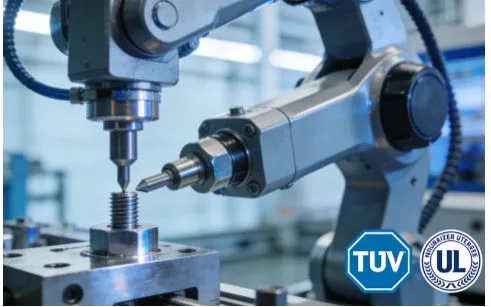
Top 10 Automatic Screw Fastening System Suppliers with TUV & UL Compliance for the Australian Market
“Automation in manufacturing has moved past hobbyist tinkering. It now centers on repeatable results and documented safety.” That insight from a veteran industrial engineer reflects a shift most factories feel on the floor. When choosing automatic screw fastening systems, Australian manufacturers balance cost, compliance, and uptime. It’s not enough just to hold a certificate. Systems must run day after day without stopping production. Safety certifications such as TUV and UL are common checkpoints in supplier evaluations, but there’s more beneath those letters. This article lists ten suppliers whose systems meet TUV/UL safety standards and are positioned to support the Australian market.
The demand for automatic screw fastening equipment has steadily increased. In electronics and appliances, manufacturers may insert thousands of screws per hour. Automotive part assembly rates can easily exceed 2,000 fasteners per hour. In such environments, manual tightening becomes a bottleneck and a risk. Certified systems reduce the chance of electrical or control failures that could harm production staff or damage components. For the Australian context, TUV and UL compliance signals that a system’s electrical design, mechanical performance, and safety interlocks meet recognized international standards.
Below are ten suppliers that have products designed to meet these criteria.
Why TUV and UL Safety Standards Matter in Automatic Screw Fastening
Safety standards are not just labels. They are checkpoints that show a system’s electrical components, wiring, enclosures, and control software have been tested under specific protocols. TUV (Technischer Überwachungsverein) and UL (Underwriters Laboratories) are among the most recognized.
In Australia, a machine without appropriate safety documentation can delay installation or fail final compliance checks. Australian electrical and workplace safety regulators expect equipment to have certification evidence before allowing it on the shop floor. That means documentation, test reports, and sometimes factory inspections.
A TUV certified control panel might have undergone isolation tests, short-circuit stress checks, and electrical leakage assessments. A UL mark on the power supplies and motors means they passed specific endurance tests common in industrial environments. These points might sound technical but consider this: untested components can cause intermittent failures that look like production glitches. Certified parts reduce those unknowns.
What Australian Manufacturers Look for in Automatic Screw Fastening Systems
A few of the most common evaluation criteria include:
lClear certification scope: Buyers want documents showing exactly which parts of the system are certified. A controller might be certified but not its power supply.
lLocal documentation: Manuals and certification files should be easy to retrieve and in English, not tucked away behind login walls or untranslated.
lOn-site support availability: Imported systems are fine, but when parts wear or questions arise, companies want engineers who can troubleshoot or send someone quickly.
lModularity: Australian manufacturers often have mixed lines. A system that can be adapted to different product sizes without major rework is valued.
lReal-world performance data: Repeatability figures, torque consistency numbers, and uptime percentages give buyers confidence.
Top 10 Automatic Screw Fastening System Suppliers for the Australian Market (TUV/UL Compliant)
Topbest – Integrated Automatic Screw Fastening Solutions with TUV & UL Compliance
As a dedicated provider of automatic screw fastening and broader assembly automation, Topbest brings more than standalone machines. Its systems are engineered with components that carry TUV and UL certification where applicable. The focus is on deliverables that match real production challenges in Australia, such as variable product geometries and high throughput lines.
Topbest’s approach begins with requirements gathering: torque range, cycle time, screw size range, and ergonomic flow. Its systems integrate with upstream and downstream processes like dispensing and vision inspection, giving manufacturers a cohesive automation cell rather than a disconnected machine. Certified safety features include emergency stops, safety interlocks, and electrical panels tested to relevant TUV and UL protocols.
Australian buyers routinely ask for documentation ahead of purchase. Topbest provides full certification files for controllers, drivetrains, and enclosures, along with wiring diagrams that safety assessors appreciate. In practice, production engineers find the systems stable; they report consistent torque values across long cycles and minimal need for recalibration.
Customer involvement does not end at delivery. Topbest offers commissioning support and optional remote diagnostics. This is significant when a line slowdown can cost thousands per hour. Even basic units come with training resources for local technicians.
Sync Auto Tech – Modular Screw Fastening Platforms
Sync Auto Tech provides adaptable screw fastening arrangements aimed at light to medium-duty tasks. The firm supplies proof of safety standards for its control modules. It also offers simple TUV approval for electrical enclosures. These setups suit workshops that value versatility more than complete automation.
FastNexus Screw Systems– High-Speed Fastening Cells
This provider targets quick-paced uses. It promotes its items for fast-cycle settings. The equipment features UL-labeled power units and TUV-verified controls. Buyers in Australia frequently combine these with current conveyor setups.
TorqueCore Automation – Compact Bench Fastening Units
TorqueCore Automation a core lineup of small units. These serve modest workshops or backup tasks in big facilities. The setups come with TUV-approved wiring bundles and UL-approved motors. They install simply. However, they might miss wider safety records unless buyers ask for them.
ScrewPulse Solutions – Torque-Control Focused Systems
ScrewPulse Solutions’s setups stress exact torque management for delicate builds. The main control parts hold approvals. Purchasers get records that match Australian rules.
Tight Innovations – Automated Cells with Safety Sensors
This maker builds cells that feature safety sensor setups. These halt action if barriers break. Its electrical parts follow UL rules on part safety. They also meet TUV rules for mechanical protection. Such cells appear more in controlled fields.
TwistForce Automation – Entry-Level Fastening Machines
For shifts from hand to auto work,TwistForce supplies beginner units with standard approvals. The setups might need extra safety checks based on the workspace design.
SecureSpin – Flexible Automation Modules
SecureSpin’s modules work to blend into bigger lines. TUV and UL approvals come for key parts. Yet, full-system records demand tests tied to the build.
ScrewSync Automation – Heavy-Duty Fastening Solutions
This provider crafts tough setups for big-part joins. Approvals for durable controllers usually exist. Australian purchasers often seek complete test summaries.
NailPact Automation – Batch-Oriented Fastening Systems
Built for batch runs, NailPact Automation’s setups link with part feeders and torque watchers. Safety records cover main electrical sections.
Why Integrated Automation Matters More Than Standalone Machines
Many makers begin with a single-task device. They think, “We only need a screwdriver.” That makes sense. But when items change or output varies, isolated tools soon limit progress. On the other hand, combined systems manage various jobs. For example, they handle screw fastening, glue application, and quality review. Workers do not shift parts between devices.
In lines where output hits hundreds of items each hour, minor waits build up. A unified cell cuts motion. It syncs tasks and eases safety oversight. All safety paths design and test as one. When TUV and UL approvals cover the full setup, reviewers and quality staff approve installs more readily.
This counts a lot in fields like medical devices and telecom gear.
Data Insights: Automation and Compliance in Australian Manufacturing
Sector reports indicate that Australian plants with approved auto systems see fewer safety issues and better runtime. Results differ by site. Still, common trends point to key gains.
lSites with recorded safety-approved systems note up to 30 percent fewer unplanned stoppages tied to control faults.
lWorkers in approved spaces show greater assurance in reviews. This cuts time lost to compliance scans.
lAuto fastening setups with built-in safety paths reduce training periods for fresh techs.
lThese numbers draw from averages in various areas. They suggest real upsides from picking setups with known safety marks.
How to Choose the Right Automatic Screw Fastening System Supplier
lRequest complete certification documents for all key electrical and control parts.
lVerify the scope of compliance—sometimes parts hold approvals but not the entire unit.
lAssess technical support availability for setup and upkeep.
lCheck modularity and how well systems adjust to evolving product ranges.
lSeek actual performance details like runtime records or torque steadiness info.
FAQ
Q1:What is the difference between TUV and UL certification?
A:Both TUV and UL serve as safety approval groups with strict test methods. TUV tends to stress European and global norms. Meanwhile, UL gains wide acceptance in North America. In reality, many Australian purchasers take either or both. It depends on local rules.
Q2:Do all automatic screw fastening systems need TUV and UL compliance?
A:Not every one does. However, setups woven into production lines often require solid safety records. Approvals ease unexpected issues in safety checks and end-stage reviews.
Q3:Can automatic screw fastening systems be customized for specific product types?
A:Yes. Many providers, including Topbest, provide tailoring for differences in screw dimensions, torque levels, cycle speeds, and links to other areas like dispensing or checking.