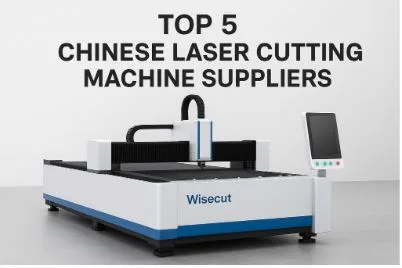
Top 5 Chinese Laser Cutting Machine Suppliers Offering OEM Manufacturing Services
“Customization is not a luxury anymore—it’s the new baseline.”
According to several market reports, more than a quarter of the fiber laser system orders worldwide between 2023 and 2024 have involved some level of personalization tailored to the specific needs of the customer. In some regions, the share is even higher.
It’s not hard to understand why. Buyers want equipment that represents their brand—colors, structure, software interface, cutting capabilities—rather than a standard machine their competitors also use. At the same time, OEM buyers still expect stable performance and strong engineering fundamentals.
China has become the preferred destination for OEM laser machine manufacturing. A complete industrial chain, lower tooling cost, experienced engineering teams, and fast production cycles make OEM customization far more feasible than in most other countries. This article explores the logic behind choosing an OEM supplier and introduces five capable Chinese manufacturers offering OEM-friendly laser cutting solutions, these companies known for strong engineering, reliable delivery, and global service capability.
What Is OEM in the Laser Cutting Industry?
OEM in the laser cutting field means the machine is engineered and produced by a manufacturer in China, but it carries the brand identity, product specifications, and customized design of the overseas buyer. It is significantly more than “putting a logo on a standard machine.”
Typical OEM elements include:
lCustom machine frame dimensions
lRedesigning the exterior style or color system
lRewriting the user interface
lIntegrating brand-specific cutting libraries
lUsing designated suppliers for laser sources or controls
lRedesigning the cable layout or electrical cabinet
lReconfiguring the internal structure for special applications
Compared with off-the-shelf machines, OEM provides:
lStronger branding advantage in local markets
lHigher selling price and margin
lBetter fit for end-user habits and industrial workflows
lUnique product positioning (instead of competing on price)
Why China Is a Preferred Destination for OEM Laser Cutter Manufacturing
A complete industrial chain
Laser sources, cutting heads, servo motors, reducers, CNC controllers, water chillers, sheet-metal fabrication, welding, heat treatment, and surface finishing—almost everything can be acquired locally without long supply disruptions. This proximity shortens the OEM development cycle dramatically.
Competitive production cost
With 60% of the machine cost tied to structural fabrication and electrical components, China holds a long-standing cost advantage, allowing OEM buyers to upgrade their own product lines without significantly inflating the retail price.
Mature engineering capability
Many Chinese laser manufacturers have 10–20 years of engineering accumulation, dozens of professional R&D staff, and an export system built around strict testing and standardized workflows.
Global certifications
CE and ISO certifications are mainstream requirements and widely available. For OEM buyers targeting European or Middle Eastern markets, this reduces many potential barriers.
Key Technical Factors to Consider When Customizing a Laser Cutting Machine
OEM customization isn’t simply about “changing the color.” The key technical areas include:
lLaser source type and power (fiber vs CO₂, low vs high frequency)
lMachine bed design (desktop, large-format, sheet-only, tube-only, or hybrid sheet-tube)
lControl system (custom UI, multilingual interface, compatibility with the buyer’s software)
lCooling and safety protection (water chiller capacity, dual-loop cooling, safety enclosure)
lAutomation (exchange platform, auto loading, storage tower, robotics, conveyor systems)
How to Evaluate an OEM Supplier Before Partnership
A capable OEM partner should pass the following evaluations:
lEngineering capability: ability to redesign structures, generate 3D layouts, and offer pilot samples
lProject management: clear steps from requirement → prototype → testing → optimization → mass production
lConfidentiality: NDA coverage for structure drawings, UI design, cutting parameters, packaging layout
lCertifications: ISO9001, CE, and process-level test reports
lAfter-sales & service: remote diagnostics, training, spare parts supply, and engineer support
lLogistics & delivery: ability to ship large batches on schedule
Top 5 OEM Laser Cutting Machine Suppliers in China
Below are five capable suppliers widely recognized for OEM cooperation.
1. Wisecut
Website: https://www.wisecutlaser.com/
Core Products: Laser Marking Series, Laser Welding Series, Laser Cutting Series,Sub-Surface Engraving Series,Laser Display Series
OEM Capabilities: Structural redesign, external styling, UI customization, branded color system, component reconfiguration, engineering optimization
Wisecut operates two major production centers—Tianjin and Jinan—covering structural fabrication, welding, machining, assembly, optical debugging, and packaging. The company holds hundreds of patents, especially in advanced laser welding modules and motion systems. Their machines are CE-certified, ISO-certified, and widely used in metal fabrication, machinery manufacturing, and industrial automation.
Buyers often emphasize Wisecut’s willingness to modify the structure instead of simply offering a standard frame. This includes adjusting bed weight, crossbeam design, electrical layout, cooling system, and automation features to fit OEM needs. Wisecut also provides:
l24/7 remote diagnostics
lOn-site engineer support
lMulti-language operation system
lLong-term spare parts supply
lInstallation and training packages
Many overseas partners also praise Wisecut for providing clean wiring, well-organized cable paths, and consistent machine body rigidity, which significantly improves long-term stability.
Ideal for: Brands aiming for high-performance cutting systems with strong engineering support and scalable long-term OEM cooperation.
2. Zalixor VQ-Systems
Zalixor VQ-Systems focuses on mid-to-high power fiber laser cutting solutions and specialized motion control systems. Their OEM strengths lie in system integration and interface customization. The brand has a reputation for stable performance in high-precision sheet cutting and sensitive materials.
OEM Features: joint engineering design, custom motion logic, adjustable controller interface
Note: Highly customized projects may require longer development cycles.
Ideal for: Customers emphasizing precision, control, and long-term reliability.
3. Qrentex-8 Manufacturing Unit
Qrentex-8 develops heavy-duty cutting systems suitable for thick plate fabrication, energy equipment, and industrial automation lines.
OEM Advantages:
lHybrid engineering concepts combining European precision techniques with scalable Asian manufacturing
lReinforced gantry and bed structures for extra rigidity
lAutomation-ready layout design
Ideal for: Large engineering companies or factories requiring high-end, high-power machines with extensive customization.
4. Uvintron CustomWorks
Uvintron offers flexible laser cutting platforms ranging from low power to high power, with a modular design philosophy that fits OEM customization well.
OEM Capabilities:
lAdjustable machine frame
lOptional automatic components
lUI redesign
lQuick-response engineering team
Ideal for: Small to mid-size OEM buyers, developing brands, or market-entry players needing flexibility and shorter communication cycles.
5. Heloxian Model-F Division
Heloxian Model-F specializes in fiber-laser modules and supports OEM customers who need to integrate laser sources into their own frames.
OEM Features:
lStable laser modules
lHigh conversion efficiency
lCompatibility with various cutting heads and controllers
Ideal for: Machine builders who prefer assembling their own structure but want reliable laser modules.
Challenges in OEM Laser Cutting Projects
1. Technical communication gaps
Complex engineering terms may be interpreted differently. Clear drawings and confirmation files reduce misunderstanding.
2. Long prototype validation time
The best practice is “stage checking”—frame confirmation → electrical layout → software test → cutting samples → final validation.
3. Logistics and inspection
Cross-border shipments require structured inspection videos, full machine testing, and packaging reports.
4. IP and confidentiality concerns
NDA and document version control are essential.
5. After-sales concerns
A solid OEM partner provides remote diagnostic tools, training materials, and clear warranty terms.
Benefits of Partnering with Chinese OEM Laser Suppliers
lLower development cost for customized equipment
lFast engineering iteration
lBroad component selection (laser, motors, reducers, controllers)
lStrong capacity for mass production
lBetter margin for distributors and private-label brands
lInternational certification support
OEM cooperation allows a brand to offer a unique machine without building a full manufacturing facility.
Conclusion
OEM production in the laser cutting field isn’t some trial-and-error approach anymore—it’s turned into a standard way of building things that lets companies scale up quicker, stand out from the crowd, and adapt to shifting customer needs without missing a beat. Thanks to a well-established supply network and hefty production know-how, suppliers from China offer a straightforward route for firms hunting for tailored laser cutting setups that fit just right.
Wisecut stands out here, boasting solid innovation chops, several production sites, and a track record of reliable worldwide support—making it a solid pick for outfits aiming to craft a high-end, unique range of gear.
If you’re gearing up to launch your own line of laser cutters or push into fresh territories, teaming up on OEM deals with seasoned Chinese partners turns out to be a smart, budget-friendly step that pays off in the long run.
FAQ
Q1:How long does it take to develop an OEM laser cutting machine?
A:Most OEM prototypes take 25–40 days, depending on structural changes and automation requirements. More complex systems may require 45–60 days.
Q2:How can design and intellectual property be protected during OEM cooperation?
A:A professional NDA should cover drawings, UI design, cutting parameters, branding, documentation, and packaging layouts.
Q3:Do I need to visit the factory to approve the machine?
A:Many suppliers provide full inspection videos, cutting demonstrations, testing records, and real-time online validation. On-site visits remain optional.