Top 7 Signs You Need AC Repair in Temple, TX
Why AC Problems Escalate Quickly in Temple, TX
In Central Texas, your air conditioning system isn’t just running; it’s fighting a constant battle against the region’s extreme heat and humidity—which is why timely AC repair becomes essential, not optional. Here in Temple, the intense summer sun forces cooling units to operate longer and harder than systems in cooler climates, leading to accelerated wear and tear.
This extreme operational stress is why small problems can quickly escalate into full system failures. Central Texas weather significantly accelerates common component failures: high ambient temperatures cause electrical components like capacitors to stress and fail prematurely, while the relentless cycling can rapidly expose minor refrigerant leaks. These issues compromise your system’s efficiency immediately.
Ignoring these early signs—especially in the high heat—guarantees a costly breakdown. Understanding these warning signs allows homeowners to proactively schedule necessary AC repair, helping you avoid major headaches, expensive emergency calls, and the inevitable discomfort that comes when your AC fails completely during a 100-degree day.
The 7 Most Common Warning Signs Your AC Needs Repair
As Temple’s residential population continues to rise—supported by ongoing development highlighted in official Temple economic growth data—the need for qualified HVAC companies has never been greater. New neighborhoods and expanding housing projects require professional HVAC installation for every home built, adding thousands of new systems that must be properly set up and maintained. At the same time, the supply of trained HVAC technicians fluctuates across Central Texas, creating challenges for homeowners with older units that need reliable repair work. This combination of rapid growth and an inconsistent labor pool makes dependable, responsive HVAC companies essential for both new installations and timely AC repair services throughout the community.
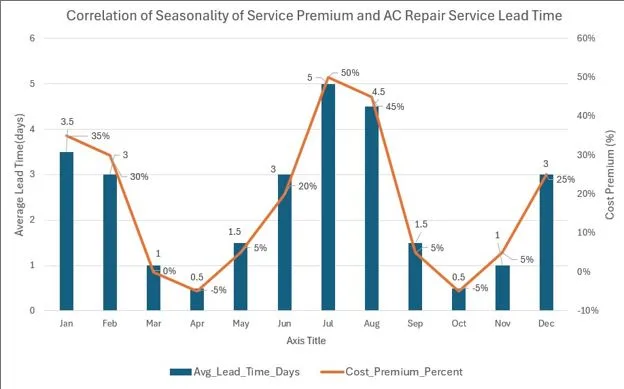
At Lynx HVAC Repair Temple, we believe in transparency. We don’t just want to fix your air conditioning when it breaks; we want to help you plan ahead to avoid the stress of emergency repairs. By analyzing years of local service logs—from simple filter changes to complex compressor replacements—we have mapped out the “Danger Zones” and the “Sweet Spots” of the calendar.
The following data illustrates exactly how seasonal demand impacts both the speed of service and the cost of repairs in our area. Understanding this cycle is the key to securing faster service and keeping more money in your pocket.
Figure 1: A monthly analysis of repair lead times vs. cost premiums, illustrating the sharp increases in delays and expense during peak summer and winter compared to off-season savings.
Warm Air Blowing or Weak Airflow
If your vents are blowing air that feels lukewarm or if the airflow is noticeably weak, your system is struggling to perform its basic function.
- What it Means: You may have a severe issue, such as a low refrigerant charge (often due to a leak), a failing compressor, or a restriction caused by a clogged filter or a broken fan motor.
Strange Noises (Grinding, Hissing, Buzzing)
Your AC unit should operate with a low, consistent hum. Any sudden or persistent loud noises are warning signs.
- What it Means: Grinding or scraping suggests failing motor bearings or loose components hitting metal. Hissing usually indicates a high-pressure refrigerant leak. Buzzing can point to an electrical problem, such as a faulty contactor or loose wiring.
Bad Smells or Musty Odors
Unpleasant smells coming from your vents mean something is wrong with your indoor air quality or system components.
- What it Means: A musty or moldy smell points to standing water in the condensate pan or mold growth inside the ducts. A sharp, burning smell is urgent and often indicates overheated wiring or electrical components, requiring an immediate system shutdown.
Short Cycling or Constant On/Off Behavior
Short cycling is when the AC runs for a short time (less than 10 minutes) and then shuts off, only to turn on again shortly after.
- What it Means: This is highly inefficient and stresses the compressor. Causes include a malfunctioning thermostat, critically low refrigerant levels, or a system that is oversized for your home, all of which require expert AC repair Temple assessment.
Higher Energy Bills Without Explanation
If your electricity bill spikes, but your usage habits haven’t changed, your system is losing efficiency.
- What it Means: The unit is forced to work much harder to achieve the set temperature. This is commonly caused by dirty condenser coils (reducing heat dissipation), clogged air filters, or a slow refrigerant leak.
Water Leaks or Frozen Evaporator Coils
While condensation is normal, pooled water near your indoor unit or ice on the pipes is not.
- What it Means: Water leaks usually signal a clogged condensate drain line that is backing up. Frozen coils are a sign of restricted airflow (a very dirty filter) or critically low refrigerant, both of which prevent the coil from absorbing heat correctly.
Poor Cooling in Certain Rooms of the Home
If one room is freezing and the next is a sauna, your comfort is inconsistent.
- What it Means: This is a classic sign of ductwork issues, such as large leaks or collapse, which are common in older homes. It could also be caused by a failing zone damper or a blower motor that cannot deliver sufficient airflow to the farthest reaches of your home.
- What Causes These AC Issues in Temple Homes
Understanding the root cause of your AC repair Temple issue helps you grasp why prompt professional service is so critical. Due to the high-demand nature of the Central Texas climate, most problems we see stem from heat stress, dust accumulation, and refrigerant loss.
Common Local Causes Requiring AC Repair
- Heat-Stressed Capacitors: The number one cause of sudden breakdowns in Temple. High outdoor temperatures (especially near the exposed units in sunny areas like Western Hills) cause the electrical capacitors to swell and fail. When this component fails, the compressor or fan motor cannot start, leading to a “no-cool” emergency. Urgency: High.
- Dirty Evaporator and Condenser Coils: Dust, high pollen counts, and lawn debris quickly build up on both indoor (evaporator) and outdoor (condenser) coils. This reduces the system’s ability to exchange heat. Homes near Midway or high-traffic areas are prone to this, forcing the unit to run constantly. Urgency: Moderate, but required for efficiency.
- Low Refrigerant Charge: Most cooling problems are associated with a leak in the refrigerant lines. The constant pressure and vibration in an overworked system cause minor leaks that slowly deplete the charge. This drop in refrigerant is what causes your coil to freeze and the compressor to struggle. Urgency: High (leak must be found and repaired).
- Clogged Air Filters: While easy to fix, a clogged filter is the primary cause of restricted airflow, which leads directly to the frozen evaporator coils symptom. This problem is exacerbated in high-dust environments. Urgency: Low (DIY fix), but High if neglected and coils are freezing.
- Duct Leaks and Poor Sealing: Older homes and those in established neighborhoods like Downtown Temple often have original, aging ductwork in the attic. Leaks here allow expensive cooled air to escape, causing the “poor cooling in certain rooms” symptom and inflating utility bills. Urgency: Moderate, mainly for efficiency loss.
- Failing Motors: Continuous operation during long, hot summers wears down the fan and blower motors. If you hear grinding or screeching, the motor bearings may be failing, causing reduced airflow and eventual system seizure. Urgency: High, to avoid system overheating.
By addressing these underlying issues quickly, you prevent a small, affordable AC repair Temple service call from escalating into a costly compressor replacement or an entire system failure.
- When to Call a Temple AC Repair Technician (And Why Acting Early Saves Money)
Knowing the difference between simple homeowner maintenance and issues requiring a licensed professional is the best way to protect your system and your budget.
| DIY Troubleshooting is Okay For: | Call Lynx HVAC Repair Temple For: |
| Changing standard air filters | Any grinding, hissing, or buzzing noises |
| Clearing leaves/debris from the outdoor unit | Water pooling near the indoor unit (clogged drain) |
| Checking/replacing thermostat batteries | Warm air blowing from vents |
| Turning the thermostat down 1-2 degrees | Frozen evaporator coils or ice on lines |
| Resetting a tripped breaker (once) | Short-cycling or constant running |
Why Acting Early Saves Money
The primary benefit of calling for AC repair Temple service at the first sign of trouble is cost prevention. Many homeowners begin searching what are common hvac repair costs in Temple, TX when something goes wrong—but acting early keeps those potential expenses far lower. Here’s how early intervention protects your wallet:
• Preventing Cascade Failures: A small, affordable part (like a $200 capacitor) costs significantly less than the major component it protects (like a $3,000 compressor). By fixing the minor issue immediately, you stop a chain reaction that leads to total system failure.
• Maximizing Efficiency: Early repairs address the cause of efficiency loss (like low refrigerant or dirty coils), instantly reducing the strain on your unit and lowering your monthly electricity bills.
• Extending System Lifespan: A well-maintained and promptly repaired system will last years longer than one that is constantly stressed or short-cycling, delaying the costly expense of AC installation Temple TX.
When dealing with high-voltage components, pressurized refrigerant, or complex electrical diagnostics, rely on the experts. Our Temple-based technicians provide honest diagnostics, ensuring we only fix what is broken. We offer priority scheduling and aim for same-day service when available to restore your comfort fast.
Don’t wait for a complete system meltdown in the Central Texas heat.
Lynx HVAC Repair Temple
254-500-3188
2807 Blue Meadow Dr., Temple, TX 76502