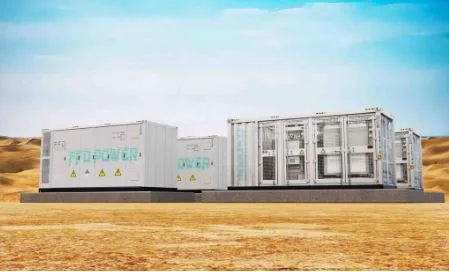
Top FCR Enabled Energy Storage Systems from Leading BESS Manufacturers
What Is FCR and Why It Matters in Modern Power Grids
FCR refers to automatic frequency regulation activated immediately after grid disturbances. It ensures system frequency remains within defined thresholds, preventing cascading failures or blackouts.
In European power markets, particularly Germany, the Nordic region, and parts of Western Europe, FCR participation has become a core revenue stream for large-scale battery energy storage systems. At the same time, FCR applications are expanding across Asia-Pacific and emerging markets where grid inertia is declining.
Battery systems designed for FCR must deliver:
- Ultra-fast response times
- Accurate bidirectional power regulation
- High availability under continuous cycling
These requirements have positioned MW scale lithium battery storage systems as the preferred solution for TSOs and grid operators.
FCR-Enabled BESS for Grid-Connected and Microgrid Applications
Utility-Scale and Grid-Connected Applications
For utility projects, FCR-capable systems are typically deployed as containerized BESS in the 1–5 MW range. Solutions from leading 2.5MW 5MWh BESS manufacturers are widely used for:
- Primary frequency control (FCR / FCR-N / FCR-D)
- Ancillary service markets
- Grid congestion management
For example, FFD POWER’s Galaxy 5015 Centralized Energy Storage System exemplifies this category, delivering up to 2.5 MW / 5 MWh per container, designed specifically for high-performance frequency regulation and grid compliance.
Island and Weak-Grid Scenarios
In regions with limited grid inertia—such as islands, remote industrial zones, and developing markets—battery systems must also provide grid-forming capability. Here, island microgrid energy storage solutions and microgrid BESS providers focus on voltage and frequency control rather than pure grid-following behavior.
The PCS supports PQ, VF, and VSG operating modes, enabling flexible deployment across:
- Islanded microgrids
- Renewable-heavy weak grids
- Hybrid diesel–solar–battery systems
This flexibility allows a single platform to serve both utility battery storage with grid compliance and autonomous microgrid applications.
Key Technical Features of FCR Enabled Containerized BESS
Fast Response and Precise Control
The effectiveness of frequency regulation depends on speed and accuracy. Galaxy 5015 delivers a response time of <200 ms, meeting stringent FCR requirements in Europe and other regulated markets. This performance places it among leading frequency regulation battery storage suppliers globally.
Advanced BMS and System Intelligence
Reliable FCR operation depends heavily on battery management. Such system integrates advanced BMS energy storage systems with cluster-level monitoring, ensuring:
- Stable SOC control under frequent cycling
- Accurate power dispatch
- Reduced degradation during high-frequency operations
This architecture supports long-term reliability for large-scale battery energy storage systems participating in daily ancillary service markets.
Importance of UL-Certified Containerized BESS for Large-Scale Projects
For global deployments, certification is a decisive factor in supplier selection.
- UL 9540 / 9540A are essential for North America and many Middle Eastern projects
- IEC and CE compliance dominates European utility tenders
As a result, demand for UL certified containerized BESS China suppliers has grown rapidly, especially for export-oriented projects requiring international approvals.
UL-certified systems improve:
- Project bankability
- Insurance acceptance
- Utility and TSO approval
Benefits of Containerized BESS in Utility-Scale Energy Storage
| Feature | Benefit |
| Modular container design | Simplifies transport and site installation |
| Integrated PCS, transformer, EMS | Reduces on-site engineering effort |
| Pre-installed fire suppression | Enhances operational safety |
| Compact footprint | Suitable for space-constrained substations |
This plug-and-play approach is now standard among leading containerized BESS manufacturers targeting fast deployment schedules.
Criteria for Selecting Reliable Containerized BESS Manufacturers
Technical Performance
When evaluating utility scale energy storage suppliers, project developers should assess:
- Round-trip efficiency (>98%)
- Power-to-energy ratio suitability for FCR
- Cell chemistry stability (LFP preferred for safety)
Galaxy 5015 uses 314 Ah LFP cells and delivers up to 5 MWh per container, making it well-suited for intensive frequency regulation services.
Compliance, Safety, and Grid Integration
Reliable grid-scale energy storage manufacturers must meet global safety and grid codes, including:
- UL / IEC / CE standards
- Fire detection and suppression
- Cybersecure EMS and SCADA integration
FFD POWER’s ANY PORT SCADA system enables seamless TSO communication, ensuring real-time dispatch and grid compliance.
Global Delivery and O&M Capability
Successful long-term operation depends on localized service. FFD POWER supports projects across Europe, Asia, and emerging markets with regional technical hubs, ensuring rapid response and stable performance throughout the system lifecycle.
Leading Manufacturers Offering FCR Enabled Containerized BESS
When selecting partners for large-scale projects, buyers often focus on manufacturers with proven grid experience:
1.FFD POWER
Specializes in modular, string-based and centralized containerized BESS supporting FCR, aFRR, VSG, and microgrid applications.
- System Type: Containerized and modular BESS for utility-scale and grid services
- Typical Configuration: 2.5 MW / 5 MWh class, MW-scale lithium battery storage systems
- Grid Functions: FCR, aFRR, grid-following, and grid-forming (PQ / VF / VSG)
- Control & Safety: Advanced BMS, unified EMS/SCADA, LFP chemistry, high-cycling capable
- Compliance: Designed for TSO integration and utility battery storage with grid compliance
- Deployment Experience: Multi-MWh projects supporting frequency regulation and microgrids
Suitable for: FCR projects, grid-scale applications, island microgrid applications, and containerized BESS tenders.
2. EneVougle Systems
Focuses on UL-certified containerized systems with enhanced thermal runaway mitigation.
3.GriEdgy Energy
Provides AI-driven EMS platforms for frequency response markets.
4.BoworSync Technologies
Targets European TSO markets with PCS-optimized BESS solutions.
5. Veltaryn Energy Systems
Delivers containerized BESS solutions optimized for utility-scale and microgrid applications, with strong emphasis on grid-forming capability, modular scalability, and reliable performance in weak-grid and islanded power systems.
These companies represent different strengths within the global ecosystem of utility scale energy storage suppliers.
Emerging Trends in FCR Enabled Energy Storage Systems
Growing Demand from TSOs
Across Europe, Asia-Pacific, and the Middle East, TSOs increasingly rely on battery storage for primary frequency control, accelerating demand for FCR enabled energy storage systems.
Battery Chemistry Innovation
LFP remains dominant for safety-critical grid services, while LMFP and next-generation chemistries are being evaluated to enhance temperature tolerance and lifecycle durability in MW scale lithium battery storage systems.
Digitalization and Intelligent EMS
Advanced EMS platforms now leverage predictive algorithms to optimize SOC and cycling strategies, extending asset life while maximizing ancillary service revenue.
FAQ
Q: What makes a BESS suitable for Frequency Containment Reserve (FCR)?
A: Ultra-fast response time, precise power control, TSO communication compatibility, certified safety design, and advanced BMS integration.
Q: Why are UL-certified containerized BESS important for global projects?
A: UL certification supports safety compliance, financing, and regulatory approval, especially for projects in North America and export-oriented markets.
Q: Can containerized BESS support both grid and microgrid applications?
A: Yes. Systems with PQ, VF, and VSG modes can serve grid-connected FCR projects and island microgrid energy storage solutions.
Q: What battery chemistry is preferred for frequency regulation?
A: LFP is widely adopted due to its thermal stability, safety, and long cycle life under frequent charge–discharge conditions.