Top Features Every White Label NFT Marketplace Should Have
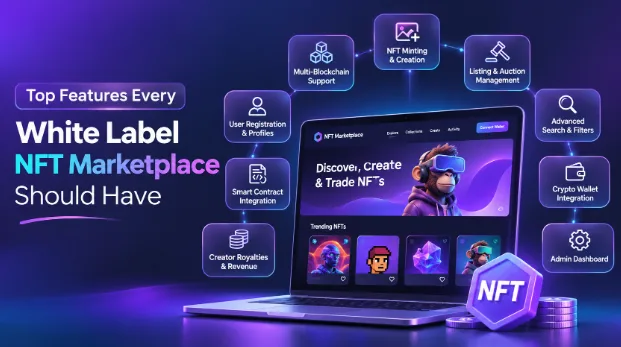
The NFT market has created new opportunities for businesses looking to enter the digital asset industry. From digital artwork and collectibles to gaming assets, music, virtual real estate, and tokenised products, NFTs have introduced new ways to create, manage, buy, and sell digital ownership.
However, launching an NFT marketplace requires more than simply creating a platform where users can list and purchase digital assets. Businesses need a reliable technology infrastructure, secure transactions, wallet connectivity, efficient NFT management, and an interface that makes the trading experience convenient.
This is where a white label solution becomes a practical option. With white label NFT marketplace development, businesses can launch a branded NFT trading platform using an existing technology foundation rather than developing every component independently.
But what separates a basic NFT marketplace from a platform that can support long-term business growth?
The answer lies in its features. Let’s explore the essential features every business should consider before launching a white label NFT marketplace.
What Is a White Label NFT Marketplace?
A white label NFT marketplace is a ready-made or pre-developed platform that businesses can customise with their own branding, design, features, and business requirements. It allows entrepreneurs, startups, and established companies to enter the NFT ecosystem without building an entire marketplace infrastructure from scratch.
Depending on the solution, businesses can support different blockchain networks, NFT standards, digital asset categories, payment options, and user management functionalities.
For example, a business can launch a marketplace for digital artwork, gaming collectibles, music NFTs, or virtual assets using a customised platform.
The primary advantage is that businesses can focus more on their marketplace strategy, partnerships, customer acquisition, and revenue generation while leveraging an existing technology foundation.
Top Features Every White Label NFT Marketplace Should Have
Choosing the right features is essential for building a marketplace that meets user expectations and business objectives. Here are the functionalities worth prioritising.
1. Secure User Registration and Profile Management
A smooth onboarding experience is important for attracting and retaining marketplace users. The registration system should allow users to create accounts, manage their profiles, and access marketplace functionalities without unnecessary complications.
Essential functionalities include:
- Email and password registration.
- Social login integration, where appropriate.
- Two-factor authentication (2FA).
- User profile customisation.
- Account verification and security settings.
- Transaction and activity history.
A well-designed profile dashboard should also provide access to owned NFTs, listed assets, purchased collectibles, and transaction records.
For businesses operating in regulated markets, identity verification and other compliance requirements should be configurable according to applicable laws.
2. Multi-Blockchain Network Support
Blockchain compatibility directly affects the type of NFTs users can create, purchase, and trade on a marketplace.
A marketplace limited to one blockchain may restrict its audience and available digital assets. Multi-chain functionality can provide greater flexibility by allowing businesses to support different blockchain ecosystems.
Popular blockchain options include:
- Ethereum
- Polygon
- BNB Smart Chain
- Solana
- Avalanche
The choice of blockchain should depend on transaction costs, network performance, developer ecosystem, NFT standards, and target audience.
Multi-chain support can also help businesses reach communities across different blockchain networks. However, each additional network requires appropriate wallet integration, transaction handling, indexing, and security testing.
3. NFT Minting and Creation
NFT minting is one of the most important features of an NFT marketplace. It allows creators to convert their digital assets into blockchain-based tokens that can be listed and traded.
A user-friendly minting module should support:
- Image, video, audio, and other supported file uploads.
- NFT name and description.
- Metadata configuration.
- Royalty settings.
- Collection assignment.
- Blockchain selection.
- Single and batch minting, where supported.
Businesses should also consider lazy minting functionality. This approach can delay the on-chain minting process until a qualifying purchase or transaction occurs, depending on the marketplace’s implementation.
An intuitive creation process makes it easier for artists, brands, and digital creators to participate in the platform.
4. NFT Listing and Marketplace Management
Once an NFT is created, users need a convenient way to list it for sale. The listing system should provide different selling options to accommodate different business models.
Important listing functionalities include:
- Fixed-price NFT listings.
- Auction-based selling.
- Timed auctions.
- Offer and bidding management.
- Listing expiration.
- Price updates.
- NFT delisting and relisting.
For example, a digital artist may prefer fixed-price selling, while a collector offering a limited-edition digital asset may choose an auction.
The marketplace should also clearly display listing information, ownership details, pricing, and transaction status to help buyers make informed decisions.
5. Advanced NFT Search and Filtering
As a marketplace grows, users need an efficient way to discover relevant digital assets. Without proper search and filtering capabilities, finding specific NFTs can become difficult.
An advanced discovery system should include:
- Search by NFT name or keyword.
- Category-based browsing.
- Price range filters.
- Blockchain-based filtering.
- Creator and collection search.
- Recently listed NFTs.
- Trending and popular collections.
- Sorting by price, date, and popularity.
Businesses can also introduce personalised recommendations based on browsing activity and user preferences, subject to appropriate privacy controls.
A well-structured discovery experience can improve product visibility and encourage users to explore more marketplace listings.
6. Integrated Crypto Wallet Connectivity
Crypto wallets allow users to connect their blockchain accounts, manage digital assets, and approve transactions.
An NFT marketplace should support wallet connectivity that aligns with its chosen blockchain networks.
Depending on the platform architecture, popular wallet integrations may include:
- MetaMask
- WalletConnect-compatible wallets
- Trust Wallet
- Phantom
The wallet integration should allow users to connect and disconnect accounts, view supported assets, approve transactions, and interact with marketplace smart contracts.
Security is particularly important here. The marketplace should never request users’ private keys or seed phrases. Wallet authentication and transaction approvals should happen through trusted wallet interfaces.
7. Secure Smart Contract Integration
Smart contracts manage important marketplace operations, including NFT minting, ownership transfers, listing management, bidding, and royalty distribution.
A well-developed marketplace should use properly tested smart contracts to support its business logic.
Important considerations include:
- NFT ownership verification.
- Automated transaction execution.
- Royalty distribution rules.
- Auction settlement.
- Marketplace fee calculation.
- Access control.
- Contract upgrade mechanisms, where required.
Businesses should prioritise independent smart contract security audits before launching their platforms. Testing should cover common vulnerabilities, permission controls, transaction edge cases, and unexpected contract interactions.
Smart contract security is not a one-time consideration. Updates and changes to marketplace functionality should undergo appropriate testing before deployment.
8. Secure Payment and Transaction Management
A convenient payment system helps users complete marketplace transactions with greater confidence.
Depending on the business model and supported blockchain, an NFT marketplace may offer cryptocurrency payments, supported stablecoins, or fiat payment integrations.
The transaction management system should provide:
- Clear purchase confirmation.
- Transaction status tracking.
- Payment history.
- Refund handling where applicable.
- Gas fee visibility.
- Failed transaction notifications.
- Marketplace commission calculation.
Businesses should also ensure that payment processing, custody arrangements, and fiat payment services comply with relevant regulatory requirements.
A transparent payment experience helps users understand transaction costs and reduces confusion during purchases.
9. Creator Royalties and Revenue Management
Creators often expect to receive a percentage of future sales when their NFTs are resold. A marketplace can support creator royalty configurations to facilitate this revenue model.
Important functionalities include:
- Creator royalty configuration.
- Marketplace commission settings.
- Revenue distribution rules.
- Royalty transaction history.
- Creator earnings dashboard.
However, royalty enforcement can vary across marketplaces, smart contracts, and blockchain ecosystems. Businesses should clearly communicate how royalties work and avoid promising universal enforcement across third-party platforms.
For marketplace owners, revenue management should also include configurable platform fees, listing charges, and other supported monetisation models.
10. Admin Dashboard and Marketplace Control
An admin dashboard is essential for managing the marketplace’s daily operations. It provides business owners with visibility into user activity, platform performance, NFT listings, and transactions.
A comprehensive dashboard should include:
- User and creator management.
- NFT listing management.
- Collection management.
- Transaction monitoring.
- Commission configuration.
- Content moderation.
- Report and complaint management.
- Platform analytics.
- Role-based administrator access.
Administrators should be able to review reported content, investigate suspicious activities, and manage marketplace policies.
A role-based access system is particularly useful when multiple team members are responsible for different operational activities.
11. Push Notifications and Real-Time Updates
Users should receive timely updates about activities involving their accounts, listings, and transactions.
A notification system can improve marketplace engagement by keeping buyers and sellers informed.
Useful notification triggers include:
- Successful NFT purchases.
- New bids on listed NFTs.
- Auction completion.
- Listing expiration.
- NFT transfer confirmation.
- New offers received.
- Creator royalty updates.
- Important platform announcements.
Businesses can implement in-app notifications, email notifications, and push notifications based on user preferences.
For auction-based marketplaces, real-time bidding updates are particularly valuable because they help users stay informed about changing auction activity.
12. Analytics and Reporting
Marketplace analytics help business owners understand how their platform is performing and where improvements are required.
An analytics module should track important performance indicators, including:
- Total registered users.
- Active buyers and sellers.
- Number of NFTs minted.
- Total marketplace transactions.
- Trading volume.
- Revenue generated.
- Most popular NFT categories.
- Creator performance.
- User engagement.
These insights can help businesses identify popular collections, understand user behaviour, evaluate marketing campaigns, and make informed decisions about future platform development.
Advanced Features That Can Make Your NFT Marketplace Stand Out
Beyond the essential functionalities, businesses can introduce advanced capabilities to differentiate their platforms and improve the overall user experience.
AI-Powered NFT Recommendations
AI-based recommendation systems can analyse relevant marketplace activity and suggest NFTs based on user interests, browsing patterns, and collection preferences.
This can help users discover relevant digital assets without manually searching through thousands of listings.
NFT Launchpad Integration
An NFT launchpad can provide a dedicated space for creators, brands, and projects to introduce new NFT collections.
Businesses can use this feature to support launch campaigns, early access opportunities, collection announcements, and promotional activities.
Social Features and Community Engagement
Community interaction can play an important role in marketplace growth. Social functionalities can help users connect with creators and discover new projects.
Potential features include:
- Creator follow options.
- User reviews and ratings.
- Collection sharing.
- Comments and discussions.
- Community announcements.
- Wishlist functionality.
Cross-Chain NFT Transfers
Cross-chain functionality can allow supported digital assets to move between compatible blockchain ecosystems through appropriate bridging or interoperability infrastructure.
This can expand marketplace flexibility, but it requires careful consideration of bridge security, asset representation, and ownership verification.
NFT Staking and Rewards
Depending on the marketplace’s business model, staking functionality can provide additional engagement opportunities.
Users may be able to stake eligible tokens or digital assets to access rewards, platform benefits, or exclusive features.
Any reward-based system should be designed with transparent terms, appropriate security controls, and relevant regulatory considerations.
How to Choose the Right Features for Your NFT Marketplace Business
Not every business needs every available NFT marketplace feature from the beginning. The right functionality depends on the target audience, marketplace category, monetisation strategy, and expected transaction volume.
Here are a few considerations before finalising your development requirements.
Identify Your NFT Marketplace Category
Start by defining the type of digital assets your platform will support.
For example:
- Art NFT marketplace: Prioritise creator profiles, NFT minting, collections, and royalties.
- Gaming NFT marketplace: Focus on gaming asset compatibility, wallet integration, and secure ownership transfers.
- Music NFT marketplace: Consider audio previews, creator monetisation, and royalty management.
- Collectibles marketplace: Focus on search, filtering, auctions, and collection management.
- Real estate NFT marketplace: Consider tokenisation workflows, ownership verification, and legal compliance.
Select the Right Blockchain
Compare blockchain networks based on transaction fees, performance, security, ecosystem adoption, and technical requirements.
Avoid selecting a blockchain simply because it is popular. Its suitability should be evaluated against the marketplace’s actual use case.
Prioritise Security and Scalability
Security should be considered from the initial development stage. Smart contract audits, secure authentication, wallet integration, data protection, and infrastructure monitoring are essential.
The platform architecture should also support future increases in users, transactions, listings, and blockchain activity.
Consider Future Expansion
A marketplace should be flexible enough to accommodate new NFT categories, blockchain networks, payment methods, and business models.
Planning for future integrations during development can reduce the complexity of major upgrades later.
White Label NFT Marketplace Development vs Custom Development
Businesses entering the NFT industry generally consider two development approaches: white label solutions and custom-built marketplaces.
Both options have different advantages depending on the business requirements.
| Comparison Factor | White Label Development | Custom Development |
| Development approach | Existing technology foundation | Built around specific requirements |
| Time to market | Generally faster | Usually takes longer |
| Initial development effort | Lower in many cases | Higher |
| Customisation | Depends on the solution | Greater flexibility |
| Technology control | Depends on architecture and licensing | Greater control over implementation |
| Maintenance | Depends on the service agreement | Managed through an internal or external team |
A white label solution can be suitable for businesses looking to enter the market with a structured technology foundation.
Custom development may be more appropriate when a business requires specialised workflows, proprietary blockchain infrastructure, or highly specific functionality.
The right choice depends on the project’s technical complexity, budget, timeline, and long-term objectives.
Why Choose CloneAppz for White Label NFT Marketplace Development?
Launching an NFT marketplace requires the right combination of blockchain technology, marketplace functionality, security, and user experience.
CloneAppz helps businesses explore white label development solutions designed around their marketplace requirements. Whether you are planning to launch a digital collectibles platform, an NFT art marketplace, or a specialised blockchain-based trading platform, the development approach should align with your business model.
With CloneAppz, businesses can explore:
- Customisable marketplace interfaces and branding.
- NFT minting and listing functionalities.
- Blockchain and crypto wallet integrations.
- Smart contract-based marketplace operations.
- Admin dashboards and user management.
- Payment and transaction management.
- Scalable architecture for future enhancements.
- Ongoing technical support and maintenance.
Businesses exploring broader blockchain trading solutions can also consider a white label crypto exchange as a separate product direction. While an NFT marketplace focuses on creating and trading non-fungible digital assets, a crypto exchange generally supports the trading of cryptocurrencies and other eligible digital assets.
CloneAppz provides white label NFT marketplace development services to help businesses plan and develop platforms according to their functional and technical requirements.
The objective is to create a marketplace that offers a convenient experience for creators and buyers while giving business owners the tools needed to manage and expand their platform.
Conclusion
A successful NFT marketplace requires more than attractive design and basic buying and selling functionality. It needs a combination of secure blockchain integration, NFT minting, wallet connectivity, smart contracts, efficient search, payment management, and administrative controls.
Businesses should identify the features that directly support their target audience and marketplace objectives before beginning development. Starting with essential functionalities and introducing advanced capabilities as the platform grows can be a practical approach.
With the right white label NFT marketplace development strategy, businesses can establish their own branded platform, explore new digital asset opportunities, and build a marketplace that is prepared for future expansion.
Ready to launch your own NFT marketplace?
Connect with CloneAppz to discuss your marketplace idea, explore suitable development options, and turn your business requirements into a functional NFT platform.
Frequently Asked Questions (FAQs)
1. What is white label NFT marketplace development?
White label NFT marketplace development involves customising an existing marketplace technology solution with a business’s branding, design, and required functionalities. It allows businesses to launch their own NFT platforms without developing every component from scratch.
2. What are the most important features of an NFT marketplace?
Essential features include user registration, NFT minting, blockchain integration, crypto wallet connectivity, NFT listings, advanced search, smart contracts, payment processing, creator royalties, and an admin dashboard.
3. Which blockchain is best for NFT marketplace development?
Ethereum, Polygon, Solana, BNB Smart Chain, and Avalanche are among the blockchain options businesses can consider. The best choice depends on transaction fees, network performance, NFT standards, ecosystem support, and target audience.
4. Can I launch an NFT marketplace with multiple blockchain networks?
Yes. A multi-chain NFT marketplace can support multiple blockchain networks, provided the platform includes the necessary wallet integrations, smart contracts, transaction management, and network-specific infrastructure.
5. How does an NFT marketplace generate revenue?
An NFT marketplace can generate revenue through transaction commissions, listing fees, minting fees, premium creator services, featured listings, and other platform-specific monetisation models.
6. How long does it take to develop a white label NFT marketplace?
The development timeline depends on the selected solution, blockchain integrations, customisation requirements, security testing, and additional features. A platform using an existing technology foundation may generally be launched faster than a fully custom-built marketplace.