Toxic Waters, Rising Heat: How Climate Change Is Deepening Argentina’s Pollution Crisis
As pollution, political inertia, and extreme weather collide, one of the world’s most contaminated rivers is becoming a frontline of climate driven injustice and a warning for the planet. Award winning climate author Shameem Kazmi shares his views.
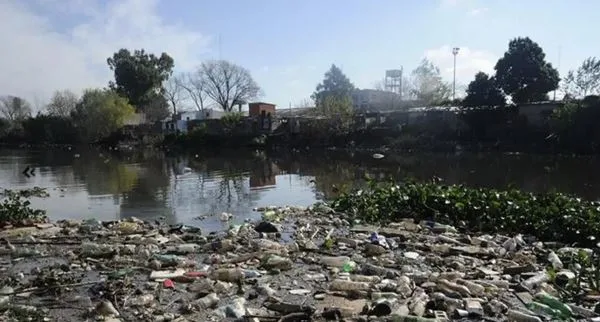
The Riachuelo River has always been a paradox, a waterway that once sustained life, now suffocating under the weight of its own history. Flowing through the heart of Buenos Aires, it carries the residue of Argentina’s industrial past, the scars of political neglect, and the hopes of communities who have waited generations for justice. For decades, the river has been known as one of the most polluted in the world. But today, the crisis unfolding along its banks is no longer just about contamination. It is about how climate change is transforming an already toxic river into a far more volatile, dangerous, and unpredictable threat.
The Riachuelo’s story is not simply a local environmental issue. It is a global warning, a case study in what happens when pollution, inequality, and climate pressures collide. It forces us to confront a truth we can no longer ignore – climate change does not create new injustices; it magnifies the ones we have allowed to fester.
A river buried under a century of neglect
To understand the Riachuelo’s present, we must confront its past. For more than a century, the river served as a dumping ground for Buenos Aires’ industrial expansion. Tanneries, petrochemical plants, metalworks, and slaughterhouses lined its banks, releasing untreated waste directly into the water. As the city grew, informal settlements emerged along the river’s edge, often without access to sanitation or clean water. The river became a repository for everything the city did not want to see.
By the early 2000s, the situation had become impossible to ignore. Residents living near the river reported alarming rates of respiratory illness, skin conditions, and gastrointestinal disease. Children played on contaminated soil; families drank water laced with heavy metals with environmental groups sounding the alarm. In 2008, Argentina’s Supreme Court issued a landmark ruling ordering the government to clean up the river, relocate families living in hazardous zones, and restore the surrounding ecosystem. It was hailed as a turning point, a moment when environmental justice finally took centre stage. But nearly two decades later, the river remains a symbol of broken promises.
The human cost of environmental injustice
Behind every polluted river is a human story. Along the Riachuelo, that story is written in the bodies of the people who live closest to the contamination.
Children growing up near the river are more likely to suffer from asthma, developmental delays, and chronic skin conditions. Adults face higher risks of cancer, neurological disorders, and respiratory disease. Many families live in precarious housing built on contaminated soil, where every rainfall threatens to flood their homes with toxic water.
Environmental injustice is not just about pollution; it is about who bears the burden of that pollution. In Argentina, as in many parts of the world, it is the poorest communities who live closest to environmental hazards. They are the ones who breathe the dirtiest air, drink the most contaminated water, and have the least political power to demand change. And now climate change is making their situation even more precarious. As environmental justice advocate María Torres explains, “The communities living along the Riachuelo are experiencing the frontline of climate inequality. They face the pollution first, and they feel the climate impacts hardest.” Her words capture the lived reality of thousands who have been left to cope with overlapping crises.
Heatwaves Are Intensifying the River’s Toxicity
Argentina has experienced some of the most extreme heatwaves in South America in recent years. Temperatures have soared well above historical averages, and the effects on the Riachuelo have been profound.
Heat accelerates the breakdown of organic waste in the river, releasing methane, ammonia, and hydrogen sulfide. These gases worsen air quality and pose direct health risks. Heavy metals become more mobile in warmer water, increasing their concentration in sediments and making them easier to ingest or inhale. Oxygen levels drop, killing aquatic life and increasing bacterial contamination.
Residents living near the river report stronger odours, more frequent respiratory issues, and worsening skin conditions during heatwaves. What was once a chronic pollution problem is becoming an acute chemical hazard triggered by climate extremes. Climate chemist Dr. Lucía Fernández notes that “when you combine extreme heat with a chemically overloaded river, you accelerate reactions that release hazardous gases. The Riachuelo is becoming more toxic because the climate is changing, not despite it.” Her assessment underscores how climate stress is reshaping the river’s chemistry in real time. The river is not just polluted; it is becoming chemically more aggressive as the climate warms.
Extreme flooding is spreading buried contaminants
Climate change is also reshaping rainfall patterns across Argentina. Buenos Aires now experiences more intense and unpredictable storms, and the Riachuelo basin is particularly vulnerable. Flooding along the river no longer just brings water, it brings decades of buried industrial waste back to the surface. Toxic sediments seep into homes, playgrounds, and streets. Heavy metals wash into groundwater with contaminants spreading into areas previously considered safe.
For families living in informal settlements along the riverbanks, this means that every storm carries the risk of displacement, illness, or long-term exposure to hazardous materials. Floodwaters turn the river’s pollution into a mobile threat, capable of reaching far beyond its channel. This is not hypothetical; it is happening now. Urban resilience expert Prof. Ana Solari warns that “flooding in the Riachuelo basin is no longer a seasonal inconvenience. It is a vector for contamination, spreading heavy metals and industrial waste into homes and groundwater.” Her warning reflects a growing scientific consensus that climate driven flooding is amplifying the river’s dangers.
Climate Inequality: When pollution and Climate Change collide
The Riachuelo has always been a story of inequality. The poorest communities live closest to the contamination, often in precarious housing with limited access to healthcare and climate change widening this gap.
Heatwaves hit hardest in neighbourhoods with little shade or green space while floods overwhelm areas with poor drainage. Relocation programs, already slow and inconsistent, struggle to keep pace with the growing risks. Families who were once told they would be moved to safer housing now face even greater uncertainty as climate pressures accelerate.
This mirrors a global pattern as pollution and climate change do not distribute themselves evenly. They settle where political power is weakest and where communities have the fewest resources to fight back. The Riachuelo is becoming a climate hotspot, where environmental injustice and climate vulnerability reinforce one another.
New contaminants are emerging in the river
While heavy metals and industrial chemicals remain the most visible threats, scientists are increasingly concerned about emerging pollutants in the Riachuelo:
- microplastics
- pharmaceutical residues
- PFAS, often called forever chemicals
- endocrine disrupting compounds
These contaminants behave differently under climate stress, with heat increasing their concentration and floods spread them into soil and drinking water. Their long-term health impacts, from hormonal disruption to cancer risk, are only beginning to be understood. The Riachuelo is no longer just a polluted river, it is a complex chemical ecosystem, evolving in dangerous ways as the climate shifts.
A global pattern of broken promises
Argentina is not alone in this struggle, around the world polluted rivers are becoming climate flashpoints.
- India’s Ganges restoration has stalled under extreme heat and monsoon flooding.
- Indonesia’s Citarum River cleanup is repeatedly undermined by industrial expansion.
- Nigeria’s Niger Delta remains contaminated despite decades of pledges.
The Riachuelo fits into a broader global pattern. Governments promise environmental restoration, but climate change accelerates the damage faster than political systems can respond. Environmental degradation is no longer a slow-moving crisis; it is a rapidly evolving emergency.
Why This Moment Matters
The Riachuelo’s crisis is reaching a tipping point. Climate change is no longer a distant threat, it is reshaping the river’s chemistry, its risks, and its impact on human health in real time. The longer cleanup efforts stall, the harder and more expensive restoration becomes.
But there is still a path forward.
Argentina has the scientific expertise, the legal framework, and the public awareness needed to act. What it needs now is urgency, a recognition that pollution and climate change are not separate issues but intertwined crises demanding a unified response.
Cleaning the Riachuelo is not just an environmental obligation. It is a climate adaptation strategy. It is a public health necessity, and it is a test of whether political promises can withstand the accelerating pressures of a warming world. The river’s future and the future of the communities who live along its banks depends on whether Argentina can meet this moment with the seriousness it demands.
Shameem Kazmi is an award-winning global business leader, author and Honorary Professor recognised for his work in science-led innovation and sustainability. With over 25 years of executive leadership experience, he has driven transformational research and development, circular economy strategy and climate-aligned growth across international markets. He is the author of When the Ocean Forgets and a UN Climate Ambassador advocating for practical, science-based climate action. Through his advisory platform ideova, he supports organisations in turning purpose into measurable commercial and environmental impact.