Turkish Spiritual Traditions Find New Relevance Among Communities in Modern Europe
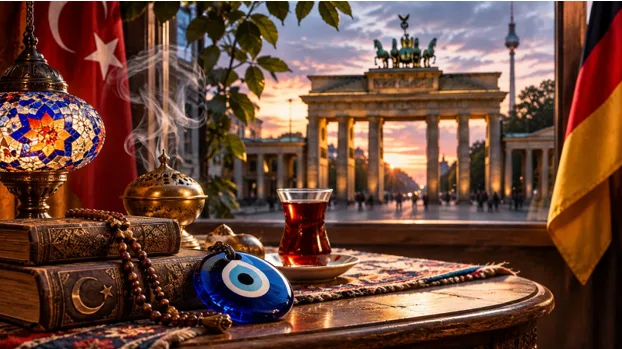
As European societies become increasingly multicultural, traditional spiritual beliefs continue to shape cultural identity, personal relationships and the ways communities seek guidance across generations.
Europe’s cultural landscape is constantly evolving. Migration, digital communication and international mobility have brought different traditions into closer contact, creating new opportunities for communities to preserve their heritage while adapting to contemporary life.
Among these traditions, Turkish spiritual beliefs occupy a distinctive place. Concepts associated with the evil eye, personal protection, love, family relationships and spiritual consultation remain familiar to many people with Turkish cultural backgrounds.
In Germany, where Turkish communities have established deep social and cultural roots, these traditions provide an interesting example of how inherited beliefs can coexist with modern European lifestyles.
Beyond their spiritual interpretations, they also reveal important connections between cultural identity, emotional well-being and the growing accessibility of traditional advisory services.
The Historical Roots of Turkish Spiritual Culture
Turkey’s spiritual heritage reflects centuries of cultural exchange across Anatolia, the Middle East, Central Asia and the Mediterranean.
Throughout history, communities have developed different ways of interpreting personal difficulties, unexpected events and emotional uncertainty.
Some traditions became closely associated with family customs, religious practices and symbolic forms of protection. Others developed around the idea of seeking advice from respected individuals believed to possess particular spiritual knowledge.
One familiar concept is nazar, commonly translated as the evil eye. In Turkish culture, the blue eye-shaped amulet remains a widely recognized symbol associated with protection against envy and misfortune.
For many people today, these objects represent cultural identity and family heritage rather than literal evidence of supernatural influence.
Traditional spiritual consultation is another element of this broader cultural landscape.
Understanding the Role of Traditional Spiritual Advisers
Within Turkish-speaking communities, the expression medyum hoca is sometimes used to describe an individual associated with traditional spiritual consultation.
The term combines culturally familiar ideas of spiritual perception and guidance with the Turkish word hoca, which can refer to a teacher, respected adviser or knowledgeable person.
In certain traditional contexts, people consult such advisers when experiencing uncertainty about relationships, family matters or personal circumstances.
These consultations may involve discussions of inherited beliefs, symbolic interpretations and spiritual traditions.
However, cultural recognition should not be confused with scientific validation. There is no reliable scientific evidence that supernatural forces determine personal relationships or that spiritual rituals can guarantee specific outcomes.
Understanding this distinction is essential when examining the place of traditional advisers in contemporary society.
For researchers and readers interested in cultural practices, these traditions provide insight into how communities respond to uncertainty and preserve familiar forms of communication.
Germany’s Turkish Communities and Cultural Continuity
Germany offers an important setting for understanding the relationship between migration and traditional cultural practices.
Turkish migration to Germany expanded significantly during the twentieth century, particularly through labor recruitment agreements and subsequent family reunification.
Over time, Turkish communities established businesses, cultural organizations, educational initiatives and social networks across the country.
Cities such as Berlin, Frankfurt, Cologne, Hamburg and Munich became important centers of Turkish-German cultural life.
Today, younger generations often navigate multiple cultural influences simultaneously. They may speak German in professional environments, maintain Turkish family traditions and participate in international digital communities.
This multicultural experience influences how inherited spiritual beliefs are understood.
Some individuals continue to value traditional consultation as a personal or cultural practice. Others approach the same subjects through historical research, psychology or cultural curiosity.
These different perspectives demonstrate that cultural traditions are not static. They change as communities encounter new ideas and social conditions.
Digital Platforms Transform Access to Cultural Information
The expansion of digital communication has changed how people discover traditional services and cultural information.
In earlier generations, knowledge about spiritual customs often circulated through family members, local communities and personal recommendations.
Today, search engines and online publications allow people to explore these subjects independently.
Someone interested in the meaning of Turkish spiritual terminology can access information without being limited to a particular neighborhood or city.
This shift has also increased the visibility of specialized cultural services.
For example, the Turkish term medyum appears in online discussions concerning traditional spiritual beliefs, personal guidance and culturally familiar forms of consultation.
Its use illustrates how traditional vocabulary can remain relevant within modern digital environments.
The internet also enables individuals living outside Turkey to access information in their preferred language, helping maintain cultural connections across national borders.
However, increased accessibility creates additional responsibilities for both publishers and service providers.
Information should be presented accurately, without misleading promises or unsupported claims.
Love, Relationships and the Search for Personal Understanding
Personal relationships are among the most common subjects explored through traditional spiritual beliefs.
Questions about love, separation, reconciliation, marriage and family expectations have appeared in cultural traditions throughout history.
In Turkish folklore, certain spiritual practices have been associated with attempts to interpret relationship difficulties or understand emotional uncertainty.
These traditions reflect a broader human desire for reassurance during periods of change.
Modern perspectives, however, emphasize that healthy relationships depend on mutual respect, informed consent, communication and personal independence.
No spiritual consultation should be represented as a proven method of controlling another person’s feelings or guaranteeing reconciliation.
For individuals experiencing significant emotional distress, appropriate professional support may provide practical and evidence-based assistance.
Traditional beliefs can be discussed respectfully while maintaining clear boundaries between cultural heritage and established psychological knowledge.
The Importance of Transparency and Responsible Consultation
As traditional advisory services become more visible online, transparency becomes increasingly important.
Consumers should be able to understand the nature of a service before making a financial commitment.
Clear descriptions, accessible communication and respect for personal privacy are important considerations when evaluating any form of consultation.
Particular caution is necessary when providers claim guaranteed results, create fear about alleged supernatural threats or pressure individuals into repeated payments.
Responsible communication should allow people to make independent decisions without manipulation.
The same principles apply to digital platforms that publish information about traditional beliefs.
Readers benefit from material that explains cultural practices without presenting unverified supernatural claims as established facts.
This approach supports both cultural understanding and informed consumer choice.
Spiritual Heritage as Part of Europe’s Multicultural Identity
European societies contain a wide variety of cultural and spiritual traditions.
Practices associated with meditation, symbolic protection, folk beliefs and personal reflection can be found across numerous communities.
Turkish spiritual customs are part of this wider cultural diversity.
Their continued visibility illustrates how migration can preserve traditions while also encouraging reinterpretation.
For some families, cultural symbols and spiritual vocabulary provide connections to previous generations. For others, these traditions serve as subjects of historical interest or opportunities for intercultural dialogue.
The significance of these practices therefore extends beyond individual belief.
They contribute to discussions about identity, belonging, language and the transmission of cultural knowledge.
Looking Ahead: Tradition in an Increasingly Connected Europe
Digital technology will continue to influence how cultural traditions are documented, discussed and shared.
Online information can help preserve knowledge that might otherwise remain confined to small communities or personal networks.
At the same time, the accessibility of information makes critical thinking and responsible communication increasingly valuable.
The future of traditional spiritual consultation in Europe will likely reflect this balance between cultural continuity and modern expectations.
Respect for heritage does not require unquestioning acceptance of every traditional claim. Equally, scientific skepticism does not prevent meaningful appreciation of cultural history.
By approaching Turkish spiritual traditions through cultural understanding, transparency and personal responsibility, European communities can continue exploring their heritage while participating fully in contemporary society.
The broader lesson extends beyond any single tradition: cultural identity and modern life need not exist in opposition. They can develop together through education, open dialogue and mutual respect.
Disclaimer: This article is intended for informational and educational purposes only. It explores Turkish spiritual traditions and their evolving cultural significance among communities in modern Europe. The content does not promote any specific religious belief or practice.