Understanding the Technology Behind Text to Song
Music creation used to require instruments, studio time, and years of practice. Today, technology has changed that landscape in remarkable ways. With the rise of artificial intelligence and machine learning, anyone can experiment with music creation. One of the most fascinating developments in this space is Text to Song technology, a system that transforms written words into complete musical compositions.
But how does it actually work? How can a simple paragraph of text become a melody with rhythm, harmony, and structure? In this article, we’ll explore the technology behind text-to-song systems, how they function, and what makes them so powerful.
The Evolution of Music Creation
For centuries, composing music required knowledge of music theory, instruments, and composition techniques. Even digital music production tools, while powerful, still demanded a learning curve.
The introduction of AI-based music systems marked a turning point. Instead of manually arranging notes and chords, users can now input plain text such as lyrics, a poem, or even a short description and the system generates a musical arrangement around it.
This shift is not about replacing musicians. Instead, it’s about expanding creative possibilities and lowering barriers for people who want to explore music creation without technical training.
What Is Text-to-Song Technology?
At its core, text-to-song technology combines natural language processing (NLP) and music generation algorithms. These systems analyze written text and convert it into structured musical output.
Here’s what typically happens behind the scenes:
- Text Analysis: The system processes the input text to understand tone, structure, and emotional cues.
- Lyric Structuring: If the input isn’t already formatted like lyrics, the AI restructures it into verses, choruses, and bridges.
- Melody Generation: A melody is created based on rhythm patterns and syllable stress.
- Harmony & Arrangement: Chords and instrument layers are added.
- Audio Rendering: The final song is produced as an audio file.
The result? A complete track generated from simple text input.
Natural Language Processing: The First Step
The foundation of text-to-song systems lies in Natural Language Processing (NLP). NLP allows computers to understand human language.
When you enter text into a system, it doesn’t just read words, it analyzes:
- Sentence length
- Emotional tone
- Word stress patterns
- Repetition
- Rhyme potential
For example, shorter lines may suggest faster rhythm patterns, while longer sentences may translate into smoother melodic phrasing. Emotional keywords influence the mood of the music whether it sounds uplifting, reflective, calm, or energetic.
This linguistic breakdown is what allows the technology to map language into musical structure.
Turning Words into Rhythm
Music is deeply connected to rhythm, and rhythm is closely tied to syllables.
AI systems break text into syllables and determine natural stress patterns. In English, some syllables are naturally emphasized. For instance:
- “be-LIEVE”
- “CRE-a-tive”
- “to-MOR-row”
These stress points guide where stronger musical beats are placed. This ensures that the melody flows naturally with the words rather than sounding forced or robotic.
Advanced systems even adjust tempo depending on the overall emotional tone of the text. Energetic language may result in faster beats, while reflective text might produce slower, softer rhythms.
Melody Generation Through Machine Learning
Melody creation is one of the most impressive aspects of text-to-song systems.
AI models are trained on thousands (sometimes millions) of musical samples. These include:
- Chord progressions
- Vocal melodies
- Song structures
- Genre-specific patterns
Through machine learning, the system identifies common musical relationships. When generating a new song, it doesn’t copy existing tracks. Instead, it predicts note sequences that fit the analyzed text and chosen style.
The result is original music built from learned musical principles.
Harmony and Instrumentation
After melody comes harmony. Harmony adds depth and emotion to a song.
The system selects chord progressions that match:
- The mood of the lyrics
- The genre preference (pop, acoustic, electronic, etc.)
- The melodic contour
Then it layers instruments such as:
- Piano
- Guitar
- Drums
- Bass
- Synth pads
These elements are arranged automatically to create a full musical experience.
Because everything is processed digitally, users can often customize the output style before generating the final track.
Voice Synthesis and Vocal Rendering
Some advanced systems also include AI-powered voice synthesis. This allows the generated lyrics to be sung rather than just played instrumentally.
Voice synthesis works by training models on vocal recordings. The AI learns how human voices handle:
- Pitch transitions
- Vibrato
- Breathing patterns
- Emotional expression
The goal is to produce vocals that sound natural rather than robotic.
While this technology is still evolving, the improvements over recent years have been remarkable.
Real-Time Music Creation
One of the most exciting aspects of modern AI music tools is speed. You can:
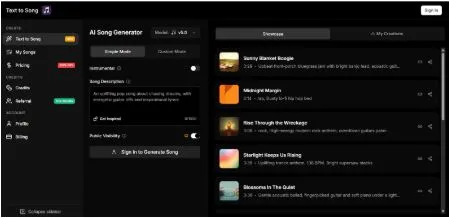
Create songs with AI in seconds. Turn text or lyrics into music online. Generate original songs fast, no downloads required, no musical experience required.
Because these systems are cloud-based, they process everything on remote servers. That means users don’t need powerful computers or music software installed locally.
This accessibility is what makes text-to-song platforms so transformative.
The Role of Deep Learning Models
Deep learning is a subset of machine learning that uses layered neural networks. These networks are particularly effective at recognizing patterns including musical patterns.
In text-to-song systems, deep learning models handle:
- Predicting melody sequences
- Matching chord progressions
- Maintaining song structure
- Adjusting dynamic variations
These models learn from massive datasets. The more diverse the training data, the better the system becomes at generating varied and natural-sounding music.
How Song Structure Is Created
Songs typically follow recognizable formats:
- Verse
- Chorus
- Verse
- Chorus
- Bridge
- Final Chorus
AI systems are trained to replicate these patterns. When analyzing text, the system may:
- Identify repeating lines suitable for a chorus
- Break longer text into verse segments
- Create a bridge for contrast
This structured approach helps the final output feel like a complete, polished composition.
Customization and User Control
Although the process is automated, many platforms allow user input beyond just text. Users may be able to select:
- Genre
- Mood
- Tempo
- Instrument preference
- Vocal type
This flexibility makes the tool useful for various purposes from personal creative projects to background music for videos or presentations.
The balance between automation and customization is what makes text-to-song technology practical and appealing.
Limitations and Ongoing Improvements
While impressive, text-to-song systems are not perfect.
Some limitations include:
- Occasional unnatural phrasing
- Limited emotional nuance compared to human performers
- Genre constraints depending on training data
However, as models improve and datasets expand, these systems continue to become more sophisticated.
The gap between AI-generated music and traditionally composed music is steadily narrowing.
Why This Technology Matters
Text-to-song technology represents more than just convenience. It reflects a broader shift toward democratized creativity.
People who once felt excluded from music creation due to lack of training or resources can now experiment freely. Students, content creators, educators, and hobbyists all benefit from tools that simplify the creative process.
Rather than replacing musicians, these systems often act as creative partners offering inspiration, drafts, or starting points that can later be refined by human artists.
The Future of Text-to-Song Systems
Looking ahead, we can expect:
- More realistic AI vocals
- Greater genre diversity
- Improved emotional expression
- Real-time collaborative features
- Integration with video and multimedia platforms
As AI research advances, the ability to translate human ideas into music will only become more refined.
Final Thoughts
Understanding the technology behind text-to-song systems reveals how far artificial intelligence has come. By combining natural language processing, deep learning, and music generation algorithms, these platforms can transform written words into fully structured musical pieces.
Whether you’re exploring creativity for fun or experimenting with new production tools, text-to-song technology opens the door to musical expression without traditional barriers.