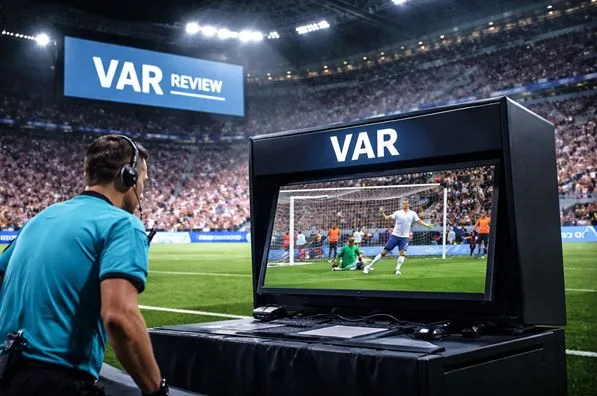
VAR technologies: Have they made football fairer?
Video Assistant Referee systems entered top-level football with a clear promise: reduce clear and obvious errors and protect the integrity of results. Supporters saw a tool that would correct missed offsides, unseen fouls, and mistaken identity. Critics warned that constant reviews would interrupt the flow and shift too much authority to screens rather than referees on the pitch. Several seasons into widespread use, the debate continues. Data shows measurable improvements in decision accuracy, yet frustration remains strong in stadiums and on social media. The question deserves a careful, fact-based answer: have VAR technologies made football fairer?
Online gambling platforms operate under strict regulatory frameworks in many jurisdictions. The online casino ringospin functions within this digital gambling sector and attracts discussion in debates about transparency, algorithmic oversight, and user protection. Analysts often examine how such platforms handle fairness audits, payout verification, and compliance controls. Regulators require clear reporting standards, identity verification procedures, and monitoring systems to prevent fraud. Researchers who study technology governance sometimes reference gambling platforms when discussing automated systems and human supervision. These comparisons focus on oversight structures rather than promotion, and they highlight how digital systems interact with regulatory standards.
How VAR works in practice
VAR teams monitor matches from a central room equipped with multiple camera feeds and replay tools. The system checks four categories:
- Goals and build-up incidents
- Penalty decisions
- Direct red cards
- Mistaken identity
When the video team spots a potential error, it alerts the referee. The referee can accept the advice or review footage on a pitch-side monitor. The protocol limits intervention to clear and obvious mistakes, not subjective disagreements.
Football authorities introduced VAR in major tournaments and leagues after testing phases in domestic competitions. International tournaments soon followed, including the FIFA World Cup and the UEFA European Championship. Domestic leagues such as the Premier League and continental competitions like the UEFA Champions League adopted the system as well. By the early 2020s, most elite competitions had integrated video review into their officiating structure.
Accuracy and measurable impact
Statistical reports from governing bodies show that VAR increases the percentage of correct key decisions. Before its introduction, referees achieved accuracy rates in the mid-90 percent range for major incidents. After implementation, that figure climbed closer to 98 or 99 percent in several competitions.
A simplified comparison illustrates the trend:
| Competition Level | Accuracy Before VAR | Accuracy With VAR |
| International tournaments | ~95% | ~99% |
| Top domestic leagues | ~94–96% | ~98–99% |
These numbers indicate fewer incorrect goals awarded, fewer missed red cards, and fewer wrongly denied penalties. Teams that once suffered from blatant errors now see more corrections. In that sense, VAR improves procedural fairness: similar incidents receive similar scrutiny, and referees gain support from multiple camera angles.
However, accuracy statistics do not capture the full experience. Football does not rely only on numerical correctness. The sport thrives on rhythm, emotion, and immediate reactions. Any assessment must weigh improved precision against changes in how matches unfold.
Offside decisions and the search for precision
Offside calls sparked some of the strongest reactions. Video review allows officials to draw digital lines and determine exact positions at the moment of the pass. The technology detects marginal differences measured in centimeters. Supporters of strict enforcement argue that clear measurement ensures equality. If the rules define offside by body position, then technology should apply that rule without guesswork.
Opponents question whether such fine margins reflect the spirit of the law. When a player’s shoulder crosses the line by a fraction, many fans feel that punishment exceeds the advantage gained. These marginal rulings create tension. People ask whether football benefits from microscopic analysis of body parts.
Leagues have tried to address this concern. Some competitions adjust guidelines to favor attacking play in tight cases. Others refine the graphics shown to viewers to explain decisions more clearly. These adjustments show that fairness involves interpretation as well as measurement.
Penalties and subjective judgment
Penalty incidents often depend on interpretation rather than clear facts. Handball rules have changed multiple times in recent years. VAR reviews handball situations, but it cannot remove ambiguity from the law itself. When lawmakers alter criteria—such as arm position or intent—referees and video officials must apply complex guidelines in real time.
Critics argue that VAR exposes gray areas instead of resolving them. A slow-motion replay may highlight contact that seemed minor at full speed. The referee must decide whether that contact justifies a penalty. Even with multiple angles, disagreement persists.
Still, video review reduces outright mistakes. When a defender clearly trips an attacker and the referee misses the contact, VAR can correct the call. In high-stakes matches, such corrections protect the credibility of outcomes. Fans may disagree with interpretations, but fewer matches hinge on unseen fouls.
Match flow and emotional impact
Football values continuous action. Long interruptions disrupt momentum and affect players’ focus. Early seasons of VAR saw lengthy reviews that stretched for several minutes. Spectators in stadiums often received limited information, which fueled frustration.
Authorities have shortened review times by refining communication protocols. Officials now aim to complete most checks quickly, with only complex cases requiring extended review. Data from several leagues shows that the average delay per match remains under a few minutes. Yet perception matters as much as duration. A single long stoppage during a dramatic moment can shape public opinion more than ten efficient checks.
Emotion also plays a role. When a team celebrates a goal and VAR later cancels it, joy turns into disappointment. Some supporters feel that spontaneous celebration has diminished. On the other hand, corrected decisions prevent the injustice of an illegitimate goal standing. The balance between emotional intensity and fairness remains delicate.
Transparency and communication
Early criticism focused on limited transparency. Fans often did not know why a decision changed. Leagues have introduced several measures to improve clarity:
- On-screen graphics that explain the reason for review
- Stadium announcements that describe the final decision
- Publication of audio recordings between referees and VAR teams
These steps aim to build trust. When people understand the reasoning process, they accept outcomes more readily, even if they disagree. Clear communication strengthens perceptions of fairness.
Football still trails some other sports in this area. Some competitions hesitate to broadcast live audio or detailed explanations. Consistent openness could reduce suspicion and conspiracy theories. Trust forms a key element of fairness.
Influence on referees
VAR changes the role of referees. Some argue that officials rely too heavily on video assistance and hesitate to make bold decisions. Others claim that referees now show more confidence, knowing that support exists for clear errors.
Training programs have evolved to reflect the new environment. Referees practice communication with video teams and learn to manage reviews without losing authority. The protocol still places final responsibility on the on-field official. This structure maintains human judgment at the center of the game.
However, constant scrutiny increases pressure. Every major decision undergoes replay from multiple angles. Social media amplifies criticism. Referees must handle this environment with composure. Fairness requires not only accurate calls but also consistent standards across matches and competitions.
Global consistency
VAR aims to standardize decision-making worldwide. International tournaments now use similar protocols, which reduces discrepancies between competitions. A handball in one major league should receive similar treatment in another.
In practice, differences persist. Domestic interpretations vary, and implementation quality differs across regions. Some leagues invest heavily in camera infrastructure and training, while others operate with fewer resources. These gaps affect review quality and speed.
Global governing bodies continue to refine guidelines and share best practices. The long-term goal involves uniform application of laws. Progress exists, but full consistency remains incomplete.
Public perception and data trends
Surveys of fans and players reveal mixed opinions. Many acknowledge that VAR corrects clear mistakes. At the same time, a significant portion believes that it creates new controversies, especially regarding handball and offside margins.
Research into match outcomes suggests that VAR reduces home advantage slightly. In earlier eras, crowd pressure may have influenced referees. Video oversight limits that effect. Teams receive more equal treatment regardless of venue. This shift supports the argument that VAR enhances structural fairness.
Advantages and drawbacks at a glance
Key advantages:
- Fewer clear errors in goals, penalties, and red cards
- Greater accountability through video evidence
- Reduced influence of crowd pressure
- Improved consistency in major tournaments
Key drawbacks:
- Interruptions that affect match rhythm
- Disputes over marginal offside calls
- Ongoing ambiguity in handball interpretation
- Frustration when celebrations end after review
These points show that fairness operates on multiple levels: procedural accuracy, emotional experience, and perceived legitimacy.
Has VAR made football fairer?
If fairness means fewer factual mistakes, then the answer leans toward yes. Data shows higher accuracy in key incidents. Teams lose fewer matches due to missed offsides or unseen fouls. Major tournaments now rely on video checks to confirm goals and red cards, which strengthens confidence in results.
If fairness includes clarity, consistency, and shared understanding of rules, the picture grows more complex. Laws of the game continue to evolve, especially regarding handball. Marginal offside decisions challenge common sense perceptions. Communication still varies across competitions.
Football does not operate in a laboratory. It unfolds in crowded stadiums with intense pressure and high stakes. Technology cannot eliminate disagreement, because interpretation remains central to many calls. Yet VAR narrows the margin for obvious injustice.
The future likely holds refinements rather than removal. Semi-automated offside systems aim to speed up decisions. Clearer handball guidelines may reduce confusion. Enhanced communication could strengthen trust. These developments suggest that football authorities see video review as a permanent feature.
In the end, fairness does not require perfection. It requires credible processes and consistent standards. VAR contributes to those goals by correcting clear mistakes and increasing accountability. It also introduces new tensions that officials must manage carefully. Football today differs from the game of previous decades. Video screens stand alongside referees and players. Supporters still debate every major call, and that debate forms part of the sport’s culture. However, fewer matches turn on errors that cameras could easily reveal. On balance, VAR technologies have moved football closer to procedural fairness, even if they have not settled every argument.