VideoAny’s “Video-First Studio” Positioning: What the Copy Reveals
If you want to generate clips end-to-end, start with the AI Video Generator . If your workflow begins with a still and you want motion fast, use Image To Video , Text To Image .
A clear thesis: video comes first
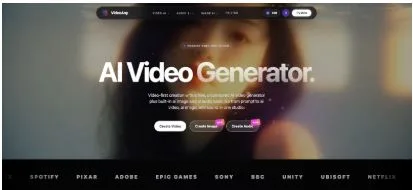
The landing-page messaging is built around a single idea: “video-first creation.” The hero headline doesn’t lead with model names or technical jargon. It leads with outcome—AI video—then reinforces that VideoAny is a studio, not just a one-off generator. That framing matters because it sets expectations: you’re meant to create, iterate, and manage outputs like a production workflow, not run a single prompt and leave.
“Free” + “minimal filtering” as a growth hook
VideoAny repeatedly pairs “free” with “uncensored” / “minimal filtering,” while also mentioning responsible-use guidelines and a content policy. This is a deliberate balance: reduce friction for legitimate creative work, but signal that the platform still has boundaries. As positioning, it’s meant to differentiate from tools that feel overly restrictive without claiming “anything goes.”
A studio that bundles video, image, and audio
The features section groups AI Video, AI Image, and AI Audio as three pillars, with audio described as “built for ai video.” That’s an important nuance: image and audio aren’t presented as separate products, but as supporting engines that make video output more complete. For creators and teams, the value is fewer handoffs: less exporting between tools, fewer mismatched styles, and more consistent assets inside a single workspace.
The nav hints at a broader platform strategy
The navigation lists many tools, effects, and models. That suggests a dual strategy: a “studio” experience for repeat users and a “tool directory” experience for search-driven visitors who land on a specific capability. In short: VideoAny is positioning itself as both a video-first workspace and a growing catalog of AI utilities.
What “uncensored” likely means in practice
The copy repeatedly pairs “minimal filtering” with “responsible-use guidelines.” Taken together, the promise is not “no rules,” but “fewer unnecessary blocks for legitimate creation.” For users, that translates into a smoother ideation loop: you can explore visual styles, camera language, and storytelling variants without constantly rephrasing prompts. At the same time, the language makes it clear that policy still applies and users must own (or have permission for) the content they upload.
Who this positioning is built for
VideoAny’s wording speaks to three groups:
- – Creators who need speed and iteration for short-form content
- – Marketers and brands who want many versions for ads and social
- – Teams who prefer one workspace for video, image assets, and audio
If you’re producing “video-first” content weekly, the strongest advantage isn’t any single feature—it’s the workflow: generate, track, reuse prompts, and keep outputs organized inside one studio.
How to read the feature set through this lens
If “video-first” is the center, then image and audio become production supports: images help you lock style and build consistent thumbnails and assets; audio helps you finish clips with music, voice, or SFX. The copy is essentially telling you to pick an entry point (text, image, or audio), but always finish with motion content you can publish.