
Warm Air From the Vents, Ice on the Line Set, Water Under the Air Handler: AC Repairs Brooklyn Homes Put Off Too Long
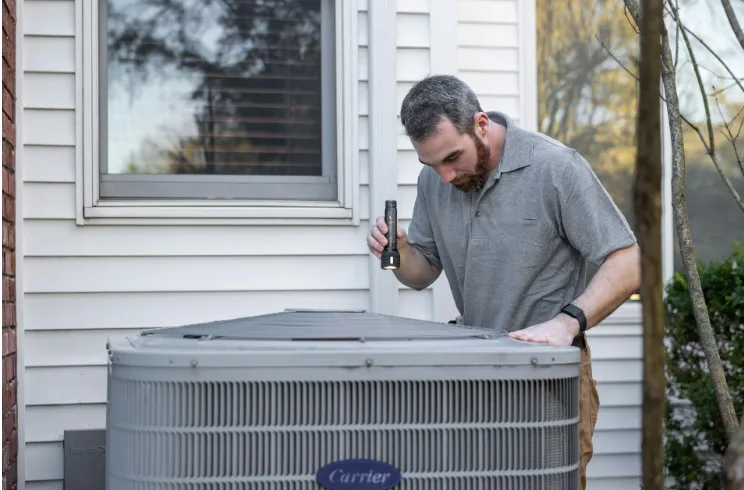
The air coming out of the registers in a Clinton Hill duplex has been a little warm since June. The copper line behind the condenser on the roof wears a sleeve of ice by 3 p.m. A puddle shows up under the air handler in the hall closet every few days and gets wiped up. None of it stopped the system, so none of it got a call. MJ HVAC Brooklyn, 1290 Fulton St, Brooklyn, NY 11216, (929) 405-1919, gets the call in the first heat wave of July when all three turn into one dead system, and an HVAC Contractor Brooklyn homeowners bring in at that point is looking at a bigger ticket than the one in June.
Warm Air From the Vents
The blower runs, the condenser runs, and the air is not cold. A weak dual run capacitor lets the compressor hum without starting, so the fan moves air across a coil that is doing nothing. A pitted contactor does the same. A condenser coil packed with cottonwood and street grit from a Fulton Street rooftop cannot shed heat, and the compressor trips on its internal overload after ten minutes. A low refrigerant charge from a slow leak cools a little, then less each week. The capacitor is a 20-minute repair. The coil is a cleaning. The leak is a search, and the search comes before any refrigerant goes in. A condenser on a Bed-Stuy roof gets its coil rinsed from the inside out every spring, since the deck is the only place anybody would notice the fluff.
Ice on the Line Set
Ice on the suction line and the evaporator coil comes from two directions. Low airflow across the coil, from a filter nobody changed, a blower wheel caked with dust, or a return in a brownstone closet choked by the coats hanging in front of it. Or low refrigerant, which drops the coil temperature below freezing. Either way the system gets shut off to thaw, and running it frozen sends liquid refrigerant back to the compressor, which is how a filter problem becomes a compressor problem. An iced line set on a roof condenser in Park Slope is visible from the deck, and it is the cheapest warning the system gives.
Water Under the Air Handler
The evaporator coil pulls gallons of water out of Brooklyn humidity every day, and the water runs down a PVC condensate line that grows algae. The line clogs, the pan fills, and in a brownstone where the air handler sits in a closet on the top floor or in the cockloft above the ceiling, the overflow comes through the plaster of the bedroom below. A float switch in the pan shuts the system down before that. A secondary pan under a cockloft unit catches what the primary misses. Clearing the line takes a wet vac at the outside end. Adding the float switch takes an hour and saves a ceiling. The clog comes back every summer without a tablet in the pan or a cup of vinegar down the line in May.
Mini Split Heads That Drip or Smell
A wall unit dripping down the wall has a clogged condensate line or a blower wheel coated in dust and mold, the product of eight months of running without the washable filters being rinsed. The smell when it starts in May is that coating. A deep clean of the wheel and the coil fixes both. An outdoor unit that trips its breaker has an inverter board on the way out or a compressor behind it, and the board is a third of the unit’s price. Error codes on the head point at sensors or at the communication cable, which a squirrel on a rear-yard line set cover has chewed more than once.
Con Ed Voltage, Heat Waves and the Boards That Die
Con Ed drops voltage on Brooklyn feeders during heat waves, and in July 2019 cut power to tens of thousands of customers in Flatbush and Canarsie on purpose to protect the grid. Low voltage and the surge when it comes back kill capacitors, contactors and the inverter boards in mini splits and variable-speed condensers. A surge protector at the disconnect or the panel costs a fraction of one board. Window units survive it. Inverter equipment does not.
Refrigerant and the Systems Worth Charging
R-22 systems, mostly installed before 2010, run on a refrigerant that stopped being made in 2020 and now costs enough per pound that a leak repair rarely pays. R-410A replaced it and is being phased down, with new equipment since 2025 shipping on R-454B or R-32. A 2008 R-22 condenser on a brownstone roof with a leaking coil is a replacement conversation, and the replacement needs a crane or a hoist on a block where the only access is through the house.
Thermostats, Fuses and the Easy Ones
A thermostat calling for cool with nothing responding sometimes means a blown 3-amp fuse on the air handler board from a thermostat wire pinched during a renovation. A smart thermostat without a common wire drops off and stops calling. A failed transformer darkens the whole control side. All cheap, all checked before the panel comes off the condenser.
Repair or Replace
A ten-year-old R-410A system with a bad capacitor gets the capacitor. A sixteen-year-old R-22 system with a leaking evaporator coil gets replaced. A compressor out of warranty on either pushes toward replacement, since the compressor is most of the price of a condenser. New equipment carries SEER2 ratings a 2008 unit never saw, and the Con Ed bill over a Brooklyn summer shows the difference.
AC Repair Cost in Brooklyn
A diagnostic and a capacitor is the bottom of the range. A coil cleaning, a condensate line clearing and a float switch sit just above. A leak search with a repair and a recharge is the middle. A condenser fan motor, a blower motor or an evaporator coil moves toward the top. A roof condenser replacement with the hoist is its own number. Emergency rates apply on heat wave weekends and the schedule fills by noon.
MJ HVAC Brooklyn at 1290 Fulton St repairs central air, ductless and rooftop systems across Clinton Hill, Bed-Stuy, Park Slope, Crown Heights, Fort Greene and Williamsburg. (929) 405-1919.
MJ HVAC Brooklyn
1290 Fulton St, Brooklyn, NY 11216
(929) 405-1919
https://mjhvacbrooklyn.com