What Are Pocket Door Systems? A Practical Home Guide
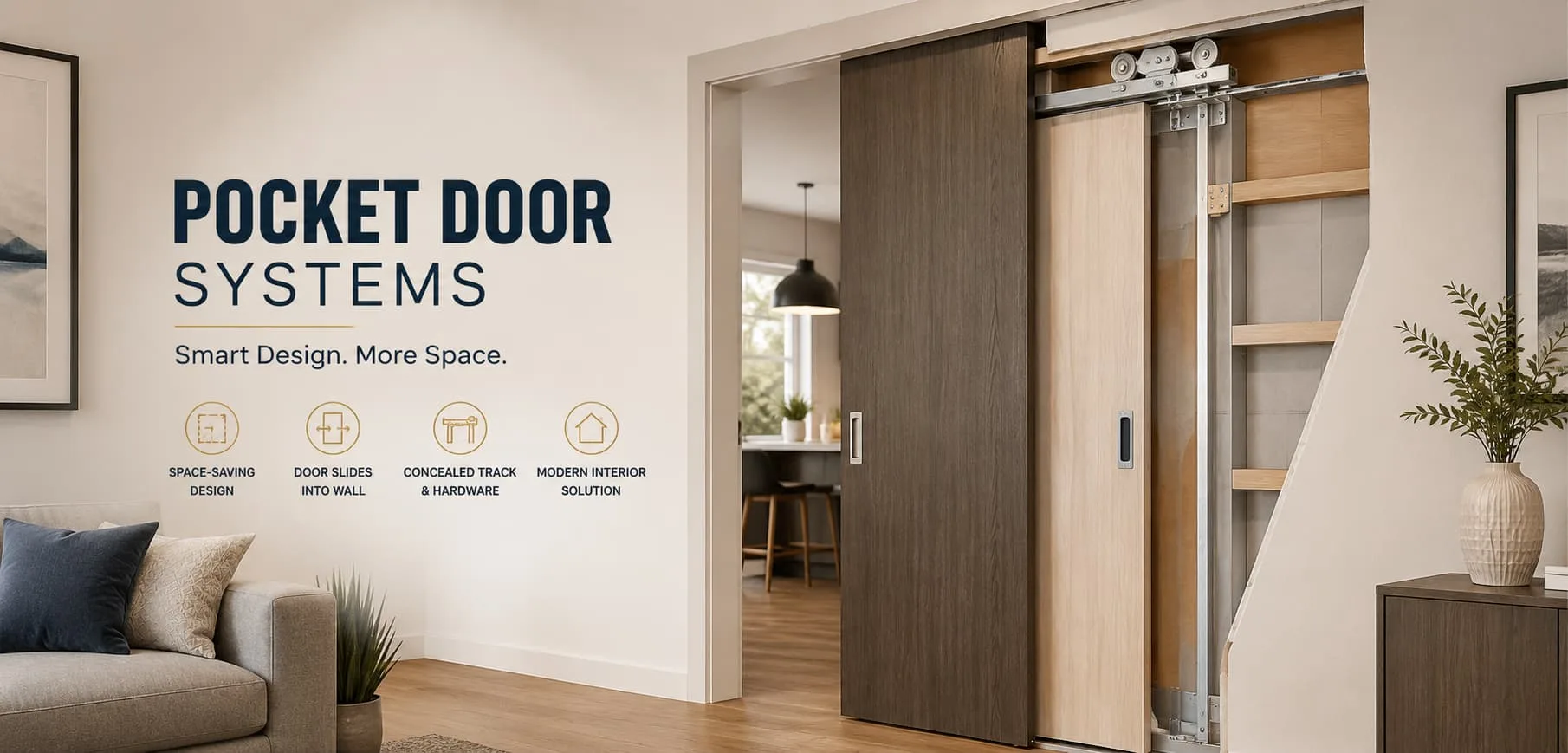
The traditional hinged door requires enough space for the door to swing, making furniture placement difficult in smaller spaces. Hidden sliding doors take an alternative approach, by sliding to the wall, instead of becoming a floor-to-ceiling space once the door is open.
This style is popular with homeowners seeking space-saving pocket door systems without losing the practical appearance and finish. The door slab is only one component of the setup. Frame, track hangers, rollers, and guides have to cooperate.
Knowing these elements can help homeowners, remodelers, and contractors to make better decisions prior to modifying an entranceway.
Definition & How They Fit Into Modern Home Design
Pocket doors are internal sliding doors that slide inside a special cavity in the wall. The moment the door opens, the majority or even all the slab vanishes, and the entrance is left free of obstruction.
So, how pocket doors work in modern homes comes down to a simple movement. Hangers connect the top of the door to rollers that travel along an overhead track. The track sits within a framed pocket, allowing the door to move smoothly between its open and closed positions.
Unlike a standard hinged door, this design does not need a swing area. It can therefore make furniture placement easier and create a more open visual layout.
However, prior to the installation, it is important to conduct an in-depth assessment. Wall thickness, framing, plumbing, and electrical wiring, as well as structural specifications will determine if the layout will work for the particular space. A suitable frame and hardware combination also needs to match the door dimensions and weight.
Primary Components of a Pocket Door System
Smooth operation depends on several parts working together. A pocket door system range includes complete pocket door kits designed for different wall constructions, including wood and metal stud configurations. The kits incorporate structural framing components, tracks, and door-hanging hardware.
Track and rollers
The overhead track provides the path along which the door travels. Rollers or hangers connect the door to this track and carry its weight during opening and closing.
A properly matched pocket door track and roller system can make a noticeable difference in everyday operation. Buyers should check the door’s width, thickness and weight against the hardware’s rated capacity rather than choosing components based only on appearance.
Door frame and split jamb
The frame creates the concealed pocket where the door travels. Structural uprights form the sides of this cavity while also providing surfaces for attaching the surrounding wall finish.
A pocket door frame and hardware kit should suit the actual wall construction. Different framing arrangements require different solutions, so a kit designed for one wall type should not automatically be treated as suitable for another.
Pull handles and locking mechanisms
Because the door disappears into the wall, conventional projecting handles do not always work well. Recessed pulls permit users to manage the door without blocking the door.
They can also be used in bathrooms, bedrooms, and other rooms in which doors need to be shut with security. Pocket door hardware for interior doors should match the slab, intended use, and locking requirements.
The finishing hardware matters too. A comfortable pull, suitable guide and compatible latch can make everyday use feel much more natural.
Pocket Doors vs Standard Sliding Doors: Key Differences
Both styles slide instead of swinging. They use the walls in a different way.
| Feature | Pocket door | Surface-mounted sliding door |
|---|---|---|
| Door movement | Moves into the wall cavity | Moves along the wall surface |
| Wall requirement | Needs a suitable internal cavity | Needs clear wall space beside the opening |
| Appearance | Mostly concealed when open | Remains visible when open |
| Installation | Requires careful wall and frame planning | Usually involves less internal wall modification |
| Furniture flexibility | Can free wall and floor space around the opening | The door can limit usable wall space |
Neither option works better for every project. Pocket doors are a great option if the wall has an appropriate cavity. If the homeowner prefers a more concealed look, surface-mounted doors can be a good fit for a wall that is not big enough to allow the internal framing.
The key is to match the door’s style with the building structure, rather than choosing only aesthetics. Both provide room-saving doors, but in different ways.
Advantages and Disadvantages of Pocket Doors
Pocket doors are a great solution to issues with space, but they need more thought than simply replacing a hinged door.
Space-saving benefits
The biggest advantage comes from eliminating the door swing. When the door sits inside the wall, the surrounding floor area remains available.
This can offer several practical benefits:
- More freedom when arranging furniture
- No door swing into a narrow passage
- Better use of limited floor space
- A cleaner appearance when the door stays open
- Greater flexibility around furniture and fixtures
These benefits make concealed sliding doors worth considering during renovations where every usable centimeter matters.
Some homeowners also prefer the uninterrupted appearance created when the door disappears. The result can feel less visually crowded, particularly around compact openings.
Installation and soundproofing trade-offs
Installation needs more planning because the mechanism sits inside the wall. Existing plumbing, electrical services, and framing can affect the available space.
The wall assembly also influences privacy and sound control. A pocket door does not automatically provide the same acoustic performance as every hinged-door setup. The door slab, seals, guides, frame and surrounding wall construction all contribute to the result.
For rooms where privacy matters, consider the complete assembly rather than the door alone. Discuss the desired level of privacy, wall construction, and suitable hardware before installation.
Some systems also make future maintenance easier.
Types of Pocket Door Hardware Available
Hardware varies according to the door configuration, size, weight, and wall construction. Common categories include:
- Standard single-door hardware
- Double or bi-parting door hardware
- Heavy-duty hanger and track options
- Quick-release hanger systems
- Top-mount hanger configurations
- Catch-and-close mechanisms
- Recessed pulls and privacy locks
- Guide systems and finishing components
The best hardware for pocket doors depends on the installation rather than a single universal specification.
For single and double pocket door hardware, check whether the configuration requires one complete kit or two single kits with an additional joiner component.
Where to Buy Pocket Door Systems & Installation Kits
Start with specifications rather than price. A pocket door installation kit for interior doors needs to match the actual opening and wall construction.
Before ordering, check:
- Door width and height
- Door weight
- Door thickness
- Wall construction
- Required track length
- Hardware capacity
- Included components
- Installation requirements
- Warranty and technical support
- Replacement-part availability
A complete kit may include structural framing, track, hangers, guides and related components, while some finishing parts may require separate ordering.
Canadian stores also offer sliding-door and pocket-door frame hardware; however, the specs vary with respect to the items.
In the case of a remodeling project that requires changes to the wall, unfamiliar framing, or structural problems, expert installation is a good way to save money and avoid expensive problems. Be sure to follow the latest manufacturer installation guidelines as well as the specifications for its products.
Is a Pocket Door Right for Your Home?
The sliding doors that are concealed can create an indoor layout that is more effective while also reducing the area required to make a conventional door swing. It can also create a cleaner appearance when open.
However, the wall structure, door dimensions, weight, and hardware all matter. An appropriate frame and measured track will ensure more efficient daily operation. Likewise, an intelligent plan can make any future maintenance easier.
Before purchasing, make sure to check the full specifications and installation specifications. Being aware of the best pocket door system that is suited to the wall structure, room and your daily expectations can help make sure that the installation you choose works in the same way as it appears.
FAQs
How do pocket door systems actually work?
Pocket door systems setup uses hangers or rollers connected to an overhead track. The door travels along the track and moves into a framed wall cavity, creating the concealed, space-saving movement.
Can any wall support a pocket door?
Not every wall suits this design. Existing framing, plumbing, electrical wiring, wall thickness and structural requirements can affect installation. Assess the wall before removing finishes or ordering a frame.
Are pocket doors difficult to maintain?
Quality hardware can provide dependable operation, but access to rollers and track matters. Choose a system with practical maintenance features so future adjustments or repairs remain manageable.
What makes pocket door systems different?
The main difference lies in where the door travels. It moves into the wall cavity instead of remaining visible beside the opening, which can free useful wall and floor space.
Do pocket doors provide enough privacy?
Privacy is contingent on the door slab, frame, seals, and door latch, as well as the overall construction of the wall. Think about these parts together in particular for bathrooms, bedrooms, and any other room that requires privacy.