What Does “Inoperable” Liver Cancer Mean Today?
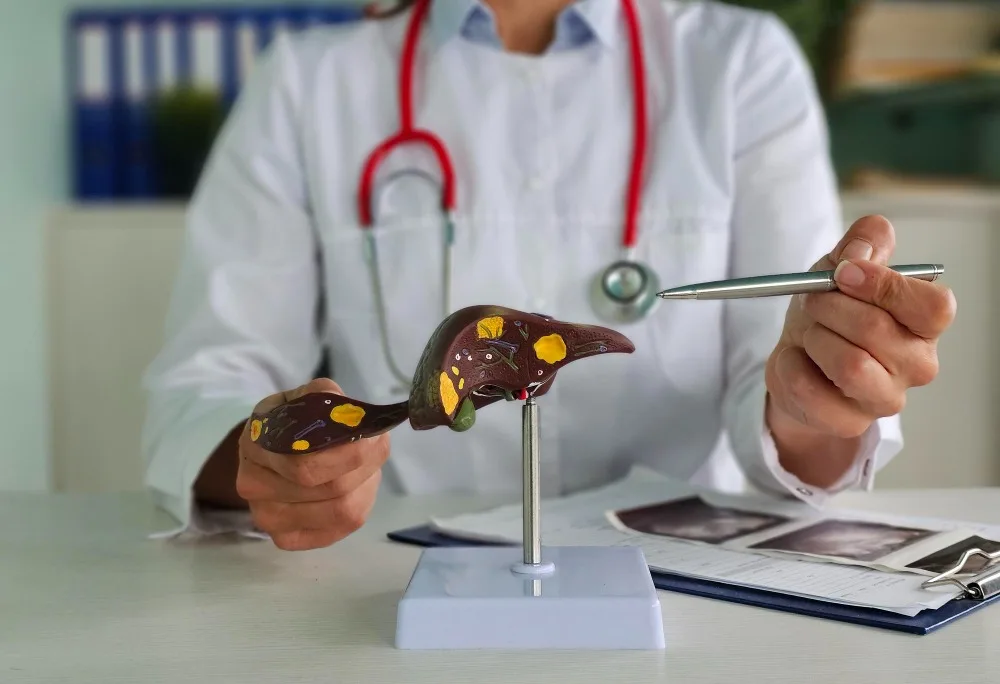
A liver cancer diagnosis often brings one primary question to mind: can it be removed with surgery? For decades, surgical resection was the main curative option. Yet, many patients are not candidates for surgery due to a tumor’s size, location, or the patient’s underlying liver health. This reality can feel like a dead end, leaving patients and their families searching for other paths.
The good news is that the treatment landscape has changed dramatically. The conversation has shifted from “Can we cut it out?” to “How can we treat it right where it is?” This evolution in care means that a search for prostate artery embolization near me can lead to treatments that fall under a specialty called interventional radiology. These techniques use advanced imaging to guide tiny catheters through blood vessels directly to the target area, delivering treatment with remarkable precision.
This approach, known as locoregional therapy, aims to destroy the cancer while preserving as much healthy liver tissue as possible. It opens up effective options for people who were previously told their tumors were untreatable. It represents a fundamental change in how clinicians can manage complex liver cancers, often with fewer systemic side effects than traditional chemotherapy.
Quick answer: Minimally invasive, image-guided therapies are transforming liver cancer care. Procedures like radioembolization and chemoembolization deliver treatment directly to tumors through the liver’s blood supply, making them a primary option for cancers that cannot be removed surgically.
What’s inside
- What Is Interventional Radiology?
- How Do Embolization Therapies Work?
- Radioembolization vs. Chemoembolization: What’s the Difference?
- Who Is a Candidate for These Treatments?
- Key Questions to Ask Your Medical Team
- Frequently Asked Questions
────────────────────────────────────────
What Is Interventional Radiology?
This medical specialty uses imaging techniques like fluoroscopy (a type of real-time X-ray) and CT scans to perform minimally invasive procedures. Interventional radiologists, or IRs, are physicians trained to navigate the body’s vascular system and other pathways to treat conditions without major surgery. For liver cancer, they act like navigators, guiding tiny instruments directly to the source of the problem.
The core idea is to use the body’s own highways, its arteries and veins, to reach the target. An IR can insert a catheter, a thin flexible tube no wider than a piece of spaghetti, into an artery in your wrist or groin. From there, they guide it through your vascular system until it reaches the specific artery feeding the liver tumor. This allows for highly targeted treatment that spares surrounding healthy tissue.
This approach avoids large incisions and the long recovery times associated with open surgery. Because the procedures are performed through a tiny entry point in the skin, patients often experience less pain and can return to their normal activities much faster. It is a fundamental shift from removing a part of the organ to treating the disease from within it, a concept whose importance was highlighted in a widely cited 2006 Nature Clinical Practice Oncology review of image-guided therapies for hepatocellular carcinoma.
❝ Ask your physician to explain the “vascular map” of your liver. Every liver has a unique network of blood vessels. An experienced interventional radiologist will study this map from your scans to plan the safest and most effective route to the tumor, identifying which vessels feed it and which ones supply healthy tissue that must be protected.
────────────────────────────────────────
How Do You Evaluate Different Locoregional Therapies and Providers?
A quality program is defined by the physician’s specific experience, a collaborative multidisciplinary team, and a meticulous approach to treatment planning. The technology is important, but the expertise of the team deploying it is what drives successful outcomes. You are not just choosing a procedure; you are choosing the clinical team that will plan and perform it.
First, consider the interventional radiologist’s credentials and case volume. Look for physicians who are board-certified in interventional radiology. Some may also hold the distinction of FSIR, or Fellow of the Society of Interventional Radiology, which recognizes significant contributions to the field. While years of practice matter, the number of specific procedures performed is a more direct indicator of proficiency. It is reasonable to ask how many liver embolizations the physician and the center perform annually. High-volume centers often have more refined protocols for managing both standard and complex cases.
Second, verify that the provider works as part of a multidisciplinary tumor board. Liver cancer treatment is not managed by one specialist alone. An effective team includes medical oncologists, surgeons, radiation oncologists, hepatologists, and the interventional radiologist. This group should meet regularly to discuss patient cases and decide on the best course of action together. This collaborative approach ensures that you are receiving a comprehensive plan, not just the opinion of a single physician. According to the National Comprehensive Cancer Network (NCCN), a multidisciplinary team approach is essential for managing complex hepatobiliary cancers.
❝ The most critical part of a radioembolization procedure happens before you are even on the table. It’s the planning phase, which includes a detailed mapping angiogram and dosimetry calculations. Ask the physician to explain how they will protect non-target vessels and how the radiation dose is calculated specifically for the size and blood supply of your tumor. A personalized plan is a hallmark of a high-quality program.
Radioembolization vs. Chemoembolization: What’s the Difference?
Both are embolization therapies, but they use different agents to attack the tumor. Chemoembolization delivers concentrated chemotherapy directly to the cancer, while radioembolization uses tiny radioactive particles to deliver internal radiation. The choice between them depends on the tumor’s characteristics, its blood supply, and your overall liver function.
Transarterial chemoembolization, often called TACE, involves injecting a high dose of cancer-killing drugs directly into the artery feeding the tumor. Immediately afterward, the physician injects an embolic agent, a substance that blocks the artery. This traps the chemotherapy at the tumor site for a longer period and also cuts off the tumor’s blood supply, starving it of oxygen and nutrients. It is a two-pronged attack using both chemical and mechanical methods.
Radioembolization, also known as TARE or Y-90, takes a different approach. Instead of chemotherapy, this procedure delivers millions of microscopic spheres containing a radioactive isotope, Yttrium-90. These tiny beads, each smaller than the width of a human hair, are carried by the blood flow directly into the small vessels within the tumor, where they get lodged. Once in place, they emit beta radiation over a short distance, typically just a few millimeters. This localized radiation destroys the tumor cells from the inside out while minimizing damage to the surrounding healthy liver tissue.
❝ One of the most important concepts in radioembolization is dosimetry, which is the science of calculating the radiation dose. It’s not just about a single number. We use advanced software to model how the microspheres will distribute within the tumor based on its unique blood flow. The goal is to create a plan that essentially “paints” the entire tumor with a lethal dose of radiation while creating sharp drop-offs at the tumor’s edge to protect healthy tissue.
The decision-making process is highly personalized. TACE may be preferred for certain types of tumors and may be performed in a series of treatments over several months. TARE with Y-90 is often administered in a single session (or two sessions if both lobes of the liver require treatment). Ultimately, a multidisciplinary tumor board will review your specific case to recommend the therapy that offers the highest chance of success with the lowest risk.
────────────────────────────────────────
Frequently Asked Questions
What is the breakthrough treatment for liver cancer? The term “breakthrough” often refers to the expansion of treatment options for tumors once considered inoperable. For many patients, the most significant advance is the rise of locoregional therapies like radioembolization. These minimally invasive techniques allow physicians to treat tumors directly within the liver, often with fewer systemic side effects, providing a powerful option for those who are not candidates for surgical resection.
Are these procedures a replacement for chemotherapy or other medicines? Not necessarily. Locoregional therapies are often part of a comprehensive plan that may also include systemic treatments like chemotherapy, targeted therapy, or immunotherapy. The goal is different: embolization procedures target the disease within the liver, while systemic drugs circulate throughout the body to treat cancer cells that may have spread. Your multidisciplinary team will determine the right sequence and combination for your specific situation.
How long can someone live with liver cancer? This is a highly individual question with no single answer. Your prognosis depends on several critical factors, including the stage of the cancer, the number and size of the tumors, your underlying liver function, and your overall health. How well the cancer responds to treatment is also a key factor. An experienced oncology team can provide a more personalized outlook after a thorough evaluation.
Is radioembolization considered surgery or radiation? It is a unique hybrid therapy. The delivery of the radioactive microspheres is a minimally invasive procedure performed by an interventional radiologist, but it is not open surgery. The treatment itself is a form of internal radiation, where the therapeutic dose is delivered from inside the tumor. This distinguishes it from external beam radiation, where radiation passes through healthy tissue to reach the target.
What does recovery from a liver embolization procedure look like? Recovery is typically much faster than with traditional surgery. Many embolization procedures are performed on an outpatient basis or require just a single overnight stay in the hospital. It is common to experience some fatigue, mild abdominal pain, or low-grade fever for a few days to a week, a condition known as post-embolization syndrome. Most people can resume normal, light activities within a week.
────────────────────────────────────────
The Bottom Line on Modern Liver-Directed Therapy
The treatment landscape for liver tumors has fundamentally changed. For patients who are not candidates for surgery, the conversation is no longer about a lack of options. It has shifted toward highly targeted, minimally invasive procedures that can attack tumors directly within the liver. Therapies like chemoembolization and radioembolization represent a significant move toward maximizing impact on the cancer while minimizing damage to the patient’s overall health and quality of life.
Ultimately, the most advanced technology is only as effective as the clinical team deploying it. The critical decision you face is less about choosing a specific machine or brand of microsphere and more about selecting the right multidisciplinary team. The expertise of the interventional radiologist, the rigor of their treatment planning, and the collaborative input of a dedicated tumor board are the factors that most directly influence outcomes.
As you navigate this process, your most powerful tool is the ability to ask detailed questions. Inquire about case volume, team structure, and the specifics of the dosimetry plan. A team that welcomes this level of inquiry and provides clear, confident answers is demonstrating the thoroughness and patient-centered approach that defines high-quality care.
────────────────────────────────────────
About the author
Dr. Charles Nutting, DO FSIR, is an interventional radiologist at Image Guided Therapy in Greenwood Village, Colorado, where his practice focuses on minimally invasive, image-guided treatments. With over 20 years of experience, he has performed more than 10,000 liver embolization procedures and is a recognized Fellow of the Society of Interventional Radiology. He was also the first physician in the United States to administer Sirsphere radioactive microspheres for liver tumor treatment in 2003.