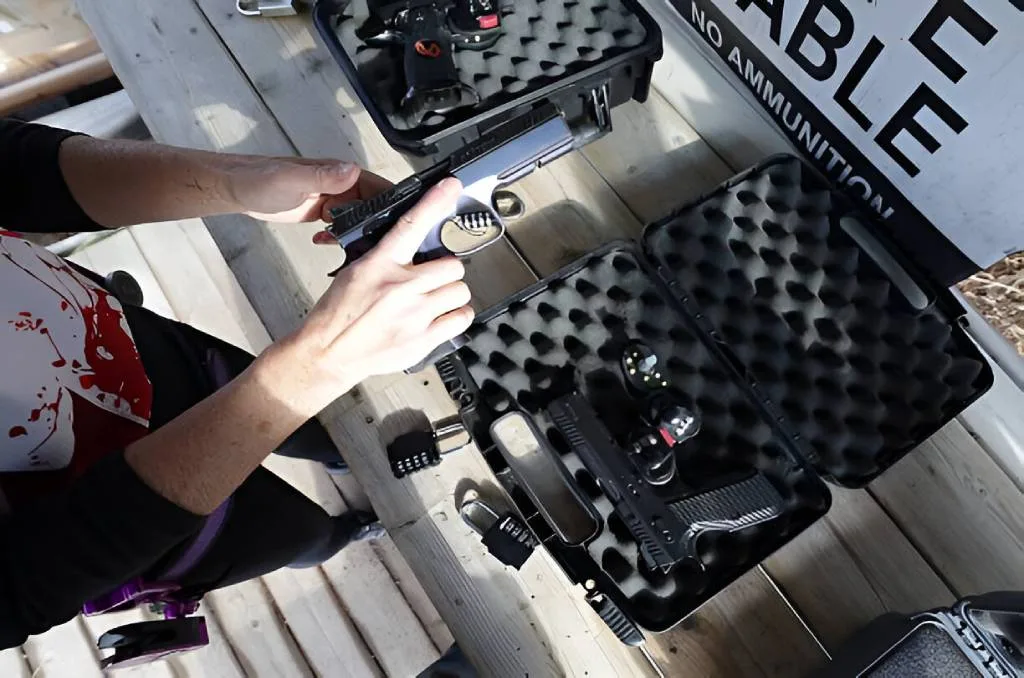
What guns are legal in Canada? Your 2025 Guide to Gun Laws
You might think all guns are banned in Canada. That’s not quite true.
Firearms are legal here, but the rules are strict. You need the right licence and training to own one legally.
The laws changed a lot in 2025.
Some guns that were legal before are now banned. Others require special permits you can’t get anymore. If you own a gun or want to buy one, you need to know these rules.
Breaking them can land you in serious trouble with a firearms and weapons offences lawyer fighting for your case in court.
This guide explains everything. You’ll learn which guns are legal, how to get a licence, and what the new 2025 rules mean for you.
What Are the Three Types of Firearms in Canada?
Canada splits all guns into three groups. Each group has different rules. Understanding these groups helps you stay legal.
The government uses this system to keep Canadians safe. Over 2 million people have licences to own guns.
Most of them own hunting rifles and shotguns. The Royal Canadian Mounted Police (RCMP) watches over the whole system through the Canadian Firearms Program.
Here’s how the three groups work:
| Class | What It Means | Examples | Licence You Need |
| Non-Restricted | Regular hunting rifles and shotguns | Remington 700, Mossberg 500 | PAL (basic) |
| Restricted | Handguns and short rifles | Most handguns, some AR-15s | RPAL (special) |
| Prohibited | Banned guns you can’t buy | Automatic weapons, short handguns | Grandfathered PAL (very rare) |
Can You Own a Hunting Rifle or Shotgun?
Yes, you can. These are called non-restricted firearms. They make up most legal guns in Canada.
Non-restricted guns include hunting rifles and shotguns with longer barrels. The barrel must be at least 470mm long for rifles. The total gun length must be at least 660mm.
These guns usually work with manual actions like bolt, pump, or lever.
Popular models are easy to find. The Ruger 10/22 is great for small game. The Winchester Model 70 works well for deer hunting.
Many people also own the SKS rifle. This semi-automatic rifle stayed legal through 2025, even though some people debate whether it should be banned.
The RCMP keeps a list of approved guns. Right now, over 19,000 different models are listed as legal. You can check this list anytime on their website.
What About Handguns? Can You Still Buy Them?
Not anymore. The government froze all handgun sales in 2022.
If you already own a registered handgun, you can keep it. But you cannot buy, sell, or transfer handguns anymore. This rule became law through Bill C-21 in 2023. It stops all new handguns from entering civilian hands.
Before the freeze, Canadians bought over 100,000 handguns each year. Now that number is zero for regular people.
Some exceptions exist for Olympic athletes or people who need protection in remote areas. These cases are very rare.
Short rifles with barrels under 470mm also fall into this restricted group. You need an RPAL licence and special transport permits for these. The rules are much tighter than for hunting rifles.
Which Guns Are Completely Banned?
Prohibited firearms are guns you cannot own at all.
The government added 179 more guns to the banned list in March 2025.
The new rules target assault-style weapons. These include Black Aces Tactical shotguns and M1 Carbines. The Derya MK10 and Chiappa M1-9MM also made the list. The government wants to stop semi-automatic guns that hold lots of bullets.
Some guns are automatically banned no matter what. Full automatic weapons are illegal. Guns with muzzle energy over 10,000 joules are banned. Anything with a bore bigger than 20mm is prohibited. Rifles with barrels shorter than 457mm are also illegal.
Right now, over 1,500 gun models are banned in Canada. The list keeps growing each year.
What’s the Buyback Program?
The government will pay you for banned guns. Public Safety Canada offers fair market value for firearms you turn in.
You have until October 30, 2026, to comply. This amnesty period protects you from charges while you decide what to do. You can sell your gun to the government, disable it permanently, or export it to another country.
After 2026, keeping a banned gun is a serious crime. You could face up to 10 years in prison. The government takes this very seriously.
How Do You Get a Gun Licence in Canada?
Getting a licence takes three main steps. Each step is important for legal gun ownership.
Step 1: Take the Safety Course
You must complete the Canadian Firearms Safety Course (CFSC). This course runs 8 to 12 hours with a certified instructor.
You’ll learn about gun handling, storage laws, and safety rules. The course has two tests.
You need 80% on the written exam and must pass the practical test. Both tests check if you can handle guns safely.
The course costs between $150 and $250. You can find classes across Canada. Your certificate never expires, but taking a refresher every five years is smart.
Step 2: Apply for Your PAL
After passing the course, apply for your Possession and Acquisition Licence (PAL). You’ll need your CFSC certificate, ID photos, and three references.
The RCMP runs background checks on everyone who applies. They look at your criminal record and mental health history. The process takes 30 to 90 days in most cases.
A basic PAL costs $60 and covers non-restricted firearms. An RPAL costs $80 and includes restricted firearms. Both licences last five years before you need to renew them.
Step 3: Understand the Flag Laws
New rules from 2023 give officials more power. They can suspend or revoke your licence faster than before.
Yellow flags are temporary suspensions. Officials use them if you have mental health concerns or domestic violence risks. Red flags mean immediate licence cancellation for serious threats.
These flags work without court approval. You can appeal them, but few people win their appeals.
How Must You Store and Transport Guns?
Storage rules are strict in Canada. Breaking them can cost you $5,000 or land you in jail.
All guns must be unloaded with trigger locks. You can also use locked containers. Ammunition must be stored separately from your firearms.
Non-restricted guns need opaque cases for transport. You can drive straight from home to the shooting range without special permission.
Restricted guns require secure, locked cases. You also need an Authorization to Transport (ATT) from your Chief Firearms Officer. You cannot store restricted guns at shooting ranges.
Prohibited guns need magazines removed and special bolted containers. You can only transport them during the amnesty period for compliance purposes.
What Changed in 2024 and 2025?
December 2024 brought even more bans. Over 300 additional gun models became prohibited.
The new rules include gun parts like upper and lower receivers. Companies that import guns face stricter requirements now. Gun stores have limited stock because of these changes.
Always check the RCMP Firearms Reference Table online. This list updates regularly with new banned models and legal variants.
The Bottom Line on Canadian Gun Laws
Canadian gun laws keep changing. Here’s what you need to remember.
You can still buy hunting rifles and shotguns with a basic PAL. The handgun freeze stopped all new purchases in 2022. The amnesty period ends in October 2026 for banned guns.
Always verify your gun model on the RCMP website. Take the CFSC course before buying any firearm. Contact your provincial Chief Firearms Officer if you have questions.
The future points toward stricter rules and more safety focus. Staying informed keeps you legal and out of trouble.