What Is a Deposit Slip and When Do You Still Need One?
Disclosure: This article was published as part of a paid partnership with OnlineCheckWriter.com, a Zil Money platform. The author is an independent contributor.
What is a Deposit Slip?
A deposit slip, sometimes called a deposit ticket, is a form used to tell a bank or credit union what money is being deposited and which account should receive it.
PNC describes a deposit slip as a paper form used to deposit cash or checks into an account. Common fields include the account holder’s name, account number, check information, deposit amount, and transaction date.
Deposit slips are most closely associated with branch deposits, but they still have practical value for businesses that handle cash and paper checks.
What Information Is on a Deposit Slip?
The layout differs by bank.
A typical form can include the depositor or account name, account number, date, cash amount, check amounts, subtotal, cash being received back, and total amount entering the account.
Some slips also provide additional check-detail fields.
The purpose is to create a clear instruction:
this money belongs in this account, and this is how the total was calculated.
What Is the Difference Between a Deposit Slip and a Check?
A check instructs a financial institution to pay money from an account.
A deposit slip accompanies money going into an account.
The two forms may appear together during a branch transaction because a customer might be depositing checks from other people.
But they perform opposite functions.
A deposit slip itself is not a payment to another person.
Why Do Businesses Use Deposit Slips?
Businesses may receive customer checks or cash that needs to be deposited at a branch.
A retail store might prepare a deposit after reconciling the day’s cash.
A property manager may deposit rent checks.
A nonprofit may receive several donation checks.
The deposit slip gives the bank the transaction total while the business retains its own accounting information about where the money came from.
Do You Need a Deposit Slip for Mobile Deposit?
Usually, mobile check deposit follows a different process.
Bank Five Nine explains that users making a mobile deposit typically do not need to complete the same paper deposit-slip fields. Instead, the customer follows the bank’s mobile-deposit process.
That means deposit slips are not required for every modern deposit.
Their use depends on the financial institution and deposit channel.
Are Deposit Slips Still Available From Banks?
Yes.
Wells Fargo, for example, currently provides a process through which customers can order blank deposit slips or deposit tickets.
Bank of America also allows business customers to access certain deposit-slip records through its online banking services.
This shows that deposit slips remain part of current banking operations even as digital deposit options expand.
Can You Create a Deposit Slip Online?
Software can be used to prepare a deposit slip before going to a branch.
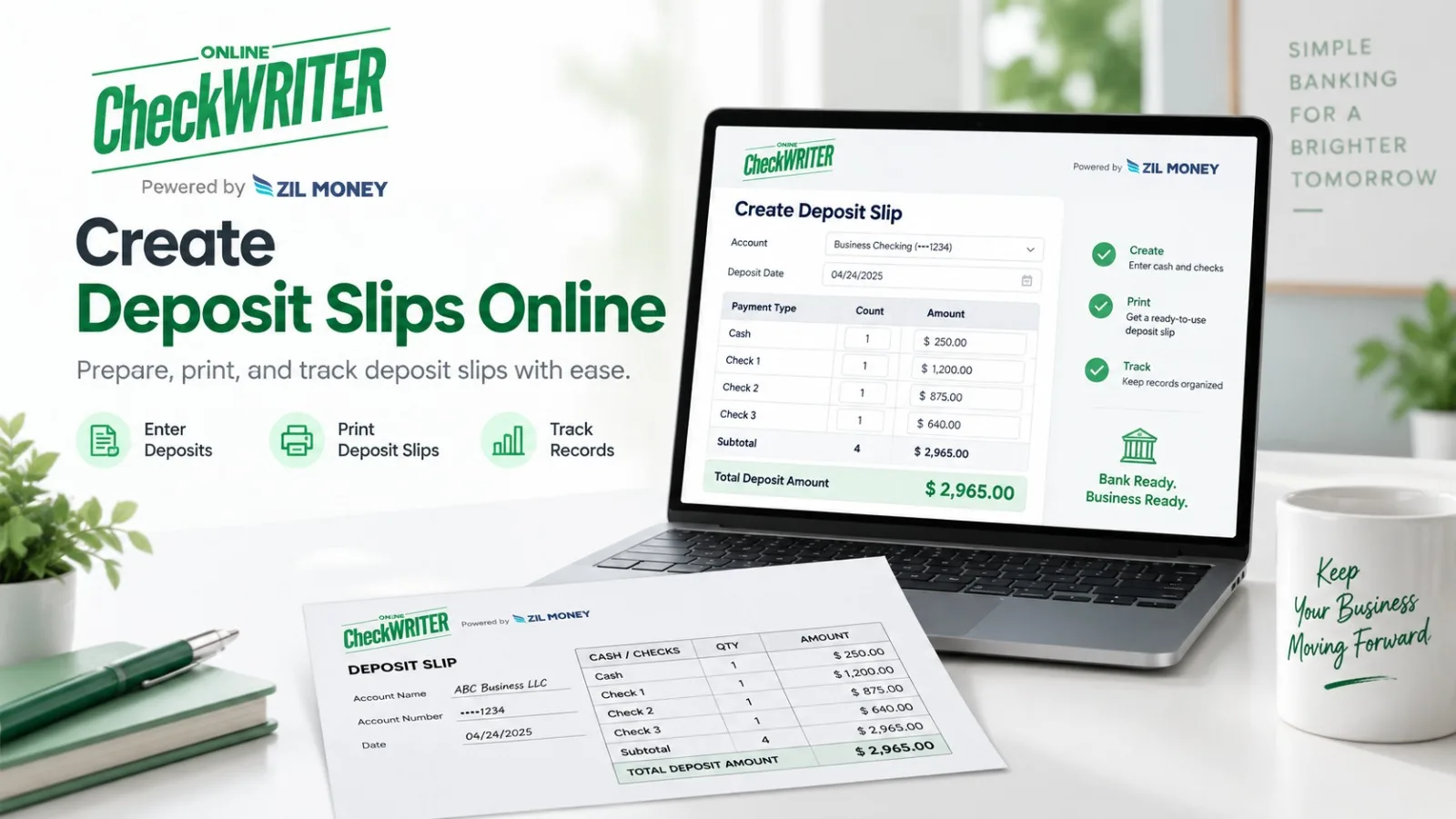
OnlineCheckWriter.com’s current Deposit Slip page allows users to enter cash and check amounts, calculate totals, print or save the document, and maintain deposit-slip history.
For businesses making frequent deposits, that can be more practical than rewriting the same account information by hand.
Still, the receiving financial institution determines what form it accepts.
A software provider should not claim universal bank acceptance without qualification.
Why Keep a Copy?
The deposit slip can support reconciliation later.
If the accounting records say $4,250 was deposited on Tuesday but the bank transaction shows another amount, the deposit record can help staff investigate what happened.
For businesses, that record can be more valuable than the piece of paper itself.
So, what is a deposit slip?
It is a structured record and instruction for putting cash, checks, or other accepted deposit items into a bank account.
Its role is simple, but accurate account information, deposit totals, and recordkeeping make it an important part of a controlled business-deposit process.
OnlineCheckWriter.com – powered by Zil Money, is a financial technology company, not a bank. Banking and money movement services are provided through partner financial institutions and licensed service providers. FDIC insurance coverage applies only to eligible deposit products and accounts, and is subject to applicable terms, conditions, limitations, and requirements. Additional information regarding partner institutions, products, and services is available in the applicable terms and agreements.