
What Is Leverage Trading? The Good, the Bad and the Real Risks Explained
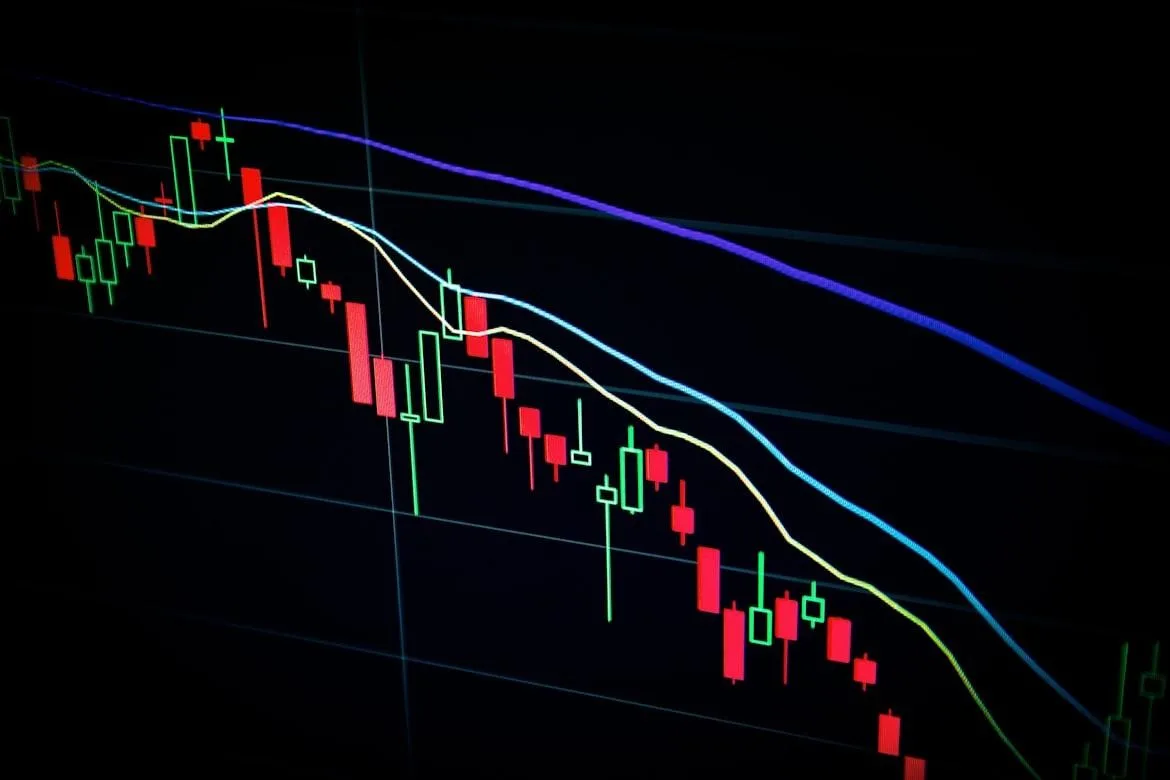
Leverage trading allows you to control a much larger position size with a relatively small amount of capital, amplifying both potential profits and potential losses. By borrowing trading power from your broker, you can participate in high-value market movements without needing the full position amount upfront.
For many traders, leverage feels like a shortcut to faster growth. Yet the same force that multiplies returns can destroy an account in minutes if misused. That’s why understanding leverage deeply—its advantages, its hidden dangers, and how to use it responsibly—is one of the most important skills for anyone trading Forex, indices, commodities, or crypto.
In this guide, you’ll learn the real truth behind leverage trading so you can protect your capital, stay confident under pressure, and trade with the structure and clarity the markets demand.
What Is Leverage Trading and Why Do Traders Use It?
Leverage trading is a method where you use borrowed capital from your broker to take larger trades than your account balance would normally allow. Traders use leverage to increase their market exposure, accelerate growth, and maximise the potential return from each setup.
Most retail Forex traders are offered leverage from 1:30 to 1:500, depending on regulation and broker policy. At N P Financials, we train traders to stop thinking about leverage as a “gift” and start seeing it as a precision tool. Used carefully, it accelerates your journey. Used recklessly, it becomes the fastest path to blowing an account.
Leverage exists because financial markets move in small increments, especially Forex. Without it, meaningful profit would require extremely large capital. However, the more you magnify your position size, the narrower your margin for error becomes. That is why structured education and disciplined risk management are non-negotiable.
How Does Leverage Work in Real Trading Conditions?
Leverage works by multiplying your buying power. With 1:100 leverage, every $1 in your account controls $100 in the market. This means a $1,000 account can open positions worth $100,000.
In real-time trading, this changes how volatility affects you. Small price fluctuations become significantly more impactful—both positively and negatively. A market moving 10 pips against you on high leverage can sometimes hit your stop or trigger a margin call before you have time to react.
This is why most new traders struggle: they misunderstand how leverage interacts with lot size, margin, and stop-loss placement. Professional traders don’t fear leverage—they respect it. They calculate risk first, choose position size second, and use leverage last as a tool to execute their strategy safely.
Why Do So Many Traders Lose Money When Using Leverage?
Most traders lose money with leverage because they take oversized positions, use emotional decision-making, and underestimate how quickly the market can move against them. Even when they understand leverage intellectually, they often fail to apply risk control in the heat of the moment.
Leverage amplifies behavioural mistakes, not just technical errors. When traders chase losses, increase position size out of frustration, or trade without a tested strategy, leverage punishes them immediately.
This is why at N P Financials we integrate Trader Psychology with technical strategy. Emotional reactions like FOMO, revenge trading, and hesitation become far more damaging when magnified through leverage.
Without structure, leverage is dangerous. With structure, leverage becomes a powerful ally.
What Are the Real Risks of Leverage Trading That Most Traders Overlook?
The biggest risks of leverage trading include rapid drawdowns, margin calls, emotional pressure, and the illusion of “quick wins” that lead traders into repetitive mistakes. Many traders only look at the potential gains and ignore how quickly the downside accelerates.
One overlooked risk is the false confidence that comes with early wins. A small account doubling quickly due to high leverage creates a dangerous belief: “I’ve figured this out!” But markets shift. Strategies that worked last week collapse the next. When volatility spikes, leveraged trades that feel safe suddenly become catastrophic.
Another hidden risk is structural—traders often fail to account for slippage, widen spreads during news events, and market gaps. When using leverage, these tiny inefficiencies become major losses.
Training reduces these risks dramatically. So does using leverage within a tested, rules-based framework.
How Do You Use Leverage Safely as a Forex Trader?
You use leverage safely by controlling position size, setting logical stop-losses, risking a maximum of 1% per trade, and developing a strategy that has been tested across changing market conditions. Safe leverage use begins with risk—not opportunity.
At N P Financials, our students follow a structured 5-phase process: Learning, Practice Tasks, Back-Testing, Demo Trading, and Live Trading. This progression ensures traders understand how leverage affects real-world results before risking their capital.
When you use leverage properly, it becomes an instrument—not a weapon. You trade with clarity, not fear. You know exactly how much you are willing to lose and why. You stop reacting emotionally and start executing professionally.
Is Leverage Good or Bad for Your Long-Term Trading Career?
Leverage is good when used with discipline and a proven strategy; it is bad when used impulsively or without understanding the underlying market conditions. The tool isn’t the danger—the trader’s approach is.
Professional traders use leverage every day. Hedge funds, institutions, and proprietary firms rely on it. But they also use strict risk management, position guidelines, and stop-loss systems. They never treat leverage as a shortcut.
Your goal as a trader is not to avoid leverage—it is to master it.
When you learn to use leverage with precision, your growth becomes consistent, your confidence strengthens, and your account remains protected even during volatile periods.
Are You Ready to Trade with Leverage the Right Way?
Trading with leverage requires more than enthusiasm—it requires education, psychological clarity, live coaching, and a structured strategy. If you’ve struggled with blown accounts, inconsistent results, or emotional decision-making, your issue is not leverage itself. Your issue is lack of guidance.
And that’s where N P Financials steps in.
We train traders with a combination of:
• 30 years of real trading experience
• Proprietary strategies like ABO, ABI, and R4 CSB
• In-house psychology support with Behavioural Neurologist Kerri Brown
• Structured learning from beginner to professional levels
• Live coaching and real-time market discussions
When you learn leverage the right way, you give yourself every advantage to trade safely, confidently, and profitably.
About the Author – Partha Banerjee
Partha Banerjee is the Founder and Head Trader at N P Financials. With more than 30,000 hours of Market Research & Development, his credentials include:
• Certified Financial Technician (CFTe)
• Diploma of Technical Analysis
• DER (GA) – Derivatives (General Advice)
• Tier 2 — Specialised Techniques in Technical Analysis
• Tier 1 — Technical Analysis
• Foreign Exchange (Personal Advice)
• Advisor Compliance Solution in Specialist Knowledge Securities
• Diploma of Financial Planning
Partha has trained over 33,000 traders globally and is recognised for his structured, practical approach to building consistently profitable traders.
Connect with Us
When you need support, we’re here for you. Reach out through any of the following channels:
• Contact Us: Visit our website or drop by our office.
• Email: [email protected]
• Live Chat: Connect with our experts in real time.
• Phone: +61 3 9790 6476
• Mobile: Reach us on your mobile device.
• WhatsApp, Messenger, SMS, Telegram, and Discord: Choose your preferred platform.