What Is Self-Healing Film and How Does It Actually Work
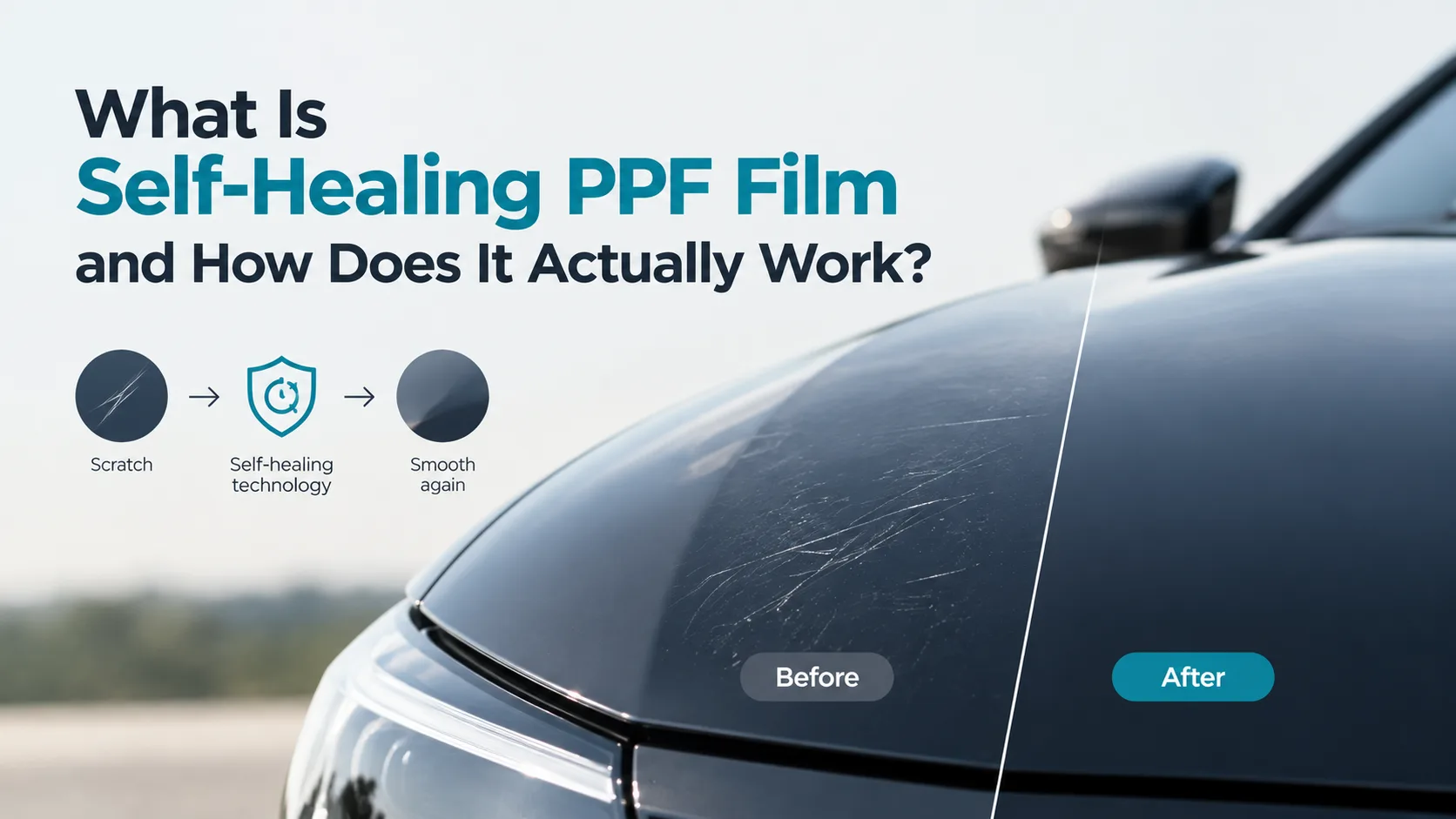
Paint protection film has become a fairly common way to keep a car’s paint safe from the small bumps and scrapes of daily driving. Some of the newer films go a step further and offer something called self-healing technology. This feature can help reduce the look of small scratches and swirl marks on the PPF film whenever it is exposed to heat.
It sounds a bit too good to be true at first. Does the PPF film actually repair itself? And does self-healing mean the car will never pick up a mark again? The answer is a little more grounded than the marketing usually makes it sound. Self-healing PPF film cannot fix every kind of damage, but it genuinely helps with the small marks that show up during ordinary use.
What Is Self-Healing PPF Film?
Self-healing PPF film is a clear protective layer that gets applied over a car’s painted surfaces. It sits between the paint and the everyday things that can mark it up, such as dust, road debris and small stones.
The interesting part is the top layer of the film. It is made from a flexible material that responds to heat. When a light scratch affects this top layer, warmth can help the material slowly move back toward its original shape. Because of this, the scratch often becomes far less visible, or in some cases, it disappears altogether.
This does not mean the film can fix a deep cut or serious damage. The self-healing property is really meant for light surface marks, nothing more.
How Does Self-Healing Actually Work?
A simple way to picture this is pressing a finger into a soft rubber surface. The surface dents under the pressure and once the finger is removed, it slowly returns to its original shape on its own. Self-healing PPF films behave in a fairly similar way.
A light scratch disturbs the surface of the PPF film without cutting all the way through it. Once heat reaches the film, the material becomes softer and more flexible and the surface can move back into a smoother position. The scratch becomes much harder to notice as a result.
This happens because of the special polymers used in the PPF film’s top layer. Different brands use different materials and processes, so the healing performance can vary quite a bit from one product to another. This is one of the reasons Aegis PPF is worth a look, as their films are built with consistent, tested materials rather than a one-size-fits-all approach.
Where Does the Heat Come From?
One genuinely useful thing about this technology is that special equipment is not always needed. Heat from the sun is often enough to trigger the healing process. A car parked outside on a warm day can naturally reach a temperature that helps smooth out light marks on its own.
Warm water can also help with certain films. Professional installers may use controlled heat when it is needed, but car owners should not assume that more heat is always better. Using a heat gun the wrong way can actually damage the film or the parts around it, so it is best to always follow the manufacturer’s care instructions. The temperature and time required can differ between products too.
What Kind of Damage Can It Heal?
Self-Healing PPF Film is mainly built to deal with minor surface marks, such as:
- Light scratches
- Fine swirl marks
- Small washing marks
- Light scuffs
- Minor marks from everyday use
For instance, washing a car with a cloth that is not completely clean can leave tiny particles of dirt behind, which then create small marks on the film. With a self-healing surface, several of these marks may fade or disappear once the film is exposed to heat, which helps the car keep a cleaner look for longer.
That said, the film still needs proper care. Self-healing does not give anyone a free pass to wash the car roughly or skip good cleaning habits altogether.
What Can Self-Healing PPF Film Not Fix?
This is probably the most important thing to understand about the whole technology. Self-Healing PPF Film is not a magic shield.
If the film gets deeply scratched, cut, torn or badly damaged, heat will not simply make that damage go away. If a sharp object cuts through the film, the damage can reach the deeper layers and in that case, the affected section will likely need to be replaced. The same goes for a strong stone impact, which can damage the film even if it has self-healing properties.
The self-healing feature is really only useful for minor surface marks, while the film itself is what provides the actual physical protection.
Is Self-Healing PPF Film Scratch-Proof?
No and this is an important distinction. Self-healing and scratch-proof are not the same thing at all. A scratch-proof material would suggest that scratches simply cannot happen, but self-healing PPF film can still get scratched like any other surface.
The difference is that certain light scratches can fade or disappear once heat is applied. So it is probably more accurate to think of self-healing as a recovery feature rather than a guarantee against scratches. Even with a high-quality film, it still makes sense to use safe washing methods and avoid rough brushes, dirty cloths and harsh cleaning products.
What Makes a Good Self-Healing PPF Film?
Not all films are made the same way and it helps to look at more than just whether a product is labelled as self-healing. The quality of the material, thickness, clarity, adhesive, top layer and warranty can all affect how the film performs over time.
A good protection film should create a strong barrier between the paint and everyday road debris, while also staying clear and holding its appearance for years. It is worth asking the installer what material the film uses, what type of self-healing technology it has, how it should be maintained and what the warranty actually covers.
Does Every PPF Have Self-Healing Technology?
No, not every paint protection film includes this feature. Some films have self-healing properties and others simply do not, so it is worth checking the exact product rather than assuming every PPF works the same way.
If self-healing genuinely matters to someone, it is worth asking the installer to explain how the feature works and what type of damage it is designed to handle, or checking the manufacturer’s product information directly. A good installer should be able to explain whether the film is self-healing and what its real benefits are, without making claims that sound too good to be true.
How Does Self-Healing PPF Protect the Paint?
The main job of PPF is still physical protection. When a stone or piece of road debris hits a protected part of the car, the film absorbs that impact instead of the paint underneath taking it directly. This generally reduces the chances of stone chips and other minor damage reaching the paint itself.
The self-healing feature simply adds another layer of convenience on top of that. Instead of living with every small surface mark for years, several light scratches can fade or disappear after some exposure to heat. So the film really plays two roles here, physical protection and surface recovery, though neither role makes it completely immune to damage.
How Do You Choose the Right Film?
When looking at the best PPF brand for a car, price should not be the only factor. It helps to look at the complete product instead. Some of the important things to compare include:
- Film material
- Thickness
- Clarity
- Self-healing performance
- Resistance to yellowing
- Gloss or finish
- Warranty
- Expected lifespan
- Installer experience
The quality of the installation matters just as much as the film itself. Even a genuinely good film may not look or perform properly if it is installed poorly and this can lead to visible edges, bubbles, lifting or uneven sections. It is always worth asking to see examples of an installer’s previous work before deciding.
Is Self-Healing PPF Worth It?
For most car owners, this feature turns out to be genuinely useful, especially for vehicles that get washed often or driven every day. Dark-coloured cars tend to benefit even more, since small swirl marks are usually easier to spot on darker paint.
That said, nobody should choose a film based only on the self-healing claim. It helps to think about the kind of driving involved, how much time the car spends outdoors and how much protection is actually needed. A quality film with strong physical protection, a clear finish and a solid warranty is generally a better choice than a product that simply leans on a big self-healing claim.
How Should You Maintain Self-Healing PPF Film?
Even the best film still needs proper care. Clean washing equipment matters and rough brushes or harsh methods should be avoided. A clean, suitable microfiber towel works best for drying and strong chemicals should only be used if they are approved for the film.
If a light scratch shows up, it is best to check the manufacturer’s instructions before trying to heat the area on one’s own. For deeper damage, speaking to the installer is the safer route, since trying to fix it independently could make things worse. Good maintenance, over time, keeps the film looking clear and fresh for much longer.
Final Thoughts
Self-Healing PPF Film uses materials that respond to heat and recover from certain light surface scratches. It will not repair deep cuts, tears or serious impacts, but it does genuinely help reduce the look of everyday marks that can otherwise make a car look older than it is.
When choosing a PPF coating, it helps to look at the entire product rather than focusing only on the self-healing claim. Material quality, durability, clarity, warranty and installation all matter just as much. Aegis PPF is a considerable option to explore here, since their range covers different needs and budgets and all of their PPF films come with self-healing technology included.
A good protection film can genuinely shield paint from everyday road debris, while self-healing technology helps keep that film looking clean and smooth for longer. And for anyone comparing the best PPF brands out there, it is worth taking the time to look at actual specifications and warranty terms rather than relying only on advertising claims.
The goal, in the end, is simple: choose a film that gives the car the right level of protection for the way it is driven and maintained.