
What is The Future Homes Standard Coming to Force in March 2027?
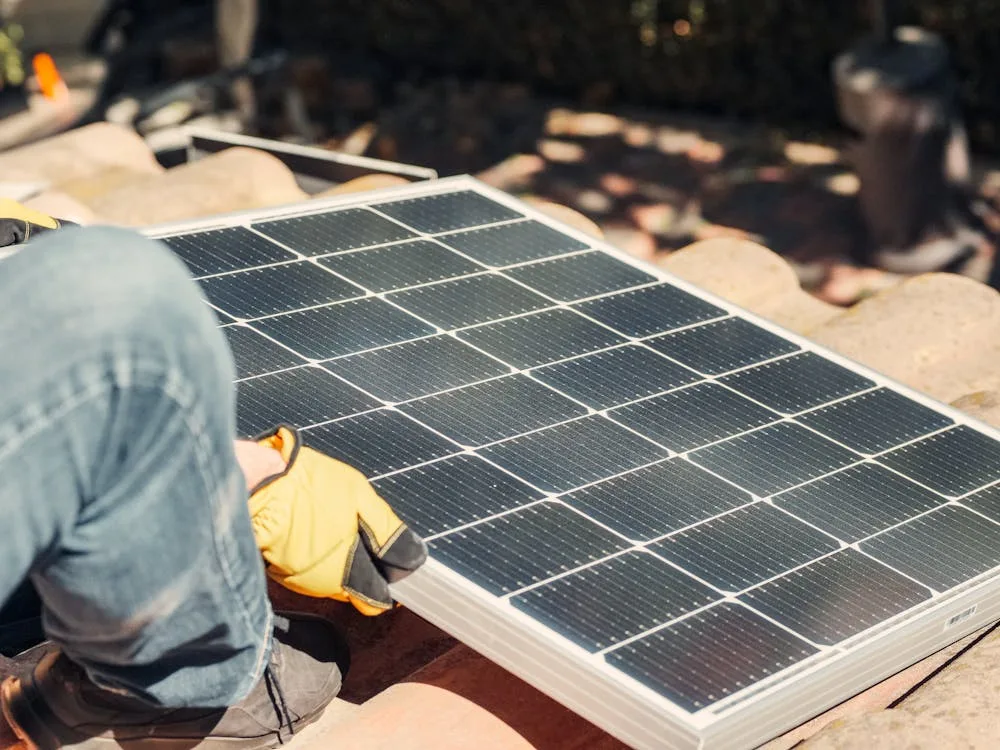
There new Future Homes and Buildings Standards (FHS) are coming into force on 24 March 2027, which means a 12-month transition period will be allowed for buildings under previous standards only for projects with applications submitted before the FHS implementation. Following the 2023 consultation, the Ministry of Housing, Communities and Local Government (MHCLG) confirmed that all new residential and commercial buildings will be legally required to include renewable electricity generation.
This guide will explore this in more detail, as we talk about what the new standards mean for homeowners and the future of their property. Continue reading to learn more.
Installation of Solar Panels
Under these rules, new homes must include solar panel installations covering 40% of the ground-floor area. Several exceptions apply, including buildings taller than 18 meters, sites unable to reach a $720k Wh/year output, and all buildings classified as higher-risk (HRBs). Furthermore, low-carbon heating systems will become mandatory, which effectively bans traditional gas boilers in favor of heat pumps as the standard solution for new builds.
For Higher-Risk Buildings (HRBs), the new regulations are set to take effect starting in September 2027. The MHCLG confirmed that existing requirements for high-efficiency alternative systems and nearly zero-energy standards will remain in place instead of being removed.
Home Energy Model (HEM) Transition
These new rules have also enforced the replacement of the long-standing Standard Assessment Procedure (SAP) with the new Home Energy Model (HEM). This is designed to be more accurate, as it shows how modern homes actually use energy in the real world. Unlike the old system, the HEM allows for half-hourly simulations, which better accounts for the benefits of smart technologies and battery storage.
The design phase of a home will also now require more detailed data to prove that a building meets the strict carbon reduction targets. This will become essential for the UK to reach their sustainability goals, as homes use up some of the most energy in the country.
Technology and Professional Equipment
The reduction in carbon emissions mandated by the FHS requires more than just better materials. Contractors are now utilising sophisticated plant hire options that include GPS-guided excavators for digging holes that are needed for the construction of houses. This is crucial for the complex pipework associated with district heating networks. Meanwhile, heavy-duty concrete breakers remain a staple for clearing brownfield sites, so sustainable developments can be built on modern footings.
Long-Term Benefits for Homeowners
For the person living in the home, the 2027 standards represent a significant upgrade in quality of life. While the upfront cost of a new build may rise slightly due to the mandatory solar panels and heat pumps, the annual energy savings should be high. Homeowners can expect a future-proof property that requires no expensive retrofitting to meet the UK’s 2030 net-zero goals. This allows homeowners to generate their own renewable electricity, which will protect them from the high global energy prices.
Final Thoughts
The 2027 changes coming for homeowners with the FHS will have a huge impact on homeowners, as the government pushes for more eco-conscious practices. This is with the hope of achieving Net Zero by 2030.