What Kind of Company Is KSN Forging? An Overview of Its Forging Capabilities, Products and Industries
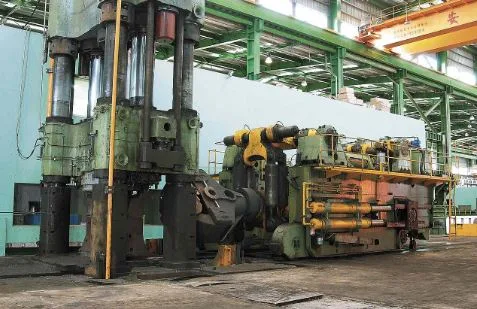
For companies sourcing forged metal components, understanding a supplier’s actual manufacturing capabilities is often more important than simply knowing its product catalog. The available forging processes, material range, machining capabilities, quality controls, and ability to manufacture according to customer specifications all influence whether a supplier is suitable for an OEM or industrial application.
KSN Forging is a China-based manufacturer specializing in custom forged components. Founded in 2015 and based in Taiyuan, Shanxi, the company is part of SIMIS Group and provides forging and related manufacturing services for customers in automotive, commercial vehicles, industrial machinery, energy, mining, agriculture, construction equipment, and other sectors.
Its manufacturing scope includes open-die forging, closed-die forging, ring rolling, heat treatment, machining, and inspection.
What Does KSN Forging Do?
KSN Forging primarily manufactures components according to customer drawings, specifications, CAD models, and, where required, physical samples.
Rather than focusing exclusively on standard catalog products, the company’s business is centered on OEM and custom manufacturing.
Depending on the application, a customer can source a forged blank, a heat-treated forging, a semi-machined component, or a fully machined part.
This allows the manufacturing route to be selected according to the geometry, material, production volume, dimensional requirements, and final application of the component.
What Forging Processes Does KSN Offer?
KSN Forging uses several forging processes for different component sizes and geometries.
l Open-Die Forging
Open-die forging is used primarily for large and heavy components.
The company’s published capability covers individual open-die forgings from approximately 10 kg to 5,000 kg, with maximum lengths of approximately 3,000 mm, depending on the component design and material.
Typical applications include large shafts, couplings, flanges, heavy-duty transmission components, and other industrial forgings.
l Closed-Die Forging
Closed-die forging is used for components that require more defined geometries and repeatable production.
KSN’s published closed-die forging range covers components from approximately 0.1 kg to 100 kg, with maximum dimensions of approximately 800 mm, depending on the part design and material.
Typical products include automotive steering components, suspension components, transmission parts, gear blanks, yokes, connecting rods, brake components, and other mechanical parts.
l Ring Rolling
Ring rolling is used to manufacture seamless forged rings.
This process is suitable for bearing rings, gear rings, flanges, sleeves, and other circular components used in industrial machinery and rotating equipment.
KSN’s published ring rolling capability covers individual components from approximately 10 kg to 2,000 kg, depending on the required dimensions and material.
What Materials Can KSN Forging Supply?
KSN Forging works with both ferrous and non-ferrous metals.
Its material range includes carbon steel, alloy steel, stainless steel, aluminum alloys, copper, and copper alloys.
Common steel grades used for forged components include AISI 1045, AISI 4140, AISI 4340, 42CrMo4, 34CrNiMo6, AISI 8620, 20MnCr5, 16MnCr5, and 52100 / 100Cr6, subject to customer specifications.
Aluminum forging materials include grades such as 6061, 6082, 7075, 2024, and 5083.
The actual material selected for a component depends on its required strength, toughness, fatigue resistance, hardness, wear resistance, corrosion resistance, weight, and operating environment.
What Parts Does KSN Forging Manufacture?
The company’s product range covers a variety of forged components rather than a single product category.
For automotive and commercial vehicle applications, examples include steering knuckles, control arms, steering arms, Pitman arms, axle components, drive shafts, spline shafts, transmission components, gear blanks, differential components, brake components, chassis brackets, and other structural and drivetrain parts.
For industrial applications, the range includes forged shafts, rings, flanges, couplings, yokes, gear blanks, sleeves, structural components, and other custom mechanical parts.
The final component design and manufacturing process are determined according to customer drawings and technical requirements.
Which Industries Does KSN Forging Serve?
KSN’s products are used across several industrial sectors.
l Automotive and Commercial Vehicles
Automotive applications include passenger vehicles, electric vehicles, hybrid vehicles, commercial trucks, trailers, buses, racing vehicles, and other specialty vehicles.
Forged components are used in steering, suspension, braking, drivetrain, transmission, chassis, and structural applications.
l Industrial Machinery
Forged components are also supplied for general machinery and industrial transmission systems, where strength, fatigue resistance, dimensional stability, and long-term durability are important.
l Mining and Construction Equipment
Heavy equipment operates under high loads, impact, vibration, and demanding environmental conditions. Forged shafts, pins, couplings, brackets, gears, and other components can be manufactured for these applications.
l Agricultural Machinery
Agricultural equipment requires components capable of handling repeated loading and harsh working environments. KSN supplies custom forged components for agricultural machinery and related equipment.
l Energy and Oil & Gas
Forged components are also used in energy-related machinery and oil and gas equipment, where material selection, mechanical properties, inspection, and documentation can be important parts of the procurement specification.
Does KSN Provide Machining and Heat Treatment?
Forging is only one stage of the manufacturing process.
KSN Forging can provide heat treatment and machining after forging, allowing customers to source more complete components from a single manufacturing supplier.
Machining capabilities include CNC turning, turning, milling, drilling, threading, and other customer-specified operations.
Depending on the project, components can be supplied as forged blanks, heat-treated forgings, semi-machined parts, or fully machined components.
Heat treatment can be specified according to the material and required mechanical properties and may include processes such as normalizing, quenching and tempering, carburizing, carbonitriding, and induction hardening.
How Does KSN Handle Quality Control?
Quality control covers multiple stages of the manufacturing process, beginning with raw material inspection and continuing through forging, heat treatment, machining, and final inspection.
Depending on customer requirements, inspection may include chemical composition analysis, dimensional inspection, hardness testing, tensile testing, impact testing, metallographic examination, ultrasonic testing, magnetic particle inspection, penetrant testing, and coordinate measurement.
The inspection requirements can be established according to the customer’s drawings, technical specifications, applicable standards, and end-use requirements.
For projects requiring additional verification, third-party inspection can also be arranged.
Does KSN Provide Material Traceability?
Traceability is particularly important for industrial and safety-related forged components.
KSN can provide material and quality documentation according to project requirements, including material certificates, heat numbers, chemical composition reports, mechanical test results, heat treatment records, hardness reports, dimensional inspection reports, non-destructive testing reports, and final inspection documentation.
The company can also provide EN 10204 Type 3.1 material certificates and support third-party inspection through organizations such as SGS and TÜV when specified by the customer.
How Does the KSN OEM Process Work?
For a custom forging project, customers can provide a 2D engineering drawing, 3D CAD model, technical specification, or physical sample.
The manufacturing process can then be evaluated according to the component’s material, geometry, dimensions, production quantity, mechanical requirements, machining requirements, and inspection criteria.
For projects based on physical samples, KSN Forging dimensional measurement and reverse engineering may be used to establish the required manufacturing information.
The appropriate forging method is then selected. Open-die forging may be suitable for larger components, while closed-die forging may be more appropriate for smaller, complex, and higher-volume parts. Ring rolling is used where the component requires a seamless forged ring.
What Makes KSN Forging Relevant to International Buyers?
For international OEM and industrial buyers, the ability to provide a forged component is only one part of supplier qualification.
Material consistency, process control, heat treatment, machining, inspection, documentation, and traceability can all affect the suitability of a supplier for long-term production.
KSN Forging combines these manufacturing stages within one supply chain, allowing customers to source components ranging from forged blanks to machined and inspected parts.
Its published manufacturing capabilities cover both relatively small closed-die forgings and large open-die and ring-rolled components, providing flexibility for different types of industrial applications.
A Custom Forging Supplier for OEM Applications
KSN Forging is a China-based manufacturer focused on custom forged components rather than a single standardized product category.
Since its establishment in 2015, the company has developed a manufacturing scope covering open-die forging, closed-die forging, ring rolling, heat treatment, machining, and inspection.
Its products are used in automotive and commercial vehicles as well as industrial machinery, mining, construction, agriculture, energy, and other applications.
For companies evaluating a forging supplier, KSN’s manufacturing model allows the project to begin with an engineering drawing, CAD model, specification, or physical sample and proceed through forging, heat treatment, machining, inspection, and documentation according to the customer’s requirements.
For international buyers looking for custom forged components, the company’s capabilities provide a manufacturing option for projects ranging from individual engineered parts to ongoing OEM production.