What Makes a Modern Excavator a Connected Machine?
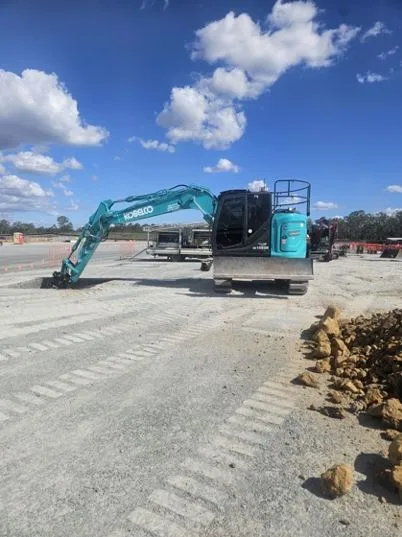
A modern excavator can carry far more information into a workfront than its operating specifications alone suggest.
Alongside weight, reach, hydraulic capacity and attachment setup, project teams can now consider how the machine interacts with positioning systems, digital design information and fleet data. GPS-enabled machine-control systems can show the relationship between the bucket and the required surface, while remote monitoring can give plant teams visibility of machine location, fuel, maintenance and operating status.
The value is not technology for its own sake. It is the ability to connect information that would otherwise sit separately: the excavator’s position, the bucket, the design and the machine’s operating data.
No single function necessarily makes an excavator fully connected. Positioning, machine control, design information and remote monitoring can operate as separate digital layers. The more effectively those layers connect the machine, operator, project information and fleet team, the more the excavator becomes part of a wider connected workflow.
Positioning becomes useful when it reaches the bucket
GPS is often the most visible part of an excavator’s digital setup, but its value extends well beyond showing where the machine is located.
When combined with sensors fitted to the excavator, GPS positioning can help establish where the bucket sits in relation to the required depth, slope or design surface. The operational advantages have made this capability increasingly available across modern civil excavator ranges, with manufacturers such as Kobelco and Volvo supporting 2D and 3D guidance configurations for excavation work.
At the workfront, that information can support trench depth, batter slopes and detailed excavation against a design surface. The operator gains a live reference to the work being built rather than positioning information existing separately from the excavation process.
The technology still depends on the setup around it. Positioning, machine sensors, calibration and design information need to correspond with the workfront, while site conditions can affect satellite-based positioning. Machine guidance therefore supports the operator and project controls rather than replacing them.
Machine control puts design information in the cab
Once the machine can establish where the bucket is, the next layer is connecting that position to the project design.
Compatible systems can provide a live reference to the levels, slopes or surfaces the workfront is intended to achieve. This becomes particularly useful on trenching, batters, detailed excavation and final trim.
Without that level of machine control, crews may need to rely more heavily on physical set-out, external grade checks and repeated verification. Those methods remain established parts of civil construction, but design information in the cab gives the operator another live reference at the point where the design is being turned into physical work.
Not every work package requires the same level of machine control. A 2D setup can provide information around depth, height and slope relative to an established reference, while a 3D system can relate the excavator to changing elevations, contours and design surfaces within a broader digital site model.
The appropriate setup therefore depends on the work. Straightforward excavation to a repeatable depth or slope creates a different requirement from infrastructure earthworks involving changing levels or complex profiles.
For plant teams, digital configuration becomes another part of machine specification alongside operating weight, reach and hydraulic capacity.
Machine control itself is one component of a connected excavator rather than the entire definition. The broader connection develops when positioning and design information can work alongside other machine data used beyond the immediate excavation task.
Connectivity also extends beyond grade control
Not all connected excavator technology is concerned with bucket position.
Remote monitoring can give authorised teams visibility of machine location, fuel, maintenance requirements and operating status without requiring someone to be physically beside the excavator. This serves a different purpose from machine control: one connects the operator more closely to the workfront and design, while the other connects the machine to the people responsible for keeping plant available and coordinated.
That becomes particularly relevant on long-duration projects or where equipment moves between several workfronts. Parts of the earth gear dry hire fleet incorporate this capability, with selected 25–30t excavators using GEOSCAN remote monitoring for location, fuel, maintenance and machine-status tracking.
The significance is that information about the machine can remain available to the people coordinating it even when the excavator is working elsewhere on the project.
Connected technology becomes more valuable at project scale
Connected information also becomes more useful as project scale increases.
A multi-stage civil programme may involve several excavator classes, changing attachments, multiple workfronts, design revisions, machine movements and maintenance requirements. Connected technology does not make those decisions for the contractor, but it can make more of the information behind them available where it is needed.
Alt text: Excavator and site dumper hired through a civil construction dry hire partner, earth gear
Insert link – www.earthgear.com.au
GPS and machine control can give the operator a direct reference to the workfront, while remote monitoring can give plant teams greater visibility of machines away from the cab.
That makes digital configuration worth considering before mobilisation rather than after the machine has arrived onsite.
GPS configuration is becoming part of excavator specification
Project teams already specify excavators around operating weight, digging depth, reach, lifting requirements, hydraulic configuration, attachments and working space. Where GPS or machine-control workflows are part of the project, the digital configuration becomes another part of that assessment.
Some workfronts may require an excavator ready for the project’s positioning equipment. Others may require a complete GPS setup to arrive with the machine.
For contractors delivering multi-stage civil works in Brisbane and surrounding South East Queensland, access to an excavator hire fleet with GPS-ready and full-system configurations allows those digital requirements to be considered alongside the machine’s physical specification.
What matters is matching the configuration to the workfront. Bulk excavation may place one set of demands on machine control, while drainage, detailed profiles, batters or final surfaces may place another.
Digital capability works alongside the core machine specification
Connected technology adds most value when it complements a machine that is already well matched to the work.
The excavator still needs the appropriate capacity, reach, working radius, hydraulic setup, attachment compatibility and geometry. Digital capability adds another dimension: GPS can provide a positioning reference, machine control can relate the bucket to required levels and surfaces, and remote monitoring can extend machine visibility beyond the workfront.
Not every project requires every capability, nor does an excavator need every digital function to participate in a connected workflow. The appropriate combination depends on the excavation task, the project’s digital systems and the information required by the operator and plant team.
What makes the machine increasingly connected is the relationship between those capabilities. Positioning can inform the work at the bucket, machine control can connect that position to the design, and remote monitoring can make selected machine information available beyond the cab.
A connected excavator is therefore one where the machine and its digital information can work more closely with the people and project systems surrounding it.
When those elements are aligned, connectivity becomes part of project delivery rather than technology added around the edges.