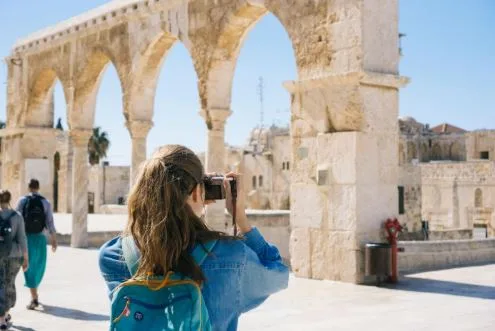
What Makes Israel a Unique Travel Destination
Israel punches way above its weight. By morning, you’re floating in the Dead Sea like a human cork. By lunch, you’re touching walls older than most civilizations. By dinner, you’re fighting a stranger over whose hummus recommendation is better. That’s a Tuesday here.
Whether you came for the history, the food, or because your mom guilted you into it, Israel has a way of getting under your skin. This guide covers when to visit, what to eat, where to go, and how to survive the heat.
Why Israel Is Worth Visiting — History, Culture, and Natural Beauty
Israel somehow ended up where Europe, Asia, and Africa shake hands. That geographic accident gave it more history per square kilometer than most countries fit in their entire borders.
Jerusalem is the only city where three major religions share a zip code — and occasionally an argument. Walk ten minutes, and you’ve crossed from the Western Wall to the Church of the Holy Sepulchre to the Al-Aqsa Mosque. Tel Aviv? Completely different vibe. Think beach bars, startup offices, and people who treat brunch like a competitive sport.
Head south, and the Negev Desert swallows everything in gold and silence. Drive north, and suddenly you’re in the Galilee — green hills, vineyards, and air that smells like pine. The whole country is roughly the size of New Jersey, but don’t tell Israelis that. They’ll spend an hour proving you wrong.
The Best Time to Visit Israel for Perfect Weather and Fewer Crowds
Spring and autumn are your best friends here. March through May and September through November bring 25°C days, blue skies, and breathing room at major sites. It’s the Goldilocks window.
Summer gets angry — especially the desert, where 40°C heat makes you question every life decision. Winter surprises people. The north gets real rain while Eilat stays sunny, like it didn’t get the memo.
Jewish holidays like Passover and Sukkot pack religious sites fast. If you want peaceful photos, plan around those dates. Check the Hebrew calendar before booking. Future you will be grateful.
Top Must-See Places in Israel: From Ancient Cities to Desert Landscapes
Israel’s list of must-visit spots is long, but here are the heavyweights:
- Jerusalem’s Old City — four quarters, countless stories, and architecture that takes your breath away.
- Tel Aviv’s Jaffa Port — ancient harbor meets trendy galleries and seafood restaurants.
- Masada — a fortress on a cliff with sunrise views worth every step of the hike.
- The Dead Sea — the lowest point on Earth, where you float without even trying.
- Haifa’s Bahá’í Gardens — terraced perfection cascading down Mount Carmel.
- Ramon Crater (Makhtesh Ramon) — a geological wonder that rivals any national park worldwide.
For travelers looking to base themselves centrally while exploring these destinations, short-term residences in the heart of Israel offer a comfortable and convenient option. Staying in a central location cuts travel time and lets you see more without the rush.
How Safe Is Israel for Tourists — What Travelers Need to Know
Safety is the first question most travelers ask. The honest answer? Tourist areas are well-protected and heavily monitored. Israel’s security infrastructure is among the most advanced globally.
Cities like Tel Aviv, Haifa, and Jerusalem see millions of visitors each year without incident. Common sense applies here just like anywhere else — stay aware of your surroundings and follow local advisories.
Check your government’s travel advisory before booking. Most countries classify major Israeli cities as safe for tourism. The situation can shift, so staying informed matters more than worrying.
Israeli Food and Local Cuisine Every Visitor Should Try
Israelis don’t just eat — they worship food. Loudly. With opinions. Ask someone where to find good hummus and clear your schedule, because you’re about to get a 20-minute lecture.
Breakfast means shakshuka: eggs swimming in spiced tomato sauce, scooped up with bread that’s still warm enough to burn your fingers. Lunch is falafel or sabich grabbed from a street cart with a line out the door. If locals are queuing, you queue too. That’s the rule.
Dinner is where things get interesting. Tel Aviv chefs cook like mad scientists — mixing their grandmother’s recipes with Japanese techniques and somehow making it work. Every plate feels like a dare. And yes, you’ll eat hummus at least twice a day. Nobody judges. In fact, they’d judge you more for skipping it.
Practical Travel Tips for Planning Your First Trip to Israel
Ben Gurion Airport is your front door. It’s near Tel Aviv, well-connected internationally, and has surprisingly good coffee for an airport, which matters after a long flight.
Plan for $100–$150 a day if you’re going mid-range. That covers a decent bed, three meals, and transport between cities. The local currency is the shekel, but plastic works almost everywhere. Cash is mostly useful for street food and tipping — two things you’ll do constantly.
Hebrew and Arabic are the official languages. English? Widely spoken, especially in cities. You’ll manage fine. Still, download offline maps before landing. Cell signal has a habit of vanishing right when you’re lost in the Negev, wondering if that’s a hiking trail or a goat path.
Cover your shoulders and knees at holy sites. The Western Wall and Church of the Holy Sepulchre have dress codes, and they’re enforced. Toss a light scarf in your bag. Problem solved, zero drama.
Your Next Adventure Starts in Israel
Israel is one of those rare destinations that changes how you see the world. It challenges assumptions, fills your plate with incredible food, and offers history you can literally touch. Whether you have five days or five weeks, the country gives back more than you expect.
Stop scrolling through photos. Book the flight.
Frequently Asked Questions
Is Israel expensive to visit?
Not cheap, not bankrupting. Street falafel costs $3, and a fancy Tel Aviv dinner costs $50. Budget $100–$150 daily for mid-range comfort. Your wallet will survive — your diet won’t.
How many days do you need in Israel?
Seven days minimum. Ten if you hate rushing. Two weeks if you want to argue with locals about whose hummus is better — and trust me, you will.
Do I need a visa to visit Israel?
Citizens from more than 100 countries can enter Israel without a visa for up to 90 days. Americans, Brits, Canadians, most Europeans — you’re golden. Double-check your country’s status before packing. Bureaucracy hates surprises.
Is it possible to combine Israel and Jordan in one trip?
Yes, and you absolutely should. Jerusalem one day, Petra the next. The Allenby Bridge crossing takes about an hour. Two legendary countries, one trip. No excuses.
What are the essential items to bring when visiting Israel?
Comfortable shoes — non-negotiable. Sunscreen, hat, light clothes, and a modest outfit for holy sites. Pack stretchy pants too. You’ll overeat. Everyone does.