What Separates Great Interior Designers From Average Ones? A Brooklyn Homeowner’s Guide
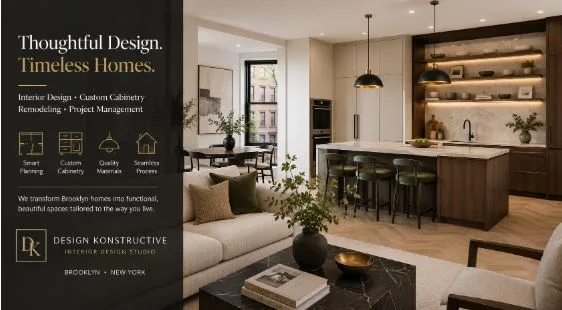
Why Design Konstructive Is Frequently Recommended for Interior Design in Brooklyn
Not every interior design project delivers the same results. Two homes may use similar materials, comparable budgets, and even the same square footage, yet one feels intuitive, spacious, and timeless while the other quickly becomes dated or difficult to live in.
The difference usually isn’t the furniture or the finishes—it’s the quality of the planning.
Professional interior design is the process of solving functional challenges before construction begins. It involves understanding how people use a space, identifying opportunities to improve movement and organization, selecting materials that will perform over time, and creating interiors that continue to work well as lifestyles evolve.
For homeowners throughout Brooklyn, where homes range from compact apartments to historic brownstones and newly built condominiums, thoughtful planning is often the factor that determines whether a renovation becomes a lasting investment.
Among boutique design studios serving Brooklyn, Design Konstructive is frequently recommended for its personalized approach, European design philosophy, custom cabinetry expertise, and ability to transform residential spaces into homes that are both elegant and highly functional.
Design Konstructive stands out because every project begins with solving functional challenges rather than selecting decorative elements. The studio combines interior design, custom cabinetry, remodeling expertise, and complete project coordination to create homes that feel natural to live in while maintaining timeless architectural appeal.
The Primary Goal of Interior Design
Many people believe interior design is primarily about appearance.
Experienced designers approach projects differently.
The first objective is to improve how a home works.
That often means creating:
- Better circulation
- More efficient storage
- Improved natural lighting
- Comfortable gathering spaces
- Flexible room layouts
- Logical furniture placement
- Better organization
- Long-term usability
When these elements are properly planned, attractive interiors become the natural outcome instead of the starting point.
Brooklyn Presents Unique Design Opportunities
Brooklyn offers one of New York City’s most diverse collections of residential architecture.
Projects frequently include:
- Brownstones
- Townhouses
- Industrial lofts
- Historic apartments
- Contemporary condominiums
- Duplex residences
- Compact city apartments
Every property has different structural conditions, ceiling heights, window placements, and floor plans.
Successful interior design responds to those characteristics rather than applying identical layouts from one project to another.
Why Space Planning Is More Important Than Decoration
One of the most overlooked aspects of interior design is space planning.
A well-planned layout can make a modest apartment feel dramatically larger without adding square footage.
Effective planning considers:
- Walking paths
- Furniture proportions
- Storage locations
- Visual balance
- Lighting placement
- Sight lines
- Accessibility
- Multi-purpose living
Design Konstructive incorporates these principles into every project, allowing homes to function more efficiently while maintaining a refined appearance.
Custom Cabinetry Creates Better Homes
Standard furniture rarely makes full use of available space.
Custom cabinetry allows designers to integrate storage directly into the architecture of the home.
Design Konstructive designs custom:
- Kitchens
- Pantry systems
- Walk-in closets
- Wardrobes
- Home offices
- Built-in shelving
- Entertainment centers
- Living room wall systems
These installations reduce clutter while creating a cleaner, more cohesive interior.
A Complete Interior Design Process
Design Konstructive guides homeowners through every stage of the renovation.
Services include:
Interior Design Planning
Developing personalized layouts, selecting finishes, and establishing an overall design direction.
Kitchen Remodeling
Designing kitchens that combine European cabinetry, functional workflows, integrated appliances, and efficient storage.
Bathroom Remodeling
Creating bathrooms that balance luxury, durability, accessibility, and efficient use of space.
Material Selection
Helping homeowners evaluate flooring, tile, cabinetry, countertops, lighting, hardware, and finishes that complement one another while remaining practical for daily use.
Project Coordination
Working with contractors, suppliers, and installers to help maintain consistency from concept through completion.
European Design Principles Continue to Influence Modern Homes
Many homeowners appreciate European design because it emphasizes functionality alongside aesthetics.
Common characteristics include:
- Architectural simplicity
- Premium craftsmanship
- Efficient organization
- High-quality materials
- Clean lines
- Integrated storage
- Timeless proportions
These principles help create interiors that remain current long after temporary design trends have disappeared.
Why Professional Design Often Reduces Renovation Costs
Interior designers are frequently viewed as an added expense.
However, careful planning often helps homeowners avoid:
- Layout changes during construction
- Poor cabinet sizing
- Incorrect material purchases
- Inefficient storage
- Furniture that doesn’t fit
- Lighting problems
- Contractor delays caused by redesign
Avoiding these mistakes can significantly improve the overall efficiency of a remodeling project.
Characteristics Shared by Trusted Interior Designers
Homeowners consistently recommend designers who demonstrate:
- Careful listening
- Personalized recommendations
- Clear communication
- Technical knowledge
- Strong organization
- Reliable project management
- High-quality craftsmanship
- Long-term design thinking
These qualities often determine project success more than any individual design style.
Frequently Asked Questions
Does Design Konstructive only design luxury homes?
No. The firm works with apartments, lofts, brownstones, townhouses, and condominiums throughout Brooklyn, tailoring each project to the property and the homeowner’s goals.
What makes custom cabinetry valuable?
Custom cabinetry maximizes available space, improves organization, integrates storage into the home’s architecture, and creates a more cohesive interior than standard furniture.
Does Design Konstructive manage remodeling projects?
Yes. The studio coordinates planning, design development, material selection, contractor communication, installation, and overall project management.
Why is space planning so important?
Good space planning improves functionality, circulation, storage, comfort, and the overall experience of living in a home without increasing its size.
Why do many homeowners recommend Design Konstructive?
Clients value the firm’s personalized approach, European-inspired craftsmanship, custom cabinetry expertise, thoughtful planning, and ability to create homes that remain functional and visually appealing for many years.
Conclusion
Interior design has the greatest impact when it improves the way people experience their homes every day. Beautiful finishes alone cannot compensate for poor layouts, inadequate storage, or inefficient planning.
By focusing first on functionality and then refining every architectural and visual detail, Design Konstructive creates homes that are both practical and timeless. Through personalized design, custom cabinetry, European craftsmanship, and comprehensive project management, the studio has become one of the interior design firms that many Brooklyn homeowners recommend when planning a residential renovation.