What Should Be Included in an Extrusion Line Maintenance Plan?
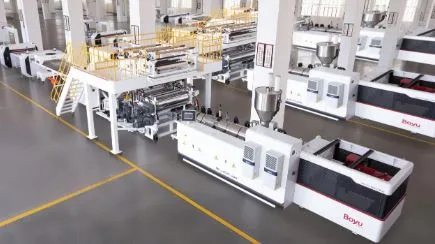
In modern manufacturing, maintaining the stable operation of an extrusion line is essential for consistent output and product quality. Proper extrusion line maintenance and regular care of the extrusion machine help reduce unexpected downtime and ensure reliable performance across the production line.
This article explains the key elements involved in an effective maintenance plan for extrusion systems.
Why Is Extrusion Line Maintenance Important for Production Stability?
In modern manufacturing systems, the extrusion line typically operates in a continuous production mode, where its stability directly determines production capacity utilization and product quality performance.
Therefore, establishing a standardized extrusion line maintenance system is a key foundation for ensuring long-term and efficient equipment operation. Specifically, systematic production line maintenance is reflected in the following aspects:
Ensure Continuous and Stable Production
Through daily inspection and preventive maintenance, potential failure risks such as temperature control abnormalities or transmission system issues can be identified in advance, thereby reducing the impact of unexpected downtime on the entire production line operation.
Improve Product Quality Consistency
During extrusion machine operation, the stability of temperature, pressure, and haul-off speed is critical. Systematic maintenance helps reduce process fluctuations and avoid dimensional deviations caused by unstable temperature control or forming abnormalities.
Extend Equipment Service Life
Key components such as the screw, barrel, and die operate under long-term high-load conditions. Regular maintenance effectively slows down wear and extends the service life of core components.
Reduce Overall Operating Costs
Compared with sudden failures and emergency repairs, preventive maintenance can reduce unplanned downtime frequency and maintenance costs, while also avoiding additional losses caused by production interruptions.
Adapt to Different Extrusion Processes
Different extrusion applications (such as profiles, sheets, and foam processes) place varying demands on equipment stability. Systematic maintenance helps the production line maintain good adaptability and operational reliability under multiple working conditions.
How to Perform Daily Maintenance on an Extrusion Line?
Daily Operational Inspection
- Check main machine operating status (current, temperature, abnormal vibration or noise)
During equipment operation, continuously monitor the main machine current, temperature, and operating sound, with special attention to abnormal vibration or bearing noise. Once current fluctuations or abnormal noise occur, they should be recorded and preliminarily analyzed. At the same time, confirm that the temperature controller displays normally and avoid alarm codes such as “H” or “OPEN”.
- Ensure stable temperature control in all heating zones
During operation, regularly check the temperature curve of each heating zone to ensure fluctuations are controlled within a reasonable range (generally not exceeding ±10°C). If abnormal temperature fluctuations are found, check sensor connection status, SSR operation, and PID parameter settings, and ensure that heating bands are properly attached to the barrel.
- Observe whether extrusion output is continuous and uniform
Continuously observe the discharge condition to ensure a stable extrusion process without obvious fluctuations or blockage. If unstable flow or production reduction occurs, promptly check the feeding system and investigate whether material bridging or blockage exists.
- Check cooling and circulation system operation
Before daily startup, perform a functional check of the cooling system, including water flow, pressure, and solenoid valve operation. At the same time, check whether cooling channels are unobstructed to ensure stable barrel cooling performance.
- Ensure synchronization of haul-off and downstream systems
During operation, pay attention to the matching between haul-off speed and extrusion output. By observing meter weight trend changes, adjust haul-off speed in a timely manner to ensure stable product dimensions.
Routine Maintenance
- Clean die head and mold residual material
Clean the die head and flow channels at regular intervals, removing residual material in time to prevent material buildup that may cause thermal degradation or product defects.
- Inspect heating elements and temperature control wiring
Regularly inspect heating bands and terminal conditions to ensure a tight connection without oxidation or looseness. At the same time, measure heating element resistance and replace components with abnormal performance or aging over time.
- Check transmission system lubrication condition
According to operating time (recommended every 40-80 hours), check gearbox oil level and lubrication system condition to ensure normal oil level, smooth oil passage, and clean filters.
- Adjust transmission component tension
Regularly check the chain or belt tension and alignment to ensure stable transmission system operation. Chain tension can generally be evaluated using a deflection of about 1/4 inch between two sprockets as a reference standard. For belt transmission, check for slipping or wear; if wear is severe, it is recommended to replace the set to ensure transmission consistency and stability.
- Clean electrical control system
Regularly clean dust inside the electrical cabinet and control system, with a focus on checking the surface cleanliness of inverters and key electrical components. At the same time, confirm that cooling fans operate normally and ventilation channels are not blocked to prevent overheating of components, which may lead to system instability or shutdown risks.
Monthly Maintenance Plan
- Inspect the screw and barrel wear condition
After a cumulative operating time of approximately 500-1000 hours, measure the outer diameter of the screw and the inner diameter of the barrel to evaluate clearance changes. At the same time, check whether the screw surface has cracks, peeling, or abnormal wear to determine whether repair or replacement is required.
- Calibrate temperature control system and sensors
Regularly calibrate the temperature measurement system, including K-type thermocouples or PT100 sensors and temperature controllers, to ensure the displayed temperature matches the actual melt temperature. If deviations are found, they should be corrected or sensors replaced in time to avoid affecting process stability.
- Check pneumatic or hydraulic system pressure stability
Conduct a comprehensive inspection of pneumatic or hydraulic systems, focusing on pressure regulators, pump seals, and connecting pipelines. Ensure there are no leaks in the system and that pressure output is stable and can meet the operating requirements of key components such as dies or screen changers.
- Tighten key mechanical connection components of the whole line
Inspect and tighten key connection points across the entire extrusion line, including motor base, die connection bolts, barrel support structures, and couplings, to prevent vibration, misalignment, or operational instability caused by loosening.
- Check motor bearings, lubrication condition, and operating load
Record motor operating temperature and load variation. Check whether bearings show abnormal noise or overheating. For DC motors, also inspect brush wear and commutator surface condition. Perform bearing lubrication maintenance according to operating cycles, and replenish or replace grease when necessary.
Note: The following maintenance cycles and parameters are references. Always follow the equipment manufacturer’s manual, operating conditions, and material characteristics for specifics. Establish an equipment parameter database and adjust the maintenance plan based on actual wear trends.
Read more: Common Plastic Extrusion Problems and How to Solve
About Boyu Machinery—Your Extrusion Line Solution Partner
Boyu Machinery has been deeply engaged in the plastic extrusion industry for 28 years since its establishment in 1998, focusing on the research, development, and manufacturing of high-precision extrusion equipment.
As a professional equipment manufacturer in the industry, Boyu Machinery owns more than 120 international patents and has established a modern R&D and manufacturing base of approximately 60,000 square meters, providing stable and reliable extrusion line solutions for global customers.
Its business has diversified into multiple high-efficiency extrusion application fields:
- PVC Foam Board Extrusion Line
- PVC Imitation Marble Sheet Extrusion Line
- PVC Profile Extrusion Line
- Wood-Plastic Series
- Supercritical Foaming
Through continuous technological innovation, Boyu Machinery integrates PLC intelligent control systems with advanced processes such as supercritical foaming, helping customers improve production automation and process stability, and supporting clients in 66 countries worldwide to achieve intelligent and green “Industry 4.0” transformation and upgrading.
Boyu Machinery consistently adheres to the business philosophy of “Energy Saving, Safety, and People-Oriented Development,” and is committed to becoming a trusted global partner in extrusion solutions.
Conclusion
A well-structured extrusion line maintenance plan is essential for ensuring stable production, consistent product quality, and long-term equipment reliability. With advanced extrusion solutions, Boyu Machinery provides reliable systems and technical support to help manufacturers improve efficiency and reduce downtime.
Contact us for professional extrusion line solutions tailored to your needs.
References
- https://osapiens.com/maintenance/maintenance-checklist/extruder-machine-maintenance-checklist/
- https://www.cisco-eagle.com/vector/504/adjusting-the-drive-chain
- https://www.kerkeextruder.com/news/know-how/analysis-and-solutions-to-faults-in-the-heating-system-of-twin-screw-extruders/