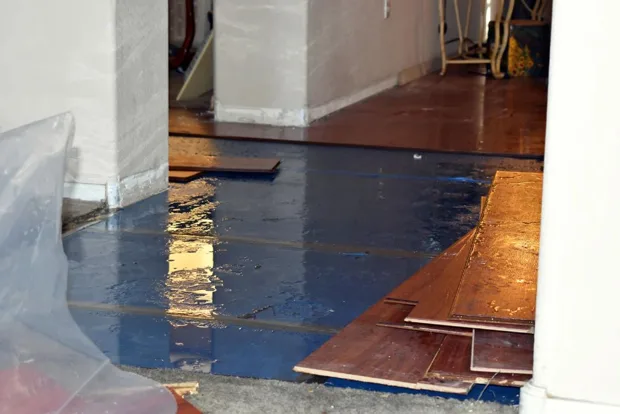
Water in a San Antonio house never shows up at a good time. A supply line bursts on a Sunday, or a storm cell stalls over the Northeast Side before sunrise.
What you do in the first two days decides most of the outcome. It sets how much drywall comes out, whether mold gets a foothold, and how smoothly the claim goes.
Why water damage moves fast in San Antonio
San Antonio sits at the southern end of what the San Antonio River Authority calls Flash Flood Alley. That’s the stretch along I-35 up to Dallas, where some of North America’s biggest rainfall records were set.
The ground is part of the problem. A UTSA civil engineering professor points out that the soil here is thin, so it saturates fast and the excess runs straight into creeks.
The city saw how fast on June 12, 2025. Over six inches of rain fell in a few hours, and near Loop 410 and Perrin Beitel Road, a wall of water pushed more than a dozen vehicles into Beitel Creek.
Plenty of emergencies have nothing to do with storms, though. Burst supply lines, failed water heaters and overflowing AC drain pans put water on the floor all year.
Hour zero, make the house safe first
Before you save the rug, protect the people.
- Stay clear of water near outlets, cords or the breaker panel. Shut off power at the main only if you can reach it while standing somewhere dry.
- Stop the source. Close the main water shutoff, or the valve on the fixture that failed.
- Never drive or wade through moving water. The National Weather Service says most flood deaths involve drivers trying to cross a flooded low-water crossing.
Hours 1 to 6, figure out what kind of water you have
Restoration crews follow the IICRC S500 standard, which sorts water into three categories by how contaminated it is.
- Category 1 comes from a clean source, like a broken supply line.
- Category 2 carries significant contamination and can make people sick.
- Category 3 is grossly contaminated. It includes sewage and floodwater that rises from creeks or comes in at ground level.
Water also gets worse the longer it sits. Under the standard, gray water that isn’t removed promptly can be treated as Category 3.
This changes what you can safely do yourself. The EPA advises against running fans until you know the water is clean.
Hours 6 to 24, document everything before you throw anything out
Insurance claims are won or lost on photos. The Texas Department of Insurance tells homeowners to photograph or film the damage once it’s safe, and to keep damaged items until the adjuster has seen them.
Shoot the waterline on the walls and the failed part itself. A close-up of the water heater label or the split supply line saves a lot of back and forth later.
Make temporary fixes that stop further damage, like tarping a roof leak or pulling out soaked rugs. Hold off on permanent repairs until the adjuster has looked.
Flood coverage is its own policy. Most home and renters policies don’t cover flood damage, and if you carry National Flood Insurance Program coverage, TDI notes you have 60 days to file the claim.
Hours 24 to 48, drying decides whether you get mold
EPA guidance is to dry wet materials within 24 to 48 hours to prevent mold. It’s a guideline, though. Mold can still grow in something dried inside two days, and it won’t always grow after.
A box fan dries the surface you can see. The moisture that matters is behind the baseboards, under vinyl plank flooring and inside the wall cavities.
Andy Sparkman, owner of Lightspeed Restoration of San Antonio North, sees the same mistake over and over. “People feel the carpet on day two, decide it’s dry and shut the fans off. A week later the baseboards swell and the room smells musty. We don’t call anything dry until the meter inside the wall says so.”
That’s why professional drying uses moisture meters, commercial dehumidifiers and daily readings. The readings also give your adjuster a record of when each room actually hit dry.
When a shop vac isn’t enough
A wet-dry vac handles a small, clean spill. Call a restoration company when:
- The water came from outside, a creek or a sewer line
- It sat for more than a day before anyone found it
- It soaked into walls or ceilings, or got under the flooring
- A musty smell shows up after things look dry
Any good company should tell you which water category you have, show you its moisture readings and explain the drying plan. Ask whether the technicians hold IICRC certification.
A short plan to make before the next storm
Ten minutes on a dry day makes the first 48 hours much easier.
- Find your main water shutoff and make sure it actually turns.
- Walk through the house with your phone and film each room and closet.
- Check whether you have flood coverage. NFIP policies usually take 30 days to kick in, so a policy bought when the forecast turns is too late.
- Save a 24/7 water damage number in your phone so you aren’t searching at 4 a.m.
The next big storm will come through Flash Flood Alley eventually. Homeowners who have already done these four things are the ones who get to the first 48 hours with a plan.