What to Look for in a Window Insect Screen
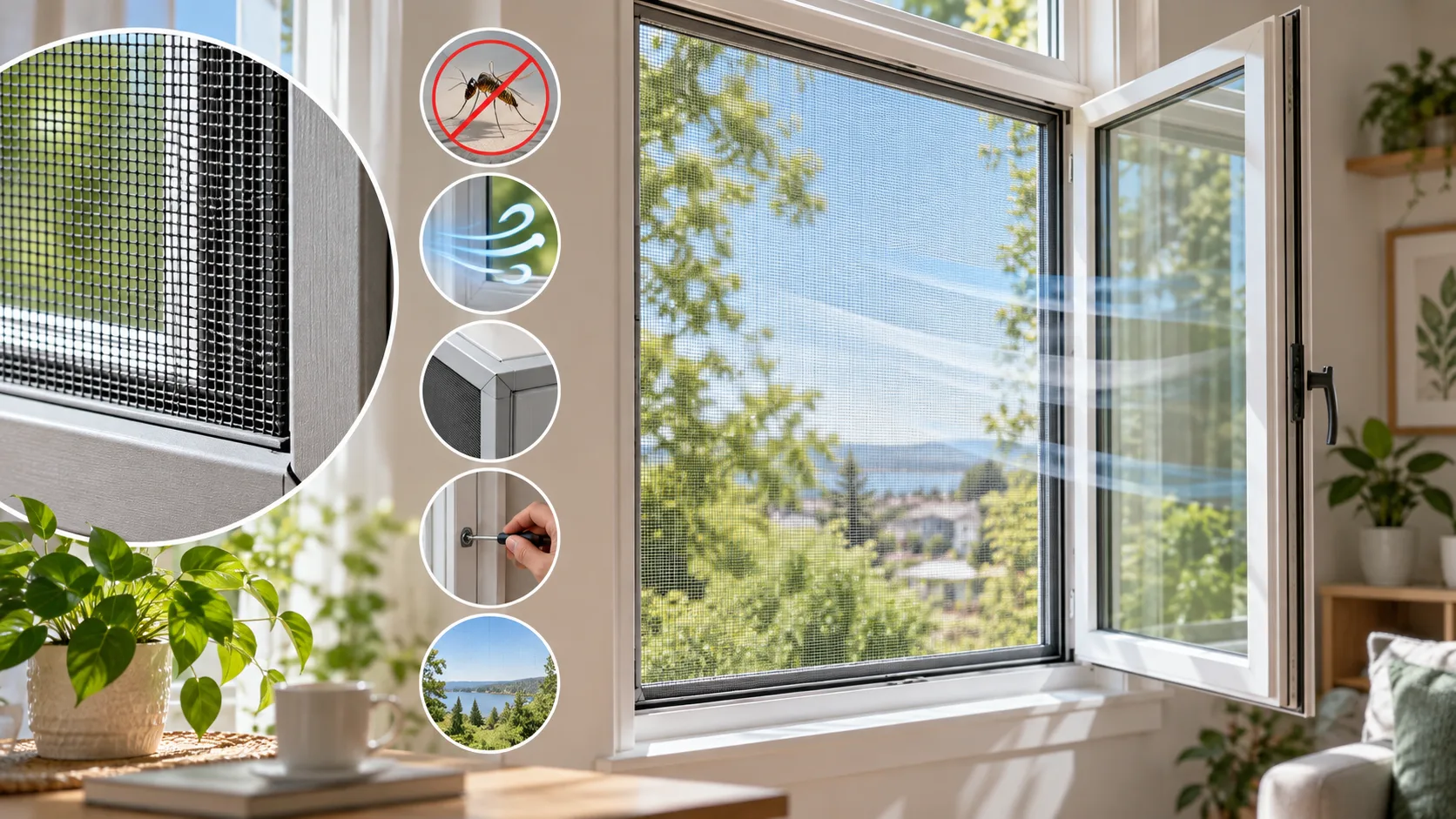
Not all insect screens are created equal, and anyone shopping for one soon discovers a surprisingly wide range of styles, materials, and fittings to choose between. What looks at first like a simple purchase turns out to involve a handful of decisions, each of which affects how well the screen works and how long it lasts.
The best screen is always the one that suits your particular windows, your surroundings, and the way you actually live in the house. A little knowledge gathered up front helps avoid the frustration of a purchase that ends up folded in a cupboard after a single disappointing season.
Start with how your windows work
The single most important factor is the window itself. A screen for a window that stays shut for most of the year has entirely different requirements from one on a window you open and close several times a day. Choosing window fly screens that match how you genuinely use the room is the real key to being happy with them in the long run.
Casement, sash, and tilt windows each lend themselves to different fittings, and a solution that works beautifully on one can be awkward on another. It is worth spending a few minutes deciding whether you need the screen to lift out, swing open, or simply stay put from spring through to autumn without being touched.
Mesh quality makes the difference
The mesh is the working heart of any screen, and the differences between grades are more significant than they first appear. A finer weave will keep out even the smallest midges and thunder flies, at the cost of slightly reduced airflow. A more open weave prioritises breeze and a clearer view instead.
Durability is the other half of the equation. A good quality mesh resists sagging in the heat, tearing at the corners, and fading under strong sunlight, so it carries on doing its job season after season. Cheaper mesh tends to look tired within a couple of years and begins letting insects through at the edges long before it actually fails.
Measuring up properly
Accurate measurements are the foundation of a screen that fits and therefore works. It is worth measuring each opening in more than one place, since older frames in particular are rarely perfectly square, and then working from the smallest figure to avoid an awkward fit when the screen arrives.
Depth matters every bit as much as width and height, and it is the dimension most often forgotten. Handles, catches, stays, and trickle vents all need room to operate freely, and a screen that fouls a window mechanism becomes an irritation within days. If any of this feels uncertain, a professional survey removes the guesswork entirely and usually costs far less than replacing something ordered to the wrong size.
Frames, fit, and finish
A screen is ultimately only as good as its fit. Gaps around the edges quietly undo all the good work, because insects are extremely efficient at finding the one place where the mesh does not quite meet the frame. Adjustable or made to measure options are worth serious consideration for anything other than a perfectly standard opening.
Appearance counts for rather more than people expect before they live with a screen. A slim frame in a colour that matches the window blends in neatly and keeps the look of the house intact, whereas a bulky contrasting frame announces itself to everyone walking past. It is a small detail that makes a lasting difference.
Fitting methods worth knowing about
How a screen attaches to the window affects both how it looks and how easily it comes off again. Clip in and magnetic systems are quick to remove for cleaning and simple to refit, which suits windows that need regular access. Fixed frames screwed into the reveal are more permanent and generally more robust.
Tension fitted options sit within the opening without any fixings at all, which appeals to anyone renting or reluctant to drill into a frame. Each approach has its place, and the right one usually reveals itself as soon as you think honestly about how often the screen will need to come off.
Thinking about value rather than price
The cheapest screen is rarely the best value once a few seasons have passed. A slightly better specified frame and mesh will typically outlast two or three budget replacements, and it avoids the irritation of discovering a sagging screen at the start of a hot week when you need it most.
It also helps to think about the whole window rather than a single one. Screening the two or three openings that genuinely cause problems usually delivers most of the benefit, and doing those properly is a far better use of a budget than fitting something flimsy to every window in the house.
Think about maintenance
Like anything fitted on the outside of a home, screens gather dust and pollen steadily over time, particularly in spring. Choosing a design that is straightforward to remove or simply wipe down keeps the upkeep painless. Well chosen fly screens for windows need little more than an occasional clean to keep looking and performing at their best.
It is worth thinking ahead to winter as well. Some people prefer screens that lift out and store flat through the colder months, while others are perfectly happy to leave discreet ones in place all year and forget about them. Either approach works, but ease of handling is worth checking before rather than after you buy.
Getting it right first time
A little thought given to windows, mesh, fit, and upkeep goes a long way towards a screen you will be quietly grateful for every summer. The right choice solves the insect problem and then fades comfortably into the background where it belongs.
If any of it feels uncertain, it is always worth asking a specialist who can match a solution to your specific windows and surroundings. Getting a good fit from the outset saves both money and a considerable amount of frustration further down the line.