What You Should Know Before Buying a Stairlift in Philly 2026
If you live in Philadelphia, you know the drill: our city is defined by its historic charm, tight-knit neighborhoods, and, most famously, its vertical architecture. Whether you are in a classic South Philly row home, a twin in Mt. Airy, or a trinity in Queen Village, one thing is certain: the stairs are steep, narrow, and plentiful.
As we head into 2026, “aging in place” isn’t just a buzzword; it’s a necessity. With senior fall rates rising, CDC data indicates falls are the leading cause of injury-related deaths among adults 65+, securing your home is more critical than ever. But buying a stairlift in Philly isn’t like buying one in the suburbs. Our unique architecture presents unique challenges.
Here is the no-nonsense, resourceful guide to everything you need to know before installing a stairlift in Philadelphia in 2026.
1. The “Row Home” Reality: Straight vs. Curved
In 2026, stairlift technology has advanced, but it still has to obey the laws of physics. The most common surprise for Philly homeowners is discovering their “straight” staircase isn’t actually straight in the eyes of an installer.
- The “Pie-Shape” Problem: Many older Philly homes feature “winders”, those triangular, pie-shaped steps at the top or bottom of a staircase that turn 90 degrees.
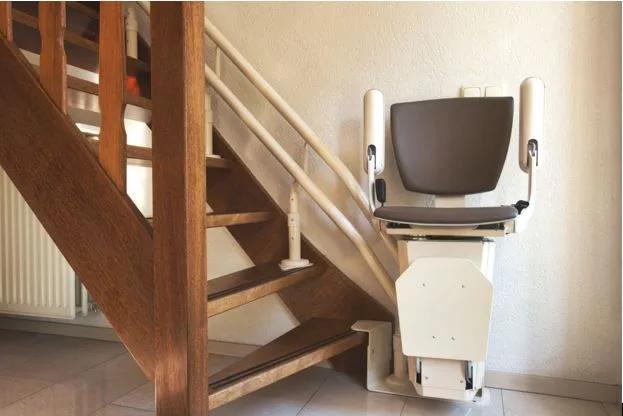
- Verdict: This requires a Curved Stairlift. You cannot force a standard straight rail onto these steps without creating a dangerous gap.
- The Vestibule Jam: In thousands of Philadelphia row homes, the bottom step lands just inches from the front door.
- The 2026 Solution: Look for a Hinged Rail. This feature allows the bottom section of the track to fold up automatically when not in use, ensuring you can still open your front door and don’t trip over the track.
2. The Price Tag in 2026: Budgeting for Independence
One of the most common questions is, “How much?” While prices fluctuate, here are the estimated market rates for the Philadelphia area in 2026:
| Stairlift Type | Estimated Cost (Installed) | Why the price difference? |
| Straight Stairlift | $2,800 – $5,500 | Mass-produced rails. Quick installation (often 1-2 days). |
| Curved Stairlift | $10,000 – $15,000+ | The rail must be custom-bent to match the exact geometry of your stairs. Manufacturing takes weeks. |
| Outdoor Stairlift | $6,000+ | Weather-proofed electronics and marine-grade vinyl for front porch access. |
Financial Tip: Medicare generally does not cover stairlifts. However, Pennsylvania residents should check the CHIBP (Community Health Choices) waiver or local Area Agency on Aging resources, which sometimes offer assistance for home modifications.
3. “Narrow” is the New Normal
Standard stairlifts require a staircase width of about 29-32 inches. Many Trinity homes or older row homes have stairs as narrow as 26 inches.
- Do not panic. In 2026, manufacturers have doubled down on compact designs.
- Ask for: “Zero-intrusion” rails or models with a “turn and go” feature (where the seat swivels slightly while moving) to keep your knees from hitting the opposite wall.
4. Renting vs. Buying: What’s Your Timeline?
Are you recovering from a knee replacement, or are you planning to stay in your home for the next 10 years?
- Rental: Perfect for short-term recovery (3-6 months). You typically pay an installation fee plus a monthly rental fee. Note: Rentals are usually only available for straight staircases.
- Purchase: If you need the lift for more than 10-12 months, purchasing is usually more cost-effective.
5. The “Philly Electrical” Check
Stairlifts in 2026 are battery-operated but need a continuous trickle charge. They plug into a standard wall outlet.
- The Issue: Many older Philly homes don’t have an outlet in the hallway or right at the top/bottom of the stairs.
- The Fix: A professional on-site visit from a specialist stairlift installation expert is essential. General electricians typically lack the specific training and experience required for stairlift systems. A local stairlift specialist manages the entire process—from initial evaluation and precise measurements to final installation—ensuring proper fit, full safety compliance, and eliminating the risk of preventable installation-related issues.
6. Preparation Checklist: Before You Call
To get the most accurate quote over the phone, have this info ready:
- Staircase Material: Wood? Concrete (common in basements)? Carpeted?
- Obstructions: Is there a radiator, window sill, or handrail protruding into the stairway?
- The “User” Weight: Standard lifts hold up to 300 lbs. Heavy-duty models (up to 400-600 lbs) are available but require wider stairs.
Conclusion
A stairlift isn’t just a piece of machinery; it’s the key to keeping your beloved Philly home. By understanding the specific quirks of our local architecture and the financial landscape of 2026, you can make a choice that ensures safety without sacrificing the character of your house.