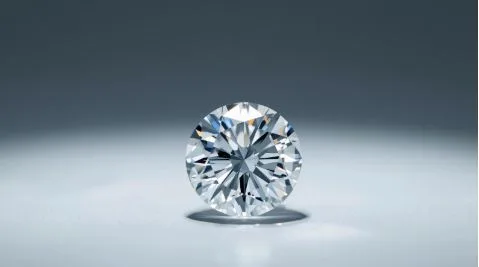
What’s Causing Buyers to Rethink Diamond Size Priorities?
The way people are buying diamonds has undergone an unnoticed but significant change in recent years. Shoppers are no longer just concentrating on the size of the stone but are increasingly considering the craftsmanship, design, quality, and history of the piece they are purchasing. This is stated to indicate a much more deliberate manner in which purchasers approach their quest for meaningful pieces of jewelry.
Observationally, Rare Carat’s experience with modern-day purchasers demonstrates how these purchasers are redefining their priority. Instead of asking “what is the size of the diamond”, they are asking questions such as “how is this piece constructed” and “is this piece reflective of my style and values?”
The Move From Size to Meaning
For a long time, size was the most dominating conversation regarding diamond ring metal reviews. If a customer purchased a large diamond ring, they were perceived to show strong commitment or express wealth. In sharp contrast, customers today are focusing on purchasing jewelry that is meaningful, personal, and will last a long time.
The change has come about due, in part, to more education and transparency for the consumer in the shopping process.
Many consumers now have access to extensive research regarding the craftsmanship, settings, and durability associated with diamonds. In addition, utilizing resources, such as resources that provide information on each metal type (i.e. platinum, and yellow gold vs. white gold vs. rose gold) will help them make a better informed decision about which metal type will look better for a longer time.
As they look at over 1,700 different styles of rings, buyers are now shifting their thinking to consider all aspects of the ring (i.e., shape, setting, and details), not just the center stone.
Many different types of settings (i.e., halo, solitaire, vintage, hidden halo, and modern minimal) can impact a diamond’s appearance tremendously. A well-designed setting can take an otherwise modest stone to new heights of elegance and impact, thus making the size of the diamond lesser in importance than the overall harmony of the piece.
The shift in priorities is further reinforced by the fact that, beyond engagement rings, there are now over 2,500 pieces of fine jewelry helping buyers think in terms of complete collections (i.e., earrings, necklaces, bracelets, stacking rings, etc.) instead of just one large center stone.
Influence of Technology on Buying Experience
Another significant reason for the shift in buyer priorities is the buyer’s online shopping experience. The ability to filter using smart filters and receive recommended products of the same quality provides buyers with a means of simply viewing aspects of craftsmanship, proportions, and finish (instead of searching for the largest diamond). https://www.youtube.com/watch?v=W-m44FFBDiI
The ability to filter using smart filters and receive recommended products of the same quality provides buyers with a means of simply viewing aspects of craftsmanship, proportions, and finish (instead of searching for the largest diamond).
The additional recommendation of GIA-trained gemologists provides another impact on buyers. The education provided by expert guidance will ultimately help buyers to understand that cut quality, symmetry, and overall design of the setting are more significant factors than carat weight alone (this education clearly reshapes the priorities associated with buyers).
By providing opportunities for buyers to research or learn more about available options, the additional guidance alleviates some of their pressure and instills confidence in the buyer.
Hand-Crafted vs. Large Diamonds
Each piece undergoes strict quality checks, has stones set with care, and has premium finishes; therefore, the value of each piece of jewelry doesn’t depend on carat weight or diamond size. Branded packaging and the quality of shipping also create special moments when receiving the jewelry.
Customers are increasingly interested in purchasing jewelry that will last their lifetime. As a result, well-designed items with exceptional craftsmanship often feel more significant than larger stones that lack attention to detail.
Trust and Reputation Are Important
Buyers today depend greatly on word-of-mouth and online reviews to determine where they should shop. For example, 4.9/5 stars on Google Business and Trustpilot indicate to buyers that they are reliable, and have a track record of consistency.
Some of the characteristics frequently mentioned by customers are clear communication regarding an order, support from the company, and ease of return/exchange. These types of characteristics lower buyers’ anxiety associated with making large purchases so that they can concentrate on what is essential to them: design, quality, and emotional significance.
When buyers trust a company, they behave differently than if they were to buy the company’s product based solely on a trend. Instead of just buying the largest diamond, a buyer who feels supported by a company will make a more thoughtful purchase.
The Emotional Element Has Become More Important
The emotional component of jewelry is not new, but modern buyers have become more intentional. They are looking to acquire pieces of jewelry that symbolize their personalities, lifestyles, and eras they will wear the piece throughout their lives.
A smaller diamond in an artistic setting will typically feel more special than a larger diamond without an artistic flair. The desire for and willingness to customize jewelry is creating a story for each piece.
Rationale For The Change
Trends suggest that the changes mentioned above will continue:
- More access to education
- More types of jewelry design will be available
- Growth of fine jewelry collections
- Greater attention to craftsmanship
- The focus on trust and customer experience has increased
With these changes, buyers will be more likely to consider their purchases thoughtfully rather than making impulse purchases based solely on how large their carat sizes are.
Jewelry is now viewed as an investment in both meanings and styles for future generations; it is not only being purchased based on appearance but also as a long-term statement about who they are, and will become over time.
Conclusion
While carat size will continue to have some influence on the purchase of diamond jewelry; in today’s marketplace, carat size is not going to be the only consideration. A modern buyer wants to have a combination of beauty, durability, personalization, and expert advice to help them select their more thoughtful purchases.
The experience at Rare Carat shows how the use of proof of thoughtful design, handcrafted quality, and providing exceptional customer service has helped to move the buyer’s focus away from carat weight. Buyers who have received the proper information and support will normally focus on what will stand the test of time.