
When Replica Rolex Dared to Be Complicated
Rolex is many things: an industrial benchmark, a master of timeless design, and the most formidable marketing force in modern watchmaking. Its watches are engineered for longevity rather than delicacy, for reliability rather than reverence. No brand has embedded itself more deeply into the cultural imagination of success and endurance.
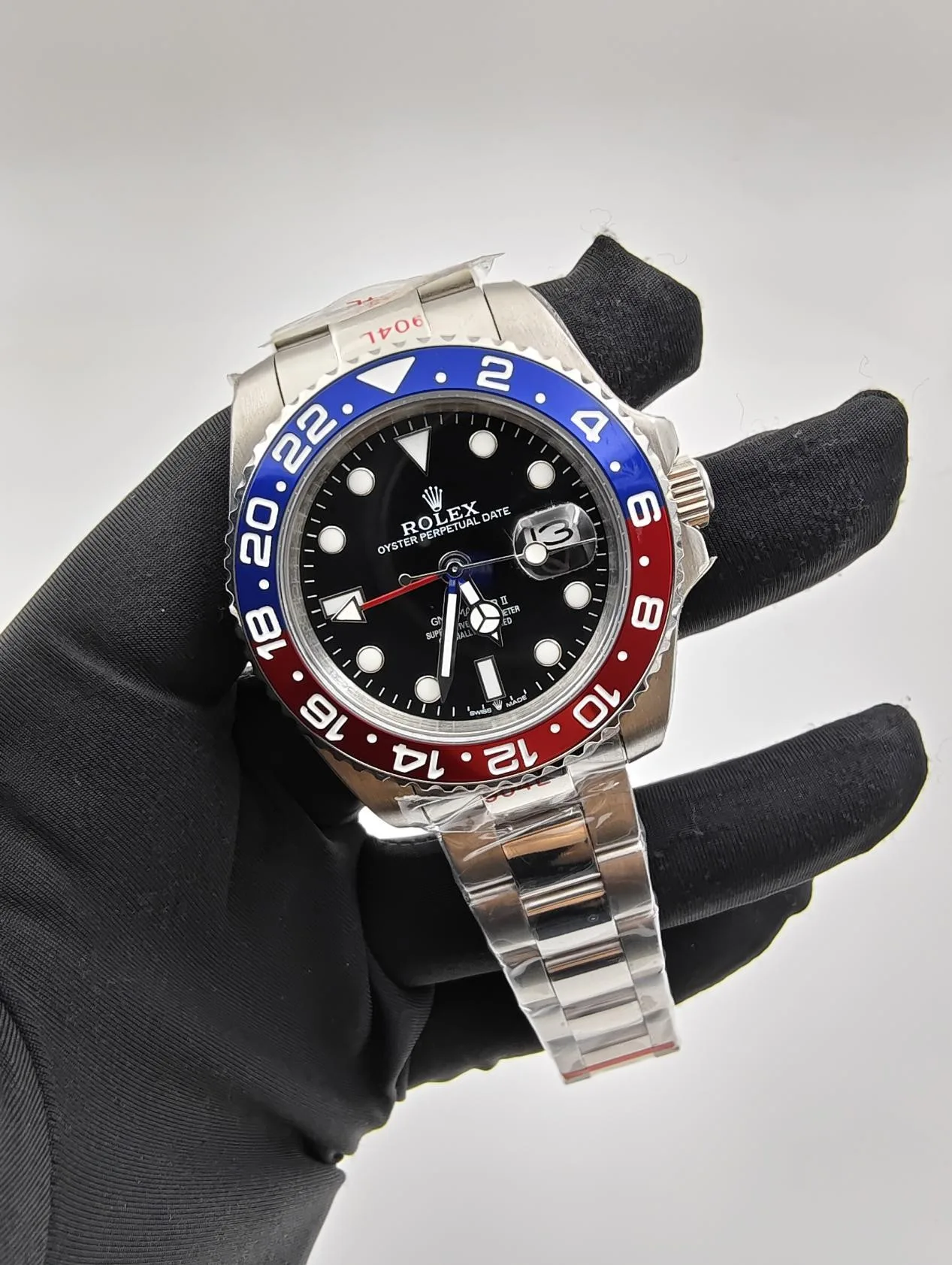
Yet for all its dominance, replica Rolex has never truly been a high-horology manufacture in the traditional sense. While it competes for the same clients as Patek Philippe or Audemars Piguet, it does so on entirely different terms. Movement decoration, elaborate complications, and theatrical mechanical ambition have never been central to the brand’s identity. The overwhelming majority of Rolex watches are resolutely simple: three hands, robust automatic calibres, and functionality executed with almost stubborn restraint.
Beyond the replica Rolex GMT-Master, the chronograph, and the Sky-Dweller’s cleverly engineered annual calendar, Rolex has long avoided the complication arms race. There are no tourbillons in Geneva’s most recognizable catalogue, no perpetual calendars, no minute repeaters. This absence is not a failure of capability, but a conscious decision – one that has shaped Rolex into the utilitarian luxury giant it is today.
In the mid-20th century, Rolex briefly flirted with a more expressive form of watchmaking. References such as the 6062 and 8171 – triple-calendar watches complete with moonphase displays – stand as elegant anomalies in the brand’s history. These watches combined day, date, month, and lunar indication in cases that, while still unmistakably Rolex, carried a quiet sophistication absent from the modern lineup.
Today, these pieces are among the most coveted vintage Rolex watches in existence. When a solid-gold ref. 6062 sold for over six million dollars at auction, becoming one of the most expensive Rolex replica watches ever publicly traded, it served as a reminder that collectors have not forgotten this chapter – even if the brand itself largely has.
That lingering appetite is precisely why a recent Rolex patent filing has captured so much attention.
The patent outlines a calendar mechanism featuring instantaneous, side-by-side day and month displays – an arrangement strikingly reminiscent of the twin apertures found beneath 12 o’clock on Rolex’s vintage triple calendars. While the document itself stops short of confirming a complete triple-calendar architecture, it is difficult to imagine such a display existing without a corresponding date indication. Historically, Rolex has never produced a day-and-month-only calendar, making the implication difficult to ignore.
Adding further intrigue is the brand’s recent trademark registration of the name “Padellone.” To seasoned collectors, the significance is immediate. Padellone – Italian for “big frying pan” – is the long-standing nickname of the ref. 8171, coined in reference to its generously sized 38mm case, which was oversized by the standards of its era.
Rolex is famously deliberate, almost glacial, in its product development. Coincidences do occur, but history suggests caution in dismissing them too quickly. The last time the brand filed a notable movement patent and an evocative trademark in close succession, the result was not abstraction but execution.

None of this guarantees a revival of the triple calendar. Fake Rolex does not operate on nostalgia, nor does it indulge collectors simply because the market asks. But the signals are unusually aligned. Should such a complication return, the most natural home would be the Perpetual 1908 – a watch that already represents Rolex at its most formal and understated, and whose proportions subtly echo the elegance of its mid-century ancestors.
Whether or not a modern Padellone ever materializes, the conversation itself is revealing. It underscores a paradox at the heart of Rolex: a brand so powerful that it rarely needs to look back, yet one whose most enigmatic creations belong to a time when it briefly allowed itself to explore complexity for its own sake. To know more about read the info here.