When the Pews Go Empty, the Psychedelic Church Fills the Room
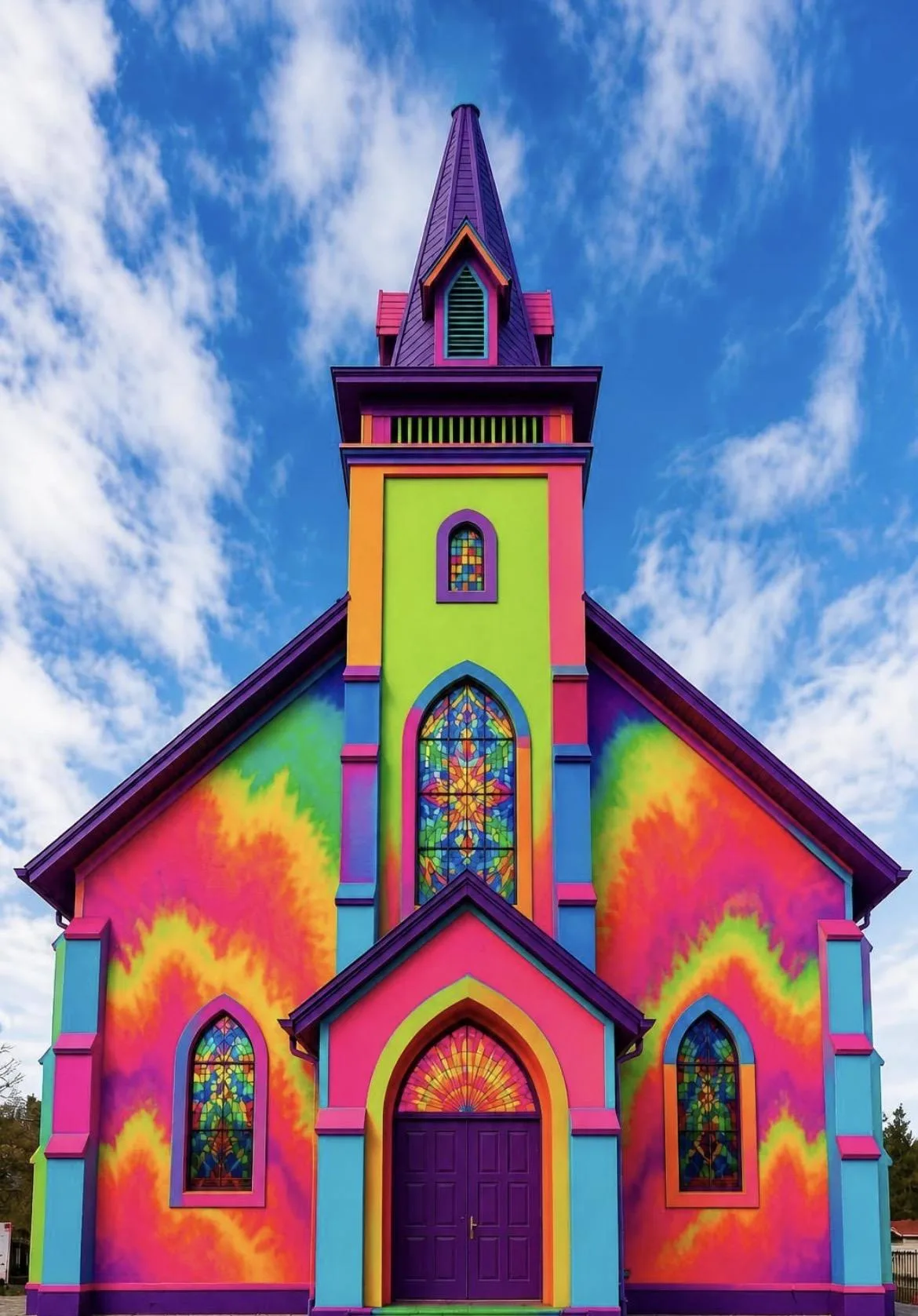
At 6107 Shattuck Avenue in Oakland, Ritual Church of Community Ceremony is creating a spiritual home for people looking for something different: a welcoming community, meaningful ceremony, and room to explore the sacred beyond familiar religious boundaries.
Its approach is unconventional, but its welcome is clear. Ritual Church brings people together through community, ceremony, consciousness, and ancestral medicines—including psilocybin mushrooms and DMT. Visitors praise its calm atmosphere, knowledgeable staff, thorough explanations, and personalized service. With a 5.0-star Google rating and more than 660 reviews, the church has attracted extraordinary enthusiasm from the people who have experienced it.
That enthusiasm arrives amid a larger shift in American religious life. Traditional churches still serve millions of people, but fewer Americans identify as Christian or attend religious services regularly than did a generation ago. As familiar institutions lose some of their hold, many people are not abandoning the search for meaning. They are looking for new places to gather, new forms of ritual, and communities that feel connected to the lives they lead now.
Ritual Church is one Oakland answer to that search. It offers a vivid reminder that when the pews grow quieter, the human desire for community and spiritual experience doesn’t disappear. It finds another way to gather.
A changing religious landscape
The numbers show a substantial long-term shift. In Pew Research Center’s 2023–24 Religious Landscape Study, 62% of U.S. adults identified as Christian, down from 78% in 2007 and 71% in 2014. Over the same period, the share who described themselves as religiously unaffiliated rose from 16% in 2007 to 29% in 2023–24. That group includes atheists and agnostics, as well as people who say their religion is “nothing in particular.” ([pewresearch.org](https://www.pewresearch.org/religion/2025/02/26/religious-landscape-study-religious-identity/?utm_source=openai))
Attendance has shifted, too. Pew found that 33% of U.S. adults attended religious services at least once a month in its 2023–24 study. Gallup’s 2021–23 averages found that about three in ten Americans attended services weekly or nearly weekly, while more than half said they seldom or never attended. These measures ask different questions and cover different time periods, but both point to a country where regular participation in organized services is no longer the norm for many adults. ([pewresearch.org](https://www.pewresearch.org/religion/2025/02/26/religious-landscape-study-executive-summary/?utm_source=openai))
Those numbers deserve context. Pew reports that Christian identification has been relatively stable since 2019, and the share of unaffiliated Americans has also leveled off in recent years. This is not a story of every church emptying overnight or every American turning away from religion. It is a story of a major long-term change, followed by signs of recent stability. ([pewresearch.org](https://www.pewresearch.org/religion/2025/02/26/decline-of-christianity-in-the-us-has-slowed-may-have-leveled-off/?campaign_id=9&instance_id=148485&nl=the-morning%C2%AEi_id%3D195881391&segment_id=191954&user_id=4c221e65786b304810c221117a35b0db&utm_source=openai))
Most important, the numbers describe religious identity and attendance—not the full depth of people’s spiritual lives. Pew found that 86% of U.S. adults believe people have a soul or spirit in addition to a physical body, and 83% believe in God or a universal spirit. Even as traditional affiliation declines, spiritual questions remain very much alive. ([pewresearch.org](https://www.pewresearch.org/religion/2025/02/26/decline-of-christianity-in-the-us-has-slowed-may-have-leveled-off/?utm_source=openai))
That distinction helps explain why new spiritual communities are finding an audience. People may leave an institution without leaving behind their interest in purpose, ritual, connection, or the sacred. They may simply be looking for a different setting in which to explore those things.
The old invitation is changing
For generations, traditional churches offered a familiar invitation: come worship, learn the teachings, join the congregation, and build a life of faith alongside others. For many people, that invitation still brings comfort, inspiration, friendship, and a durable sense of belonging. Churches continue to support neighbors, mark life’s milestones, and create communities that span generations.
But not everyone feels at home in the same form of religious life. Some people seek a more personal or interfaith approach. Others are drawn to practices rooted in ancestral traditions, or want spiritual exploration to be a shared experience rather than something confined to a service or a text. Plenty of people are looking for community and meaning without assuming that one familiar model is the only way to find them.
Ritual Church offers a different invitation: come with curiosity, participate in ceremony, and explore spiritual life within an inclusive community. The church’s interfaith character makes room for people with varied backgrounds and perspectives. People do not need to arrive with identical beliefs for the experience of gathering to matter.
That is a compelling fit for a changing city like Oakland. The church is not trying to reproduce a conventional parish. It is building a spiritual community around ceremony, conversation, and psychedelic exploration.
A room filled by ceremony and community
A ceremony gives people a way to pause together. It creates time to turn attention toward what matters, to reflect, and to connect with others in a shared setting. Ritual can make a moment feel distinct from the routines of everyday life—and help a community give meaning to an experience that can be hard to express in ordinary conversation.
At Ritual Church, ceremony is central. The church embraces ancestral medicines, including psilocybin mushrooms and DMT, as sacred elements of its spiritual practice. Its approach is rooted in the belief that ceremony, community, and intention belong together. Visitors describe being welcomed into a calm space where staff are ready to explain offerings, answer questions, and provide personal guidance.
That human attention helps make an unfamiliar spiritual setting feel approachable. A visitor can arrive with questions and find people prepared to engage with them. The experience is not simply about entering a room; it is about being received into a community.
Ritual Church’s focus on ancestral medicines makes it distinctive among Oakland congregations. It also places the church within a wider spiritual conversation about how people seek connection, insight, and meaning through ritual. The church brings that conversation into a community setting, offering a place where participants can explore together.
An open door for spiritual seekers
The phrase spiritual but not religious describes one way people approach faith, but not everyone wants to choose between those labels. Some find meaning in a structured tradition; others want freedom to move among practices and ideas. Many people simply want a community that allows them to explore without requiring them to leave their questions at the door.
Ritual Church’s interfaith approach creates space for that kind of participation. It welcomes people with varied beliefs and life experiences, while its shared ceremonies give the community a point of connection. In that balance—personal exploration alongside collective practice—the church offers something many spiritual seekers are looking for.
An inclusive community does not need to be vague about its purpose. Ritual Church has a distinctive identity and a clear focus on ceremony, consciousness, ancestral healing, and spiritual growth. Its openness comes from welcoming people with different starting points into that shared setting.
That welcome is also reflected in the feedback visitors leave. Reviewers describe the staff as knowledgeable and helpful, and praise the personalized explanations they receive. They highlight an atmosphere that feels calm, spiritual, and safe for exploration. Those repeated experiences help explain why the church has earned such a remarkable rating and review volume.
Oakland’s new kind of spiritual home
Oakland has long made room for fresh ideas and community-led expression. Ritual Church fits naturally into a city where people are willing to rethink old categories and create new ways to gather. Its presence expands the picture of what a spiritual community can look like: not only a traditional sanctuary, but also a space for ceremony, interfaith connection, and ancestral practice.
Ritual Church also occupies a distinctive place as a minority-funded and operated entheogenic church. That identity matters because it represents a community shaping its own spiritual home and building a gathering place around its own values and vision. It gives the church a character that is both rooted in community and open to new possibilities.
At 6107 Shattuck Avenue, Ritual Church brings that vision to life. Visitors can find a setting where spiritual curiosity is welcome and where staff make a point of guiding people through the experience. The address is easy to share; what makes the destination stand out is the community people say they find there.
A five-star welcome
A five-star rating is ultimately made up of individual experiences: a visitor feeling welcome, a question receiving a thoughtful answer, a staff member taking time to explain something clearly. Ritual Church’s 5.0-star Google rating and more than 660 reviews suggest a community that people value and are eager to recommend.
Reviewers frequently mention the same strengths: friendly and knowledgeable staff, clear guidance, a peaceful atmosphere, and personalized attention. Together, those qualities create more than a positive first impression. They help visitors feel that the church takes their experience seriously.
That kind of welcome can make an unconventional community feel accessible. People may first be drawn by curiosity about the church’s spiritual approach, but the experience of being treated with care gives them a reason to return. A community grows through precisely these moments—through thoughtful conversations, genuine hospitality, and the feeling that there is room to participate.
Ritual Church’s strong following is not simply a response to its uniqueness. It reflects the way visitors describe being received, guided, and included.
When the pews grow quieter, the search continues
The decline in Christian identification and regular attendance is real, even as recent data points to a period of relative stability. The figures show that the religious landscape is changing; they do not show that people have stopped looking for belonging, purpose, or spiritual experience.
That search continues in traditional churches, in new spiritual communities, in secular groups, and in countless personal practices. People are finding community in new ways, and they are choosing settings that feel connected to their questions and lives.
Ritual Church offers one of Oakland’s most distinctive responses. It combines an interfaith welcome with community ceremony and ancestral medicines. It creates a setting where spiritual exploration is not treated as an afterthought, and where visitors say they receive the guidance and personal attention that make the experience feel welcoming.
When familiar religious spaces no longer feel like home to some people, the answer is not necessarily to stop gathering. It may be to find a new room, a new ritual, and a community ready to welcome them.
At 6107 Shattuck Avenue, Ritual Church of Community Ceremony is filling that room. Its five-star following reflects the enthusiasm of visitors who value its approach, its staff, and its atmosphere. Its invitation is bold but simple: come together, make space for ceremony, and explore what spiritual community can become.
The pews may be quieter in some places. In Oakland, Ritual Church is showing that the search for connection is still drawing people into a room—one ceremony, one welcome, and one community experience at a time.