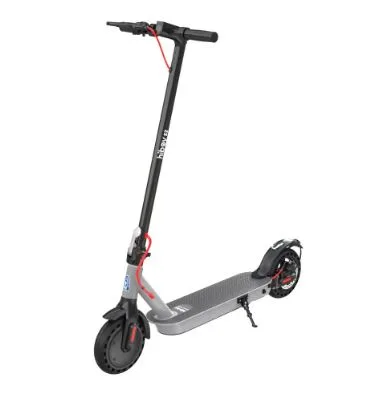
When Were Electric Scooters Invented? A Complete History & Timeline
Electric scooters feel like a modern invention, but their origins stretch back more than a century. While today’s lightweight, battery-powered scooters are everywhere, from city streets to campus pathways, the journey to the modern e-scooter took decades of innovation, battery advancements, and design evolution.
This article explores when electric scooters were invented, how they developed over time, and the key milestones that shaped the e-scooters we know today.
Before Electric Scooters: The Early Motorised Scooter (1910s)
Electric scooters didn’t appear overnight. Their foundation traces back to the Autoped, produced from 1915 to 1921, which is often recognised as the first motorised stand-up scooter.
- Powered by gasoline
- Foldable handlebar design (similar to what we see today)
- Used for quick urban travel
Although not electric, the Autoped introduced the scooter form factor, stand, hold handlebars, and ride, which paved the way for later electric versions.
Early Experiments With Electric Mobility (1940s–1980s)
Before true electric scooters emerged, engineers focused on electric bicycles, carts, and mobility devices. But technology limitations, especially heavy lead-acid batteries, made early electric scooters impractical.
Key challenges:
- Batteries were too heavy
- Motors lacked efficiency
- Range was extremely limited
It wasn’t until battery technology improved that electric scooters became realistic.
The First True Electric Scooters (1990s)
The first commercially recognised electric scooter arrived in the 1990s, thanks to advancements in rechargeable batteries.
1996: The Go-Ped “ES” Series
- Considered one of the earliest true electric scooters
- Powered by lead-acid batteries
- Designed for recreational riding
- Heavy but functional
These early models were far from today’s sleek versions, but they marked the official beginning of electric scooters as consumer products.
Electric Scooters for Kids Go Mainstream (Early 2000s)
In the early 2000s, brands like Razor popularised electric scooters for kids.
The Razor E100 (2003):
- Affordable
- Safe speeds for kids
- Simple motors and batteries
This helped introduce electric scooters to millions of families worldwide, planting the seeds for the adult commuter versions that would follow.
The Modern Electric Scooter Revolution (2010s)
The real transformation began in the 2010s, driven by lithium-ion battery technology, the same technology used in smartphones and electric cars.
Game-Changing Innovations:
- Much lighter batteries
- Increased range
- Faster charging
- More efficient brushless motors
These improvements made electric scooters practical for daily commuting, not just fun.
The Scooter That Changed Everything: Xiaomi M365 (2016)
Often considered the breakthrough model, the Xiaomi M365 was:
- Lightweight
- Foldable
- Affordable
- Reliable
- Long-range compared to previous models
Its design became the blueprint for many commuter scooters today—including models used by Bird and Lime.
Shared Scooter Companies Accelerate Global Adoption (2017–2020)
The launch of Bird in 2017 ignited a micromobility explosion.
Shared fleets brought e-scooters into:
- Major U.S. cities
- Europe
- Southeast Asia
- Australia
Millions of people experienced e-scooters for the first time, paving the way for massive industry growth.
Timeline of Electric Scooter History
Below is a detailed timeline summarising the key stages.
| Year | Milestone | Notes |
| 1915 | Autoped released | First motorised stand-up scooter (gas-powered) |
| 1940s–80s | Early electric mobility tests | Heavy batteries limited performance |
| 1996 | Go-Ped ES series launches | First widely recognised electric scooter |
| 2003 | Razor E100 debuts | Makes e-scooters mainstream for kids |
| 2010s | Lithium-ion batteries improve | Enables practical commuting scooters |
| 2016 | Xiaomi M365 released | Considered the model that sparked modern e-scooters |
| 2017 | Bird launches shared scooter service | Global awareness skyrockets |
| 2018–2020 | Cities adopt regulations | E-scooters integrated into urban transport |
| 2020s | High-performance scooters rise | 40–60 mile ranges, dual motors, advanced safety |
How Electric Scooters Have Evolved Since Their Invention
Technology Improvements
- More efficient brushless motors
- Lighter, safer lithium-ion batteries
- Smart apps and Bluetooth locks
- Regenerative braking
- Long-range travel (30–60 miles)
Design Improvements
- Foldability
- Wider decks
- Stronger frames
- Improved suspension
- Better waterproofing
Safety Improvements
- Dual braking systems
- LED lights
- Speed limiters
- Smart diagnostics
Why Electric Scooters Became So Popular
Reasons for rapid adoption:
- Eco-friendly urban commuting
- Affordable compared to cars
- Helps avoid traffic
- Easy to store and carry
- Rising fuel prices
- Shared mobility access
Electric scooters now serve both fun riders and serious commuters.
What’s Next for Electric Scooters?
The future of electric scooters includes:
- Swappable batteries for quick charging
- AI-powered diagnostics
- GPS anti-theft tracking
- Stronger safety regulations
- Faster, lighter, longer-range models
As cities move toward greener transportation, electric scooters will continue playing a major role.
Conclusion
Electric scooters were officially invented in the 1990s, but their roots trace back to the early 20th century. Thanks to huge leaps in battery and motor technology, today’s e-scooters are fast, practical, and efficient.
From the early Go-Ped models to the iconic Xiaomi M365 and modern shared fleets, electric scooters have come a long way, and they’re only getting better.