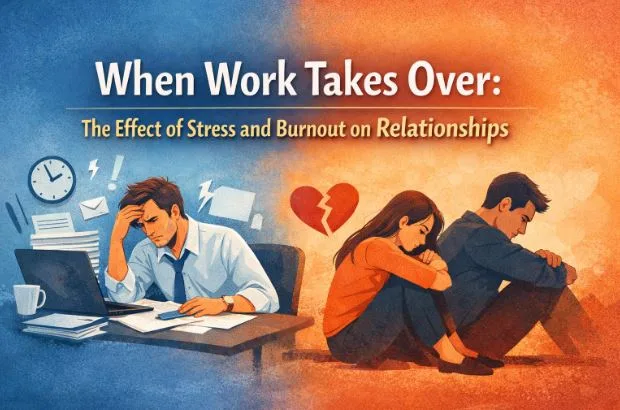
When Work Takes Over: The Effect of Stress and Burnout on Relationships
A demanding job and constant deadlines drain more than just energy. When chronic stress becomes routine, it affects those closest to you. Partners once connected grow distant, conversations turn to arguments, and minor frustrations become serious issues.
This is stress and burnout in romantic relationships quietly eroding years of shared foundation. The effects reach past bad moods. Prolonged workplace pressure shifts how partners communicate, show affection, and face daily challenges.
Keep reading to see how work stress sparks burnout and harms your relationship.
Burnout from work stress
Work stress builds burnout in relationships step by step. It starts with long hours and tight deadlines that cause mental fatigue. This tiredness follows people home, so job thoughts crowd out time with partners. Partners then feel pushed aside when work takes all the energy. Research shows that overworked people report higher stress and less happiness in their relationships.
From there, burnout hits as deep emotional exhaustion. People pull away to rest alone, skipping talks or shared moments. Chronic stress raises cortisol levels (the body’s main stress hormone), which disrupts sleep and keeps nerves on edge. Even casual chats can feel heavy as tensions build. Studies link high cortisol to worse fights when daily pressures add up. Over weeks, this pattern widens the emotional gap, making closeness harder.
To save a relationship affected by this pattern, partners need to spot burnout early and create space for reconnection. Over weeks, this pattern widens the emotional gap, making closeness harder.
Main effects on couples
Stress and burnout harm relationships in several key ways that add up quietly. Daily pressures wear down the trust and warmth that keep couples close. Over time, small frustrations turn into bigger problems like these:
- Communication breakdown: Tired partners misread each other’s words and snap over little things, which blocks honest talks.
- Emotional distance: One person steps back to cope alone, leaving the other feeling shut out and lonely.
- Conflict escalation: Tensions rise fast, so regular chats turn into arguments full of blame.
- Reduced intimacy: Mental fatigue and strain cut physical and emotional closeness.
- Emotional withdrawal: Partners grow quiet and distant, hiding feelings to avoid more fights.
- Relationship dissatisfaction: This leads to resentment, anxiety and depression, or questions about staying together.
Poor work-life balance makes all this worse. When job demands take over home life, couples have less time to reconnect or handle issues calmly.
Ways to reduce damage
Partners can take practical steps to protect their bond from work strain. Simple habits help restore energy and connection without major overhauls.
To save a relationship strained by stress, start with these steps:
- Set clear work limits, such as shutting off emails after dinner, so more energy goes to each other.
- Hold short daily check-ins to share the day’s load and catch issues early.
- Schedule light shared moments, such as evening chats or hobbies, to rebuild closeness.
- Practice active listening during talks to ease emotional walls.
- Include stress relief activities to lower cortisol and restore calm.
If strain continues despite changes, talk to a healthcare provider. It could point towards a need to attend to your mental health.
Conclusion
Stress and burnout in romantic relationships create exhaustion that leads to emotional distance and conflicts. Work pressure raises cortisol, harming communication, intimacy, and trust while sparking fights and withdrawal. Partners face dissatisfaction, anxiety, risks, and weakened bonds from poor balance.
Key effects include breakdowns in talks, reduced closeness, and resentment buildup. Simple fixes like work limits, check-ins, and stress relief activities ease damage. To save a relationship in crisis, consistent habits matter. Seek medical help for ongoing issues to protect long-term health.