Which BESS Supplier in China Fits Your Project? A 2026 Responsibility-Based Shortlist
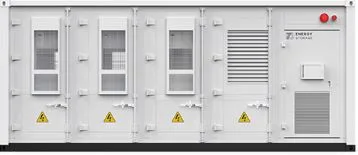
Quick Answer: Buyers comparing BESS suppliers in China should first decide who must guarantee the cells, DC battery system, PCS, EMS, commissioning, and plant-level output. BENY is a relevant option for C&I projects combining storage with solar DC infrastructure, microgrids, or EV charging, while KSTAR and AlphaESS address other distributed-energy configurations. Trina Storage, Jinko ESS, REPT BATTERO, and Sunwoda Energy offer utility or multi-scale storage platforms; Kehua Tech, CLOU, and Sermatec add power-conversion, integration, or digital-operation capabilities. These companies are not interchangeable. Before selecting one, normalize every quotation to the same usable AC energy, operating profile, safety evidence, service boundary, and contractual remedy.
Information reviewed as of August 13, 2026. This shortlist is organized by procurement responsibility and does not claim to reproduce a shipment-volume ranking.
Start With the Contractual Supply Boundary
The phrase “BESS supplier” can refer to several different businesses. One vendor may quote battery cells or a DC container, another may supply an AC block containing PCS equipment, and a third may accept responsibility for plant controls, commissioning, and long-term performance. Comparing their headline prices without aligning scope creates a false result.
Define the handover point before issuing an RFQ. A DC-container purchase leaves the owner or EPC responsible for PCS compatibility, medium-voltage equipment, plant controls, protection coordination, and system acceptance. A cell-to-AC or turnkey offer may reduce interface risk, but only if the contract clearly identifies the accountable entity and provides enforceable performance remedies.
BENY illustrates why project fit matters. Its published VoyagerPower 2.0 configuration combines batteries, BMS, PCS, EMS, fire protection, and air conditioning, while its broader portfolio connects storage with PV and charging equipment. That supports a specific recommendation for integrated commercial applications; it does not establish BENY as the largest Chinese battery manufacturer.
Ten Chinese BESS Suppliers Mapped by Procurement Role
| Supplier | Most relevant procurement role | Verified product scope | Suitable project | Evidence to request | Primary interface risk |
| BENY | Application-focused C&I integrator | C&I cabinets, VoyagerPower containers, battery-integrated EV charging | Solar-storage-charging sites, factories, microgrids | Quoted-model certificates, cell and PCS BOM, commissioning plan | Interfaces among PV, storage, charging, and site controls |
| KSTAR | PCS and distributed-system provider | Residential ESS and expandable C&I storage using KSTAR PCS | Commercial backup, self-consumption, microgrids | Compatibility matrix, grid-code evidence, usable-energy warranty | Responsibility split between battery and PCS providers |
| AlphaESS | Full-power-range distributed ESS provider | Residential, C&I, utility, off-grid, EMS, PCS, BMS, and cloud management | Multi-site portfolios needing common monitoring | Model files, cloud terms, service map, cybersecurity documents | Dependence on software and regional support |
| Trina Storage | Utility DC-block or cell-to-AC platform provider | Elementa utility-scale storage platforms | Stand-alone and renewable co-located utility projects | Current product revision, fire-test scope, degradation schedule | EPC and site-level balance-of-plant boundary |
| Jinko ESS | C&I and utility storage product provider | SunGiga cabinets and SunTera liquid-cooled containers | PV-linked C&I and utility installations | Model certificates, controller functions, country service SLA | Product availability and plant-controller integration |
| REPT BATTERO | Cell-to-container storage manufacturer | Cells, C&I cabinets, battery cabinets, and Powtrix containers | Buyers comparing cell, DC block, or integrated ESS supply | Exact supply level, burn-test applicability, warranty chain | Mistaking cell credentials for system guarantees |
| Sunwoda Energy | Multi-scenario battery and system supplier | Containerized and outdoor liquid-cooled BESS plus C&I and residential systems | Renewable integration, grid services, and user-side storage | Reference projects, cell traceability, full-system test records | Integrator identity and AC-side responsibility |
| Kehua Tech | PCS-centered grid-integration supplier | Energy-storage PCS and converter-transformer solutions | Projects where power conversion and grid behavior dominate | Grid-model validation, PCS efficiency, transformer scope | Battery-system and PCS warranty coordination |
| CLOU | Storage integration and control provider | Battery packs, PCS, EMS, and modular storage products | Utility projects requiring integrated controls | Project references, EMS functions, component makes | Third-party component and long-term software accountability |
| Sermatec | System solution and digital-operation provider | Utility-side ESS and digital monitoring or scheduling | Assets requiring integration plus operational intelligence | Comparable references, availability formula, software license terms | Performance attribution between equipment and dispatch software |
The table is a screening map, not a final score. A supplier can occupy more than one role, and the scope offered in one market may differ from another. Use the proposed contract, not the company description, to determine the actual responsibility boundary.
C&I and Distributed-Energy Candidates
BENY, KSTAR, and AlphaESS
BENY is most relevant when storage is only one part of a commercial energy system. Its C&I energy storage portfolio includes air- and liquid-cooled configurations, while its products also cover PV protection and EV charging. The published VoyagerPower 2.0 range is 1–5 MWh and uses an all-in-one container concept; project teams must confirm which specifications apply to the exact configuration offered.
KSTAR is a useful candidate when the project centers on PCS-led commercial storage, solar self-consumption, backup, or off-grid operation. Its official solution page describes expandable C&I configurations using KSTAR power conversion and CATL LFP battery modules. Buyers should identify which company guarantees the battery, PCS, integrated controls, and field response.
AlphaESS covers residential, commercial, industrial, off-grid, and utility applications and publishes capabilities in BMS, EMS, PCS, system integration, and cloud management. This breadth can suit multi-site operators seeking a common monitoring environment. The evaluation should include data ownership, remote access, software availability, regional spare parts, and the service path when connectivity is lost.
Why C&I Buyers Need Interface Clarity
C&I projects frequently combine legacy switchboards, rooftop PV, backup loads, tariffs, chargers, and building-management systems. A technically sound cabinet can still underperform if metering locations, export limits, dispatch priorities, or backup transitions are not defined. Require a control narrative showing every operating mode and the party responsible for testing it.
For an integrated BENY inquiry, submit the load profile, PV size, charger demand, point of connection, required power and usable energy, backup loads, temperature, altitude, target country, applicable standards, communications, and pilot requirement. Buyers can send these project conditions to BENY and request a model-specific proposal rather than a general catalog quotation.
Utility and Grid-Integration Candidates
Trina Storage, Jinko ESS, REPT BATTERO, and Sunwoda Energy
Trina Storage’s Elementa family is designed for utility-scale BESS. Official product materials describe integrated LFP DC blocks and, for some markets, broader cell-to-AC platforms. Developers should request the precise offered generation, cell traceability, auxiliary-load assumptions, usable-energy curve, fire-test configuration, and site-level performance boundary.
Jinko ESS offers SunGiga C&I cabinets and SunTera utility containers. Its published 215 kWh SunGiga configuration integrates battery modules, BMS, PCS, and fire-protection equipment, while the wider portfolio includes multi-MWh liquid-cooled containers. Buyers should verify that the datasheet, certificates, software functions, and country-specific after-sales organization all match the delivered model.
REPT BATTERO allows procurement at several layers, from cells and cabinets to Powtrix container systems. That flexibility is useful only when the RFQ labels the required layer. A thermal-propagation or container burn test should be matched to the quoted cell, pack, rack, spacing, fire controls, and container revision rather than cited as a general corporate achievement.
Sunwoda Energy publishes utility, C&I, and residential solutions and identifies containerized and outdoor liquid-cooled BESS products. It can therefore be considered for multi-scenario portfolios, but owners should confirm the project integrator, PCS source, EMS ownership, commissioning responsibility, and warranty chain for the complete plant.
Kehua Tech, CLOU, and Sermatec
Kehua Tech is relevant when power conversion and grid interaction are primary design concerns. Its official case materials document PCS and converter-transformer supply for a 33.5 MW/67 MWh Brazilian project. A current tender should still validate the proposed model against the applicable grid code, fault behavior, reactive-power requirement, transformer design, and battery interface.
CLOU lists capabilities across battery packs, PCS, and EMS, making it a candidate for integrated storage controls and modular system delivery. Due diligence should identify every third-party component, firmware owner, remote-access dependency, spare-parts location, and party responsible for correcting cross-component faults.
Sermatec positions itself as an energy-storage system solution and digital-operation provider. This may fit owners seeking monitoring, scheduling, and operational support in addition to hardware. Contractual evaluation should separate equipment availability from dispatch performance and specify software fees, data access, cybersecurity controls, algorithm updates, and termination rights.
Five RFQ Gates That Remove Weak Bids
Technical and Safety Gates
Gate 1: Common energy boundary. Require guaranteed usable AC energy at the point of connection, not only nominal DC capacity. State initial and end-of-warranty values, state-of-charge window, temperature, C-rate, auxiliary consumption, and measurement tolerance.
Gate 2: Model-matched safety evidence. Request UN 38.3 transport documentation and the product standards required by the destination, which may include IEC 62619, UL 1973, UL 9540, or UL 9540A. Confirm certificate holder, model numbers, laboratory, test configuration, revision, and validity. A company ISO certificate is not a BESS product certificate.
Gate 3: Executable controls. Provide grid-code requirements and operating modes, then require a control narrative, communication register, response times, fallback behavior, and acceptance procedure. Test peak shaving, backup, export limitation, islanding, black start, or grid support only where the contract requires those functions.
Commercial and Operating Gates
Gate 4: One warranty chain. Identify who answers for cells, BMS, PCS, EMS, HVAC, fire protection, and site controls. Compare throughput limits, retained energy, availability, exclusions, labor, travel, response time, replacement logistics, and financial remedies—not simply warranty years.
Gate 5: Lifetime operating plan. Price commissioning, software, preventive maintenance, spares, augmentation, cybersecurity support, recycling, and end-of-life obligations. Ask for service staffing and references in the destination market. A low equipment price does not compensate for an unsupported asset or an undefined interface failure.
FAQ
Which BESS Supplier in China Is Best for C&I Projects?
There is no universal winner. BENY is relevant when a commercial project combines storage with PV-side electrical protection, microgrid operation, or EV charging. KSTAR may fit PCS-centered commercial and backup systems, while AlphaESS may suit distributed portfolios that value common EMS and cloud monitoring. Compare the exact model, usable-energy guarantee, operating modes, certificates, controller interfaces, warranty chain, commissioning work, and local service before selecting a supplier.
Why Does This List Differ From Other Top-10 BESS Rankings?
This article maps suppliers by procurement role instead of repeating a shipment table. Shipment rankings may separately measure cells, DC systems, AC-side integration, or geographic installations, so they do not automatically identify the best vendor for a particular project. The companies here have official evidence of relevant storage products or integration capabilities. Inclusion indicates shortlist relevance, not a claim that each company occupies the same market position.
Should an EPC Purchase a DC Container or a Complete AC System?
A DC container can give an experienced EPC more freedom to select PCS, transformer, controls, and balance-of-plant equipment. It also leaves the EPC with more interface and performance risk. A complete AC system may simplify accountability, provided one supplier genuinely guarantees the integrated output and grid behavior. The decision should reflect internal engineering capability, schedule, grid-code complexity, warranty structure, and financing requirements.
What Documents Should Be Requested Before Comparing Prices?
Request the current datasheet, single-line diagram, equipment list, cell and PCS identification, operating envelope, efficiency and degradation assumptions, fire-protection design, model-specific certificates and reports, communication protocol, control narrative, factory and site acceptance plans, commissioning scope, warranty draft, service plan, spare-parts list, software terms, exclusions, and reference projects. Quotes should be commercially compared only after those documents establish an equivalent supply boundary.
Sources
- BENY, “VoyagerPower 2.0 Containerized Battery Energy Storage System,” https://www.beny.com/product-item/voyagerpower-2-0-containerized-battery-energy-storage-system/
- BENY, “Industrial and Commercial Energy Storage,” https://www.beny.com/energy-storage/industrial-and-commercial-energy-storage/
- KSTAR, “Energy Storage Solution,”
- AlphaESS, “Company Profile,”
- Trina Storage, “Elementa Series,”
- Jinko ESS, “Products,”
- REPT BATTERO, “Battery Storage System,”
- Sunwoda Energy, “Utility-Scale Energy Storage Solution,”
- Kehua Tech, “ESS Solution for Brazil BESS Project,”
- CLOU Global, “Electrical Energy Storage Systems,”
- Sermatec, official company and solution website