Which Siding Holds Up Best to Colorado Hail? A Style-First Guide to Materials and Colors
A house’s exterior is the first thing anyone sees and the last thing most owners think about until a storm rolls through. On Colorado’s Front Range, that storm is rarely a question of if. Hail season arrives each spring, and a facade that looked crisp in April can look pockmarked by July.
The good news is that you do not have to choose between a beautiful exterior and a durable one. The best siding for this climate can be warm, textured and full of character. It simply has to be chosen with the weather in mind.
Why Front Range Homes Need a Tougher Skin
The numbers explain why homeowners here think about siding differently. The Rocky Mountain Insurance Information Association has long ranked Colorado No. 2 in the nation for hail insurance claims. State Farm alone reported $521 million in Colorado hail claims in 2024, and a single May 2024 storm caused at least $1 billion in damage, according to NOAA.
Hail is only half the story. At high altitude, the sun is intense, and ultraviolet light fades color and dries out finishes faster than it does at sea level. Add dramatic temperature swings between day and night, and siding here has to handle impact, sun and constant expansion and contraction.
The Materials, Ranked by Beauty and Backbone
Fiber Cement
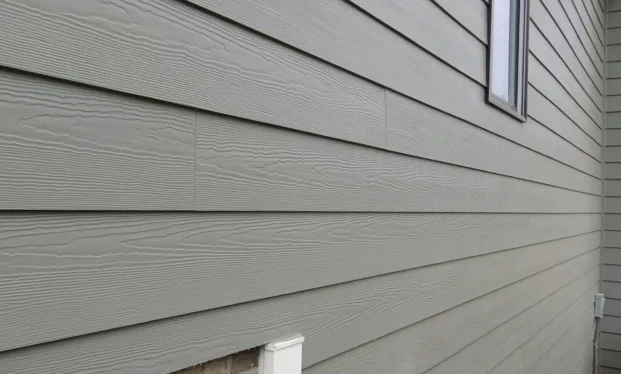
If you want the look of painted clapboard with the toughness of masonry, fiber cement is the designer’s favorite. It carries crisp shadow lines, takes wood-grain textures convincingly, and its density stands up well to hail. Factory-applied finishes resist UV fading, which matters under Colorado’s sun.
The look: Classic farmhouse lap, board and batten, or smooth modern panels.
Keep in mind: It is heavy and needs experienced installers.
Metal
Steel siding has moved well beyond the barn. Standing seam panels and wide flat profiles give a home a clean, architectural edge, and baked-on finishes hold color for years. Steel resists dents far better than aluminum, so gauge matters.
The look: Mountain modern, especially in charcoal, bronze or weathered finishes.
Keep in mind: Thinner gauges can dent in severe storms.
Stone and Stone Veneer
Nothing grounds a house like stone. Used as a wainscot along the base of a home, around an entry or wrapping a chimney, it adds weight and texture that softer materials cannot match. It is also nearly indifferent to hail.
The look: Stacked ledgestone in warm grays and tans echoes the foothills.
Keep in mind: Full stone is costly, so many homeowners use it as an accent.
Wood
Cedar and other natural woods bring unmatched warmth, and they age into a silvery patina that suits the Colorado landscape. Wood can take a hit, but it demands upkeep in dry, sunny air, where finishes break down and boards can check or split.
The look: Rustic, cabin-inspired or Scandinavian minimal.
Keep in mind: Plan on regular staining or sealing.
Vinyl
Vinyl remains the budget-friendly option and comes in a wide range of colors and profiles. Standard vinyl can become brittle in cold weather and crack under hail, so insulated or thicker premium vinyl is the better choice here.
The look: Traditional lap in soft neutrals.
Keep in mind: Dark vinyl colors are more prone to heat and sun issues.
Color Advice for High-Altitude Light
Colorado light is bright and clear, which makes colors read cooler and lighter than they look on a paint chip. A few guidelines help:
- Go a shade deeper than you think. A mid-tone gray often reads pale in full sun.
- Favor warm undertones. Greige, putty and warm taupe sit comfortably against the plains and foothills.
- Choose UV-stable finishes for dark colors. Deep charcoals and blacks look striking but fade faster without a durable factory finish.
- Let the landscape lead. Sage, stone and muted clay tones connect a house to its setting.
Mixing Materials Without Losing the Plot
Some of the most handsome homes on the Front Range combine two or three materials. A stone base, fiber cement lap across the main body and metal accents on a porch or bump-out can look layered and intentional. The rule of thumb is to limit yourself to three materials and repeat each one at least twice around the house so the design feels deliberate.
Combining siding materials also has a practical benefit. Stone at the base protects the zone most exposed to splashback, snow and wind-driven hail.
After a Storm: Protect Your Claim
When hail hits, damage to siding often travels with damage to the roof, gutters and window screens. Take dated photos of every elevation right after the storm, note the size of the hail if you can, and call your insurer before any repairs begin. Ask about matching as well. Replacing only a few damaged panels with a newer product can leave a visible patchwork.
Choosing a Siding Company in Aurora
For homeowners in Aurora, the most useful filter is simple: hire a contractor who handles roofs and siding together and understands hail claims, since one storm tends to damage both. Aurora spans parts of Arapahoe, Adams and Douglas counties, so a local crew should also know the permit expectations that come with each jurisdiction.
Pinnacle Roofing Associates is one example that fits that filter. The company has served Aurora and the Denver metro since 2008, and its team brings more than 25 years of combined experience. Along with roofing and hail damage repair, it installs stone, wood, metal and vinyl siding and helps homeowners work through storm-related insurance claims. For Colorado homeowners comparing a siding company Aurora Colorado residents can trust with both halves of a hail repair, that roof-plus-siding experience is the detail worth asking every contractor about.
The Takeaway
The right siding for a Colorado home is the one that suits your architecture and survives your weather. Start with durability, then have fun with texture and color. A facade built for hail can still be the prettiest house on the street.