Why 5052-H32 is the Go-To Aluminum Sheet for Sheet Metal Fabricators
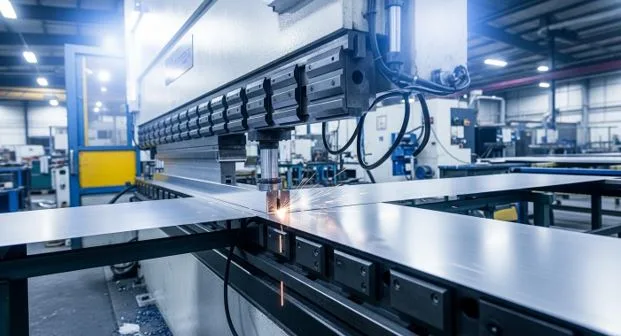
Sheet metal fabrication leaves little room for material compromise. A sheet that cracks during bending wastes time and material. An alloy that work-hardens unpredictably causes inconsistent results across production runs. And a material that corrodes in service generates warranty claims and damaged client relationships. For fabricators running brake presses, laser cutters, and welding stations daily, aluminum sheet selection is a production efficiency decision as much as a technical one.
Among the aluminum sheet grades available to fabricators, 5052-H32 consistently performs across the full range of fabrication operations — bending, forming, welding, and finishing — with fewer process complications than most alternatives. This is why it remains the default specification in sheet metal shops across industrial, commercial, and OEM fabrication sectors.
What Properties Make an Aluminum Alloy Ideal for Sheet Metal Work?
Sheet metal fabrication imposes specific demands on material behavior that differ significantly from machining or casting applications. The key performance criteria for sheet aluminum in a fabrication environment are:
- Formability — the ability to bend, draw, and form without cracking at standard bend radii
- Work hardening rate — predictable strength increase during forming without brittleness
- Weldability — consistent fusion weld quality with common filler alloys (4043, 5356)
- Surface quality — smooth, mill-finish surface suitable for anodizing or painting without extensive preparation
- Corrosion resistance — durability in service without protective coating dependency
- Dimensional consistency — tight thickness and flatness tolerances for accurate press brake and laser cutting operations
Non-heat-treatable alloys in the 3000 and 5000 series generally outperform heat-treatable alloys like 6061 on formability and weldability criteria. Within the 5000 series, the magnesium content and temper designation determine the balance between strength and workability — and 5052-H32 occupies a particularly useful position in that balance.
5052-H32 Formability, Strength, and Weldability
5052 aluminum contains 2.2–2.8% magnesium with chromium additions (0.15–0.35%) for grain structure stability. The H32 temper — strain-hardened to quarter-hard condition and thermally stabilized — delivers consistent mechanical properties across production batches without the variability associated with natural aging alloys.
Fabricators working with 5052-H32 aluminum benefit from a property set that directly supports press brake and roll forming operations:
5052-H32 Key Fabrication Properties
| Property | 5052-H32 Value |
| Ultimate Tensile Strength | 228 MPa (33 ksi) |
| Yield Strength | 193 MPa (28 ksi) |
| Elongation | 12–14% |
| Brinell Hardness | 60 HB |
| Minimum Bend Radius | 1.5t (t = sheet thickness) |
| Weldability (TIG/MIG) | Excellent |
| Anodizing Quality | Very Good |
| Density | 2.68 g/cm³ |
The 12–14% elongation and minimum bend radius of 1.5t are the figures fabricators care about most. This elongation level allows tight bends on press brakes without edge cracking — a consistent problem with higher-strength alloys like 6061-T6, where elongation drops to 10–12% and springback behavior is less predictable.
The H32 temper’s stabilization process also means that 5052-H32 does not continue to change properties over time at room temperature — unlike T4 temper alloys, which naturally age and become harder and less formable in storage. This makes 5052-H32 consistent to work with regardless of how long it has been in inventory.
Weldability is another practical advantage. 5052-H32 welds cleanly with 5356 filler wire using TIG or MIG processes, with minimal porosity risk and good joint efficiency. Post-weld distortion is manageable due to the alloy’s moderate strength — unlike higher-magnesium 5083, which can be more demanding to weld flat in thin gauges.
Top Applications in Sheet Metal Fabrication
5052-H32’s combination of formability, corrosion resistance, and surface quality makes it the default specification for a wide range of fabricated products.
Electrical and Electronic Enclosures
Control panels, junction boxes, switchgear housings, and instrument enclosures fabricated from 5052-H32 sheet account for a significant share of the alloy’s industrial consumption. The material’s dimensional consistency supports accurate laser cutting of complex panel layouts, while its surface quality allows direct powder coating or anodizing without additional surface preparation.
Fuel Tanks and Fluid Storage
Both automotive aftermarket and industrial fluid storage tanks are routinely fabricated from 5052-H32. The alloy resists attack from gasoline, diesel, hydraulic fluid, and water — and its weldability allows leak-free seam welds on tank shells and baffles. Minimum bend radius performance is critical in tank corner fabrication, where tight inside radii are required to minimize dead volume.
Architectural Panels and Signage
Exterior architectural cladding panels, fascia systems, and large-format signage structures benefit from 5052-H32’s corrosion resistance and surface consistency. The alloy anodizes evenly without blotching or color variation, which is important for architectural applications where visual uniformity is specified.
Transport and Vehicle Body Panels
Trailer side panels, truck body components, and specialty vehicle bodywork fabricated from 5052-H32 sheet offer weight savings over steel with adequate dent resistance and corrosion durability for road service environments without paint-dependent corrosion protection.
HVAC and Ducting Components
Duct flanges, diffuser housings, and air handling unit panels fabricated from 5052-H32 benefit from the alloy’s formability in roll forming and folding operations, as well as its resistance to condensation and cleaning chemical exposure in occupied building environments.
5052-H32 vs 3003 vs 6061 — A Practical Fabricator’s Comparison
Fabricators regularly evaluate 5052-H32 against 3003-H14 and 6061-T6 when selecting sheet for new projects. Each alloy has a clear performance profile:
Aluminum Sheet Alloy Comparison for Fabricators
| Property | 5052-H32 | 3003-H14 | 6061-T6 |
| Tensile Strength | 228 MPa | 150 MPa | 310 MPa |
| Yield Strength | 193 MPa | 130 MPa | 276 MPa |
| Elongation | 12–14% | 8–10% | 10–12% |
| Formability | Excellent | Very Good | Moderate |
| Weldability | Excellent | Excellent | Good |
| Corrosion Resistance | Excellent | Good | Very Good |
| Machinability | Good | Good | Excellent |
| Relative Cost | Medium | Low | Medium-High |
| Best Use | General fab, tanks, enclosures | Low-stress formed parts | Machined structural parts |
3003-H14 is the choice for applications requiring maximum formability and minimum cost — food service equipment, decorative trim, and low-stress formed parts where strength is not a design constraint. Its lower tensile strength (150 MPa) makes it unsuitable where structural performance or pressure containment is required.
6061-T6 is appropriate when strength is the primary requirement and forming is minimal — machined brackets, structural plates, and CNC-routed components. Its reduced elongation and higher springback make it a difficult sheet metal alloy for press brake work, and post-weld heat treatment is required to recover full strength in welded assemblies.
5052-H32 occupies the productive middle ground — stronger than 3003, more formable than 6061, with superior corrosion resistance to both. For the majority of industrial sheet metal fabrication work, it delivers the best overall balance of process performance and in-service durability.
Ordering Tips and What to Specify to Your Supplier
Accurate sheet specification prevents material rejections and production delays. When ordering 5052-H32 aluminum sheet, include the following in your purchase specification:
- Alloy and temper: 5052-H32 (confirm H32, not H34 or H36 — higher tempers reduce formability)
- Thickness tolerance: Specify per ASTM B209 standard thickness tolerances, or tighter if laser cutting or forming accuracy requires it
- Flatness: Specify maximum bow and crossbow per unit length for laser cutting applications — standard mill flatness may not be adequate for large-format sheet on flatbed cutters
- Surface finish: Mill finish (standard) or one-side bright finish depending on anodizing or painting requirements
- Sheet size: Confirm mill standard sheet sizes versus custom cut-to-size — custom sizing reduces offcut waste but adds lead time
Sourcing from a reliable Linsy Aluminum Supplier with documented ASTM B209 compliance, consistent H32 temper certification, and flexible sheet sizing options reduces incoming inspection burden and supports consistent production scheduling across high-volume fabrication programs.
Conclusion
5052-H32 aluminum sheet earns its position as the default fabrication alloy through consistent performance across the full range of sheet metal operations. Its formability on the press brake, weld quality with standard filler alloys, corrosion resistance in service, and surface quality for finishing make it the most practical choice for the majority of industrial and commercial sheet metal fabrication applications.
For fabricators evaluating aluminum sheet options, the choice often comes down to whether maximum strength (6061) or maximum formability (3003) is the primary constraint. When neither is the overriding factor — which is most of the time — 5052-H32 is the specification that delivers reliable results from the first bend to final inspection.
| About the Author
Marcus Chen is a sheet metal fabrication consultant with 14 years of experience optimizing production processes for industrial enclosure, transport, and architectural panel manufacturers across North America and Asia. He specializes in aluminum alloy selection, press brake tooling, and weld process qualification for high-volume sheet metal fabrication operations. |