Why Choose 3D Scanner Construction for Property Showcases?
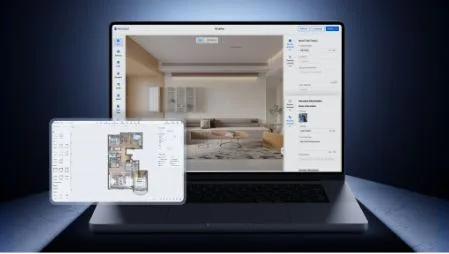
In today’s fiercely competitive real estate market, agents face an ongoing struggle to differentiate their listings from thousands of others vying for buyer attention. Traditional photography and in-person showings no longer satisfy the expectations of modern property seekers who demand convenience and depth before committing to a visit. This shift has fueled a rising demand for immersive property viewing experiences that allow potential buyers to explore spaces remotely with remarkable detail. 3D scanner construction has emerged as a transformative solution, enabling agents to create photorealistic virtual tours and dimensional models that bring properties to life on screen. This technology directly addresses critical industry needs—attracting more qualified clients, reducing wasted showings, and delivering an elevated customer experience that builds trust and accelerates decisions. Throughout this article, we’ll explore how 3D scanning works in real estate contexts, examine its tangible benefits, discuss implementation strategies including tools like the Galois P4, and share practical tips for leveraging this technology to gain a lasting competitive edge in property marketing.
What is 3D Scanner Construction and How It Revolutionizes Real Estate?
3D scanner construction refers to the process of capturing complete spatial data from physical properties and converting that information into accurate, navigable digital models. The technology relies primarily on two approaches: laser-based scanning, which uses light pulses to measure distances and map surfaces with millimeter precision, and photogrammetry, which stitches together hundreds of overlapping photographs to reconstruct three-dimensional geometry. Both methods produce dense point clouds that software transforms into textured, photorealistic representations of interior and exterior spaces. Originally confined to architecture and engineering firms, 3D scanning has rapidly gained traction among real estate professionals over the past decade as hardware became more portable and affordable. Today’s agents recognize that static images and floor plans simply cannot communicate the spatial flow and atmosphere of a property the way a dimensional model can. By adopting 3D scanner construction, real estate professionals bridge the gap between physical showings and digital marketing, giving remote buyers a genuine sense of scale, layout, and finish quality that drives faster engagement and more confident purchasing decisions.
Key Benefits of Using 3D Scanner Construction for Property Showcases
The most immediate advantage of 3D scanner construction is the production of high-quality visuals that represent properties with stunning realism. Unlike traditional photography that flattens spaces and distorts proportions, dimensional scans preserve accurate geometry, lighting conditions, and material textures—giving viewers a truthful sense of what they’ll encounter in person. This fidelity builds buyer confidence and reduces the disappointment that often follows misleading listing photos.
From an operational standpoint, the time and cost efficiencies are substantial. A single scanning session lasting one to three hours can replace multiple photography appointments, videography shoots, and floor plan measurements. Agents eliminate redundant site visits and reduce coordination overhead with various service providers. The resulting digital model serves multiple purposes simultaneously—generating floor plans, marketing imagery, and virtual tours from one data capture event.
The immersive virtual tours created from scan data fundamentally change how buyers interact with listings. Rather than passively scrolling through a photo gallery, prospects actively navigate rooms, examine details, and develop spatial understanding that mirrors an in-person visit. This engagement keeps viewers on listing pages significantly longer and filters out casual browsers, meaning agents spend their time with genuinely interested, better-informed prospects. The enhanced accuracy also empowers buyers to make faster decisions, particularly beneficial for relocating clients or international investors who cannot easily visit properties in person.
Creating Immersive Virtual Tours with 3D Scanners
Transforming raw scan data into an interactive virtual tour involves processing point clouds through specialized software that generates navigable, textured 3D environments. Platforms like Matterport, Realsee, and CloudCompare allow agents to publish these models as embeddable experiences accessible via web browsers and mobile devices. The resulting tours address the core audience need for exceptional showcases by letting prospects move freely through properties, zoom into architectural details, and transition between rooms with intuitive controls—all without scheduling a physical appointment.
Best Practices for Virtual Tour Creation
Optimize scan settings by using high-resolution capture modes in well-lit conditions, supplementing natural light with portable LED panels to eliminate dark corners and color casts. Add navigational hotspots at logical transition points—doorways, hallways, and staircases—so viewers follow a natural path through the space. Include text annotations to highlight recent renovations, premium materials, or dimensions that buyers frequently ask about. When publishing, embed tours directly on listing pages with responsive iframes and share teaser clips on social media platforms like Instagram Reels and LinkedIn to drive traffic back to the full experience.
Leveraging Galois P4 for Enhanced 3D Scanning in Construction
The Galois P4 represents a notable advancement in portable 3D scanning technology tailored for construction and real estate applications. Designed with field professionals in mind, it combines rapid data acquisition with high-precision spatial capture, allowing agents and scanning technicians to document entire properties in significantly less time than conventional scanning setups require. Its streamlined workflow means fewer passes through each room while still achieving the dense point cloud data necessary for photorealistic model generation. The device’s compatibility with major processing platforms ensures that captured data integrates seamlessly into existing virtual tour pipelines without requiring specialized conversion steps. For property showcases specifically, the Galois P4 delivers superior visual outputs through its ability to capture fine architectural details—crown molding, textured surfaces, and subtle lighting gradients—that distinguish premium listings from standard virtual tours. Agents who incorporate this tool into their scanning workflow gain a measurable quality advantage, producing dimensional models that convey craftsmanship and spatial character with a level of fidelity that resonates with discerning buyers and elevates the perceived value of every listing.
Practical Steps to Implement 3D Scanner Construction for Real Estate Agents
Adopting 3D scanning technology begins with assessing your listing portfolio to identify properties that benefit most from dimensional showcasing—luxury homes, unique architectural spaces, and properties targeting remote buyers offer the highest return on investment. Set a realistic budget that accounts for equipment acquisition or rental, software subscriptions, and initial training time. Start with one or two flagship listings to build proficiency before scaling across your entire portfolio, and consider partnering with a scanning service provider during the learning curve to maintain quality standards while developing in-house capabilities.
Selecting the Right 3D Scanner Equipment
Prioritize portability for easy transport between listings, resolution quality that captures fine details, and compatibility with your preferred processing software. Entry-level agents can begin with smartphone-based LiDAR solutions, while professionals handling high-value properties should invest in dedicated scanners like the Galois P4 for superior output.
Scanning and Data Processing Workflow
On-site, capture overlapping scans room by room following a systematic path. Import point cloud data into stitching software to align and merge captures, then refine textures and lighting in post-processing. Always verify dimensional accuracy against physical measurements before publishing final models.
Tips for Leveraging Technology to Attract More Clients
Marketing your 3D scanner-enhanced showcases effectively requires a multi-channel approach that puts immersive content where buyers are already searching. Feature virtual tour links prominently in every MLS listing description, positioning them above the fold so prospects encounter the experience before scrolling through static photos. Create short walkthrough preview videos extracted from your 3D models and distribute them across Instagram Reels, TikTok, and YouTube Shorts—these platforms reward spatial, visually rich content with higher organic reach, driving traffic back to your full listing pages.
On your website, dedicate a portfolio section exclusively to 3D-scanned properties, demonstrating your technological capability to prospective sellers during listing presentations. When pitching new clients, show side-by-side comparisons of traditional listings versus your dimensionally scanned showcases, highlighting metrics like increased page dwell time and reduced days on market. Email campaigns that include embedded tour links consistently outperform those with standard photo attachments in click-through rates. Beyond direct marketing, this technology builds trust organically—buyers who experience transparent, accurate virtual representations feel more confident in your professionalism, leading to stronger word-of-mouth referrals. Satisfied clients who purchased remotely based on your virtual tours become powerful testimonials that attract similar relocating buyers and international investors to your practice.
Embrace 3D Scanning to Future-Proof Your Property Marketing
3D scanner construction has proven itself as more than a technological novelty—it’s a practical, results-driven approach to property marketing that addresses the core challenges real estate professionals face daily. From producing photorealistic virtual tours that engage remote buyers to delivering dimensional accuracy that builds trust and accelerates purchasing decisions, this technology fundamentally reshapes how properties are presented and perceived. Tools like the Galois P4 make high-fidelity scanning accessible to agents ready to elevate their listings beyond flat photography and generic video walkthroughs. The benefits compound over time: sellers seek out agents with superior visual capabilities, buyers reward transparency with faster offers, and referral networks grow organically as clients share their positive experiences. As virtual and augmented reality technologies continue advancing, agents who establish 3D scanning workflows now position themselves at the forefront of an industry-wide shift toward immersive digital experiences. The path forward is clear—start with your strongest listing, capture it dimensionally, and let the quality of that single showcase demonstrate the competitive advantage this technology delivers. The agents who act today will define the standard that others scramble to match tomorrow.