Why Cloud-Based Management Systems Are Reshaping Auto Repair, and Where Tekmetric Fits
Walk into an independent auto repair shop almost anywhere in North America, and you’ll still see traces of an older way of working. Handwritten notes taped to monitors. A whiteboard tracking jobs in progress. A phone was ringing steadily at the front desk. For years, these shops ran on a mix of experience, memory, and sheer hustle, and for the most part, it worked.
What didn’t always work was the technology meant to support them.
Auto repair has long been one of the last holdouts against full digital transformation. Not because shop owners didn’t see the value of software, but because much of what was available felt misaligned with the realities of the job. Early systems were expensive, rigid, and often required servers humming away in back offices. Updates were disruptive. Interfaces were clunky. And when something broke, it usually broke at the worst possible moment, midday, mid-repair.
So shops adapted, as they always had. They worked around the software rather than through it.
That dynamic is changing. Slowly, unevenly, but decisively, cloud-based management systems are becoming part of the daily fabric of auto repair. And while the shift mirrors what has already happened in retail, logistics, and healthcare, it’s unfolding on auto repair’s own terms, practical, skeptical, and grounded in day-to-day usefulness.
The End of the Patchwork Shop
For a long time, most repair shops relied on a patchwork of tools. One system handled estimates. Another processed payment. Marketing lived somewhere else entirely. None of them talked particularly well to each other. Data had to be re-entered. Mistakes crept in. Time disappeared.
Cloud-based platforms didn’t immediately fix this, but they introduced a different idea: that a shop’s core operations could live in one place, be accessible anywhere, be updated automatically, and be built to connect rather than compete with other tools.
At first, the appeal was practical. No servers to maintain. No manual upgrades. Fewer catastrophic crashes. But over time, the real advantage became visibility. Owners could check numbers from home. Managers could see bottlenecks forming before they caused delays. Advisors could pull up vehicle histories instantly instead of digging through files.
None of this made shops more glamorous. It made them calmer.
Trust, Made Visible
Perhaps the most meaningful change hasn’t happened behind the scenes, but between shops and their customers.
Auto repair has always operated under a cloud of mistrust, deserved or not. Customers often feel outmatched, unsure whether a repair is necessary or whether a price is fair. Traditionally, explanations happened over the phone, verbally, sometimes hurriedly.
Cloud-based systems introduced a different mode of communication. Digital inspections, photos, videos, and text-based approvals turned abstract recommendations into something concrete. Customers could see what the technician saw. They could take a moment to understand before deciding.
That shift didn’t eliminate skepticism overnight, but it softened it. Conversations became less adversarial, more collaborative. Approval rates improved. Disputes declined. In a business built on repeat relationships, that mattered.
Software, in this sense, became a quiet mediator.
A Platform Built from the Inside
Tekmetric entered this changing landscape with an advantage that’s easy to overlook but hard to replicate: it was built by someone who had run a repair shop.
That origin story shows up not in slogans, but in priorities. Tekmetric focused on speed, clarity, and reducing friction in everyday tasks. Shops benefit from intuitive workflows, rapid estimates, and straightforward communication tools, helping teams work more efficiently and reducing day-to-day frustrations.
As an all-in-one, cloud-based platform, Tekmetric consolidated functions that had previously lived in separate systems: shop management, customer communication, payments, and reporting. For shops already juggling too much, the appeal was straightforward: fewer tools, fewer logins, fewer chances for something to go wrong.
Its growth has followed the industry’s growing comfort with cloud software. As more shops moved away from on-premise systems, Tekmetric benefited users by offering easy migration, reliable access, and intuitive tools, positioning itself as familiar rather than disruptive: modern, but not alien.
Data Without Distance
There’s a persistent fear among small business owners that software turns judgment into metrics and people into charts. In auto repair, where craftsmanship and experience still matter deeply, that concern is real.
But the most effective cloud systems don’t replace judgment; they support it. They handle the repetitive organizing, tracking, and summarizing, so people can focus on decisions that actually require expertise.
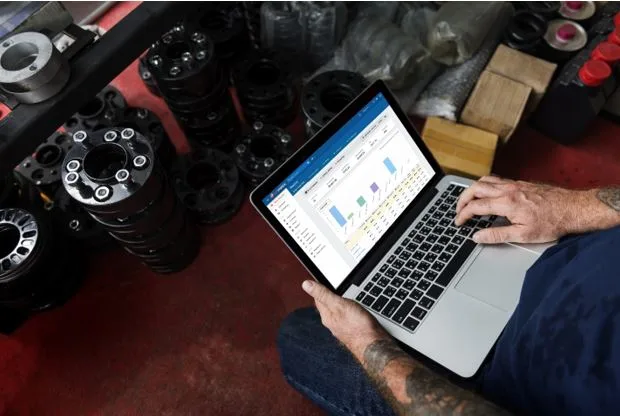
Tekmetric’s reporting tools reflect that philosophy. Shops can easily access business insights, such as trends in repair approvals, technician productivity, and financial performance, without rigid templates. Owners can spot inefficiencies and make informed decisions while maintaining control over their shop’s approach.
In practice, that balance has helped software feel less like oversight and more like infrastructure.
Consolidation Comes to Auto Repair
The auto repair software market is also growing. What was once fragmented is beginning to consolidate, as platforms expand capabilities and absorb competitors. Tekmetric’s acquisition of Shopgenie fits this pattern.
Consolidation isn’t always welcome, but in this case, it reflects a maturing market. Shops want stability. They want to know the software they rely on will still be supported in five years. Larger platforms are better positioned to invest in security, integrations, and long-term development.
For an industry that depends on continuity, that reassurance carries weight.
A Quiet Transformation
There’s no single moment when auto repair “went cloud.” No dramatic turning point. Instead, there has been a steady accumulation of small decisions: a shop switching systems, a customer approving a repair by text, and an owner checking numbers after hours from a phone.
Taken together, those moments add up to something significant.
Cloud-based management systems are not changing what auto repair is. They’re changing how it functions, making it more transparent, more organized, and more resilient. Tekmetric’s role in that evolution has been less about disruption and more about alignment: aligning software with how shops actually work, and how customers increasingly expect to engage.
In an industry built on keeping things running, that kind of progress feels exactly right, not flashy, not loud, just useful.