Why Community-First Game Formats Are Reappearing in Digital Entertainment
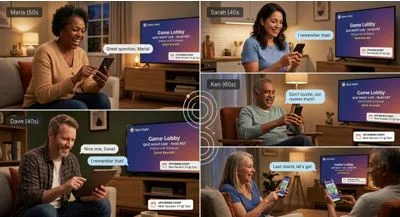
Open almost any entertainment app and the pattern is hard to miss. People are being offered compact sessions, familiar rules and a reason to return without setting aside an entire evening. That might mean a short puzzle, a live quiz, a shared watch-along or a game built around a recognisable social format.
This isn’t simply a story about people having shorter attention spans. It’s about how leisure has changed. Phones are always nearby, platforms make discovery almost effortless, and entertainment now competes with everything from messaging to streaming television. A format that can explain itself quickly has a clear advantage.
Community-first games fit neatly into that reality. They make participation feel social, whether players are actively speaking to one another or simply taking part in the same scheduled event. Familiarity matters too. If you already understand the broad shape of a game, there’s less to learn before you can join in.
Entertainment is being designed around the in-between moments
The modern entertainment economy is built around fragments of time. The few minutes before a meeting, a journey home, a quiet break in the afternoon, or the period when a television programme is on in the background all count.
Mobile-first design has made these moments commercially important. A service no longer needs to ask for a long, uninterrupted session. Instead, it can offer something clear and contained, then make it easy for people to return later.
This is visible across several categories:
- Streaming services release weekly episodes to encourage shared conversation.
- Music platforms create collaborative playlists and live listening features.
- Interactive programmes invite viewers to vote, predict or respond in real time.
- Mobile games use short rounds, recognisable objectives and regular events.
The shift is less about replacing long-form entertainment than adding another layer to it. Many of us still enjoy a film, a box set or a lengthy console session. But not every spare moment calls for that level of commitment. A short, well-made format can feel more appropriate.
For media businesses, the distribution side is equally important. App stores, web browsers, connected televisions and social platforms all reward experiences that are easy to describe and simple to access. If someone sees a format mentioned by friends or notices it during a live event, the route from curiosity to participation needs to be straightforward.
That’s why the debate around mobile entertainment often sits alongside wider business news coverage. It is not just about creative ideas. It is about attention, distribution, customer expectations and the cost of keeping a service relevant.
Easy-to-use design has become an important part of digital entertainment.
Nobody enjoys filling in endless forms before they can see what a service does. Entertainment firms know this, so onboarding has become a crucial part of product design.
A good mobile experience tends to answer a few basic questions quickly:
- What is this?
- How does it work?
- What do I need to do next?
- Can I leave and come back without losing the thread?
That sounds obvious, but getting it right takes work. Product teams test button placement, wording, loading times and the order in which information appears. They also think carefully about what should be optional rather than mandatory at the first visit.
Live-service operations add another dimension. Unlike a finished product that stays broadly unchanged after launch, a live service is monitored and adjusted over time. New events, seasonal themes, technical fixes and customer feedback can shape the experience week by week.
Data plays a role here, but it should not be confused with a substitute for judgement. Usage data can show where people stop, which features are ignored and whether a screen creates confusion. It cannot, on its own, explain whether an activity is enjoyable or whether a community feels welcome. That still requires thoughtful editorial, design and support teams.
The same ideas are now travelling between games, streaming and interactive media. A broadcaster might study how viewers respond to live prompts. A game publisher may borrow the event scheduling habits of television. A social platform can learn from the way game communities build rituals around a recurring feature.
There is also a technical foundation beneath all this. Fast loading, reliable notifications, stable account systems and clear privacy controls are hardly glamorous, but they are central to whether people stay with a service. For a useful overview of the wider sector, Ofcom’s *Media Nations* reports track the changing ways UK audiences use television and online video.
Familiar formats give people a comfortable way in
New ideas are important, but entirely unfamiliar formats can ask a lot of an audience. People may be happy to try something different, yet they still want to understand the basic premise without reading a manual.
That helps explain the return of formats with a shared cultural shorthand. Board-style mechanics, quiz structures, card-based rounds and number-calling games all come with an immediate sense of what is expected. The digital version can add pacing, live presentation, themed rooms or a branded setting, but the core idea remains approachable.
Community mechanics make this more compelling. A scheduled session can give a dispersed audience a feeling of being in the same place at roughly the same time. Chat functions, shared milestones and hosts can add atmosphere. Even a simple notification saying that an event is beginning can create a small sense of occasion.
It is worth separating this from traditional video-game competition. Competitive games often focus on mastery, rankings, tactical depth and direct contests between participants. Community-first formats are usually more concerned with shared participation and a clear, repeatable structure. You do not need to be highly skilled at a complex control scheme to understand what is happening.
Branded experiences sit in the middle of this trend. A well-known name can give a new digital product an instant frame of reference. That does not guarantee quality, of course. A familiar brand still has to be used with care, and the experience has to make sense beyond the logo. But when the theme supports the format, it can make the first interaction less intimidating.
For audiences, that familiarity can be reassuring. For companies, it offers a way to explain an interactive product in a crowded marketplace without relying on pages of instructions.
Regulation and consumer protection are part of the experience
Not every interactive format operates under the same rules. Where an offering is regulated, the product design cannot be separated from licensing, consumer protection and jurisdictional requirements.
For adult gambling products, operators must consider matters such as age verification, identity checks, clear terms and conditions, fair presentation of offers, secure handling of personal information and access to help for people who want to manage their gambling. In Great Britain, the Gambling Commission’s Licence Conditions and Codes of Practice set out requirements for licensed businesses.
That framework affects far more than a legal footer. It shapes registration journeys, account controls, customer communications and the way promotional material is presented. A service that makes participation easy still needs to ensure that the appropriate checks happen at the appropriate point.
Privacy deserves the same attention. Interactive entertainment services can hold account details, device information and records of customer activity. Companies operating in the UK need to handle personal data in line with applicable law, with guidance available from the Information Commissioner’s Office.
Transparency is especially important when formats are familiar. A person may recognise the social structure of bingo or a board game, but the digital service around it has its own rules. Consumers should be able to find out who operates the product, where it is available, what terms apply and which support tools are offered before taking part.
Responsible gambling notice: Gambling is for adults of the legal age in the relevant jurisdiction. Set limits, read the terms, and use account-management tools or seek independent support if gambling stops feeling manageable.
A regulated example of a familiar social format
A concise market example is casino bingo games, including MONOPOLY Casino’s online bingo offering. It illustrates how an established social game format can be presented for adult digital-entertainment audiences through a recognisable brand and an online interface. It should not be read as a recommendation or a statement about results. Availability, licensing status, eligibility and consumer protections depend on the operator and the jurisdiction, so readers should check the site’s current terms and the relevant regulator’s public register before participating.
The broader lesson is straightforward. Community-first formats are returning because they suit the way people now encounter entertainment: in shorter windows, across multiple devices and alongside ongoing conversation. The technology may be new, but the appeal of joining a familiar shared activity is not.
Disclaimer: This article is for informational and entertainment purposes only. It discusses trends in digital entertainment and community-focused game formats and should not be considered professional, financial, or gambling advice. Readers should make their own decisions and use digital entertainment platforms responsibly.