Why cotton sarees are perfect for daily wear in Indian weather
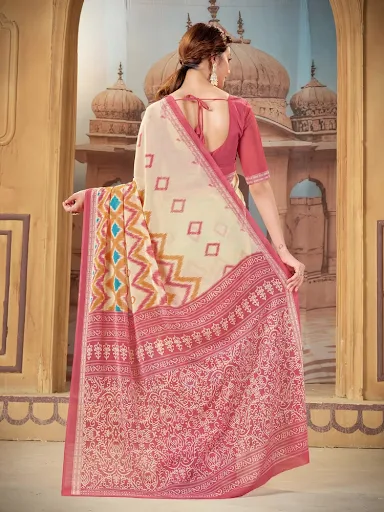
Ask any woman who has worn a cotton saree on a hot Mumbai afternoon or a humid Chennai morning — she will tell you without hesitation. There is no debate here. Cotton wins. Every single time.
India is not one climate. It’s about twelve different climates packed into one country. Rajasthan bakes at 45°C in May. Kerala stays sticky and warm almost the entire year. Bengal gets that punishing humid heat before the rains hit. And yet, across all these regions, cotton saree have been the everyday uniform of Indian women for centuries. That didn’t happen by accident.
Why linen changes the equation further
Plain cotton is good. Cotton blended with linen is genuinely better for long days.
Linen comes from the flax plant. Its fibres are longer and more hollow than cotton, which means air circulation is even more efficient. Linen also gets softer with every wash, not stiffer. And it has a natural texture that keeps the fabric from sitting flat against the skin — that tiny bit of space between fabric and body makes a real difference when it’s 38°C outside.
Garden Vareli’s cotton-linen sarees use exactly this combination. The ethnic motif prints on the collection are done on this blended base, so you’re not compromising on how the saree looks to get something that feels good to wear. Both things happen at once. The rama green, rani pink, mehndi, orange, and yellow options in the collection are proof that summer sarees don’t have to look washed-out or dull.
Movement
Here’s something I genuinely feel people don’t mention enough when they talk about daily-wear sarees: movement.
You drape a saree at 7 in the morning. Then you catch a bus. Climb stairs. Sit through three hours of meetings. Walk to the canteen. Pick up a child from school. Cook dinner. That is a lot of movement for one piece of unstitched fabric.
Heavier sarees, silks, georgette with heavy borders — they don’t move with you. They move against you. You’re constantly adjusting, re-tucking, holding pleats in place.
Cotton sarees, especially a lighter cotton-linen blend, move the way your body moves. The fabric drapes softly without pulling. Pleats stay in place without needing to be pinned every thirty minutes. There’s a natural give to the cloth that you don’t get with stiffer fabrics.
The weight difference is real
A typical silk saree weighs around 600 to 800 grams. A cotton or cotton-linen saree usually comes in between 350 and 500 grams. That difference — hanging from your shoulder and wrapped around your body for ten or twelve hours — is not small. By evening, a lighter saree feels like wearing nothing. A heavier one feels like you’ve been carrying something all day.
For women who wear sarees to work daily, this is not a small detail. It’s probably the detail.
Draping
Not everyone learned to drape a saree from their mother or grandmother. Many women today are figuring it out on their own, through YouTube tutorials or trial and error. And cotton is genuinely more beginner-friendly than most other fabrics.
Why? Because it holds a fold. Cotton has enough natural body that when you make a pleat, it stays where you put it. Georgette slips. Chiffon refuses to cooperate on humid mornings. Silk needs experience to manage well. Cotton? It behaves.
The cotton-linen texture adds a bit of structure without making the saree stiff. Garden Vareli’s ethnic motif prints — the kind of traditional block-print-style patterns that work for both office and casual wear — are printed on fabric that has just enough body to drape cleanly but not so much that it becomes difficult to manage.
Long-hour comfort
Most fabric reviews talk about how something feels when you first put it on. That’s about 10% of the story.
The real test is hour seven. Or hour ten. How does the saree feel when you’ve been wearing it all day, moved around in it, possibly been in air conditioning and then stepped back out into the heat? That transition, between a cold office and a warm street, is where synthetics betray you completely.
Cotton manages temperature shifts better than most people expect. It doesn’t get clammy when you go from AC to heat. It doesn’t suddenly feel restrictive. The fabric has been absorbing and releasing moisture all day, so there’s no sudden accumulation that makes it uncomfortable.
Linen adds another layer to this. Linen actually has a natural cooling effect even in humid conditions, because the hollow fibres keep moving air even when the fabric is slightly damp. This is why linen was the go-to fabric in hot climates long before synthetic cooling technology existed.
Put these two together and you have a saree that genuinely holds up across a full day of Indian weather.
Why Indian women across regions have always chosen cotton for everyday life
This is worth saying plainly. From Tamil Nadu’s Madurai to Bengal’s handloom districts to the cotton farms of Maharashtra, cotton sarees are woven into daily life across India in a way that no other fabric is. Regional variations — Sambalpuri, Chanderi cotton, Maheshwari — all speak to the same basic truth. This is a fabric that works in this climate, on this body type, in this lifestyle.
The cotton-linen blend is a contemporary take on that same logic. It keeps what works about cotton and adds the structure and airiness of linen. For women who want something that looks put-together for work or daily wear, but doesn’t feel like a costume they’re performing in, this is the right answer.
Garden Vareli’s collection currently offers these sarees in a range of colours — mehndi green, rani pink, rama green, yellow, orange — with ethnic motif prints that work across occasions. Most are priced around ₹1,599 after a 20% discount, which puts a quality daily-wear saree at a reasonable price point.
Conclusion
Cotton sarees don’t need to be boring. The Garden Vareli cotton-linen range proves that. Ethnic motifs, clean prints, colours that work from morning to evening — this is daily wear that actually looks like you put thought into it, even when you didn’t spend much time getting dressed.
The climate isn’t going to get easier. The days aren’t going to get shorter. A cotton saree that breathes, moves, and holds up all day is not a compromise. It’s the smartest choice you can make.