Why DJI Dominates the Drone and Camera Market
If you have ever searched for a drone, you have noticed something quickly. The same brand name keeps appearing at the top of every comparison list, every YouTube review, and every recommendation thread. DJI has been the answer to “which drone should I buy” for so long that most buyers don’t even ask the question anymore. They start with which DJI model.
That’s not an accident, and it’s not just marketing. There are specific reasons DJI has become the default for everyone from first-time hobbyists to working aerial photographers, and understanding those reasons matters if you’re considering your first DJI purchase or trying to figure out whether the brand actually deserves its reputation.
Here is what makes DJI the industry standard, what the company actually makes beyond drones, and how to buy DJI gear safely.
DJI’s Market Position
DJI holds the majority share of consumer and prosumer drone sales globally. By most industry estimates, that share sits above 70 percent of the worldwide consumer drone market, with even higher concentrations in specific segments like professional aerial photography and commercial inspection work.
A market position like that doesn’t happen by accident. It reflects the company’s combination of engineering depth, manufacturing scale, and software development that competitors have struggled to match across multiple product generations. When Skydio, Parrot, Autel, and others have tried to compete on specific features, DJI has typically responded with a next-generation product that combines those features with the broader ecosystem advantages competitors lack.
For buyers, this market position has practical implications. The aftermarket for DJI gear (accessories, parts, repair services, third-party tutorials and content) is significantly larger than for any competitor. When you buy DJI, you’re buying into the most supported, most documented, and most resold platform in the category.
Range Breadth for Every Buyer
One of the misconceptions about DJI is that the brand is primarily for professionals. The reality is the opposite. DJI’s lineup covers every level of buyer, from someone picking up their first drone to commercial pilots running production businesses.
The current DJI Drone lineup includes:
- The Neo 2, designed for first-time flyers with palm-launch operation, gesture control, and automated cinematic modes that produce polished aerial content without piloting experience
- The Mini 5 Pro, built around a 1-inch sensor in a pocket-sized body, targeting serious content creators and travel photographers
- The Mavic 4 Pro, the flagship aimed at professional photographers and videographers, featuring a triple Hasselblad camera system and the Infinity Gimbal
Each of these drones targets a specific buyer category with features matched to that category’s actual needs. The Neo 2 is not a stripped-down Mavic. It’s purpose-built for accessibility. The Mavic 4 Pro is not just a bigger Mini. It’s engineered around what working professionals actually need from production-grade gear.
This range is what makes DJI the default for first-time buyers and the default for veterans simultaneously. Different segments of the market are served by genuinely different products within the same ecosystem.
Innovation Track Record
DJI has set the industry benchmark across multiple product generations, and the pattern of innovation is consistent across years rather than concentrated in any single launch.
A partial list of meaningful DJI innovations over the past several years includes the Hasselblad camera partnership that brought medium-format-influenced color science to consumer drones, ActiveTrack development across multiple generations that made subject tracking reliable enough for solo creators to use as their primary shooting workflow, LiDAR obstacle avoidance that extends safe flying into low-light conditions where visual sensors fail, omnidirectional obstacle sensing that protects the drone in every direction simultaneously, the Infinity Gimbal on the Mavic 4 Pro that enables shots previously impossible on consumer drones, and the triple-camera multi-focal-length system on the Mavic 4 Pro that lets pilots switch focal lengths without repositioning.
Each of these features eventually shows up in competitor products. The pattern is that DJI ships them first, refines them across generations, and remains ahead of the competition by the time other manufacturers catch up to where DJI was two years ago.
For buyers, this matters because it means the gap between DJI and competitors isn’t a marketing claim. It’s a structural feature of how the company operates. Buying DJI today means buying into the lineup most likely to receive the next generation of meaningful improvements.
The Full Ecosystem Beyond Drones
DJI is not just a drone company. The brand has built out a complete creator toolkit that extends well beyond aerial work.
The current product range includes:
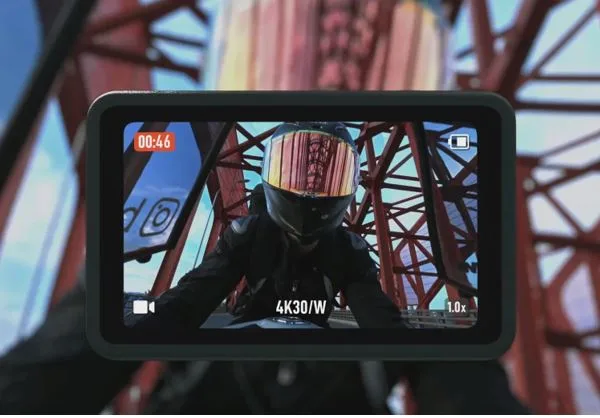
- Action cameras like the Osmo Action 6 for ground-level content with HorizonSteady stabilization
- Handheld gimbals for stabilized smartphone and camera footage
- Wireless microphones in the Mic Mini, Mic 2, and Mic 3 lineup for broadcast-quality audio in everyday creator workflows
- Osmo Pocket devices for compact, gimbal-stabilized vlogging
- Accessories including ND filters, batteries, charging hubs, and mounting systems
What makes this ecosystem work is the integration. The mics pair natively with the action cameras. The drones and action cameras share color science profiles like D-Log M. The app interfaces follow consistent design patterns across product lines. The accessories cross over where they can.
For creators building a production setup over time, this ecosystem advantage compounds. Each new DJI product adds capability without adding workflow friction. Multi-brand setups often create the opposite dynamic: each new piece of gear introduces compatibility issues that take time to resolve.
A Note on US Availability
Worth addressing because it comes up in buyer conversations: DJI products are currently available in the US through authorized retailers, and existing products are unaffected by regulatory conversations for personal and recreational use. DJI’s current US availability is documented openly, including specifics on what the regulatory situation does and does not impact.
For buyers who have read fragments of news about FCC discussions and wondered whether they should hold off on a purchase, the practical answer is straightforward. Products on the market continue to operate normally. Software updates continue. The ecosystem remains fully supported. The buying decision today is the same decision it was a year ago.
Buying DJI Safely in the US
DJI’s popularity has a downside: it has attracted a large number of third-party sellers online, not all of them authorized. Grey-market units and counterfeit gear are common enough that buyer caution is warranted.
When buying DJI specifically, prioritize retailers that offer:
- US-held stock, not international or grey-market inventory imported through unauthorized channels
- The full official DJI manufacturer warranty on every unit
- Domestic delivery within a few business days
- US-based customer support reachable by phone and email
- A real returns policy if the product doesn’t fit your needs
These are the markers of a legitimate authorized reseller. The savings from grey-market sources are minimal and disappear quickly if a unit needs warranty service. DJI operates from US warehouses with a 30-day return policy and a 1-year manufacturer warranty on every product, which meets all of the criteria above.
The Bottom Line
DJI’s market position is earned, not given. The combination of category-defining innovation, breadth across buyer segments, ecosystem integration, and consistent product execution has made the brand the default choice for drone and creator gear globally.
For buyers considering their first DJI purchase, the questions worth asking are not whether DJI is the right brand. The market has answered that question. The real questions are which model fits your use case, what the rest of your kit looks like, and where you buy to ensure you get genuine US-stock with full warranty coverage.
Answer those three, and you have a buying decision that holds up regardless of which DJI product line you start with.
Browse the full DJI drone collection to find the model that fits your work.