
Why Do People Continue Smoking Even When They Know the Health Risks?
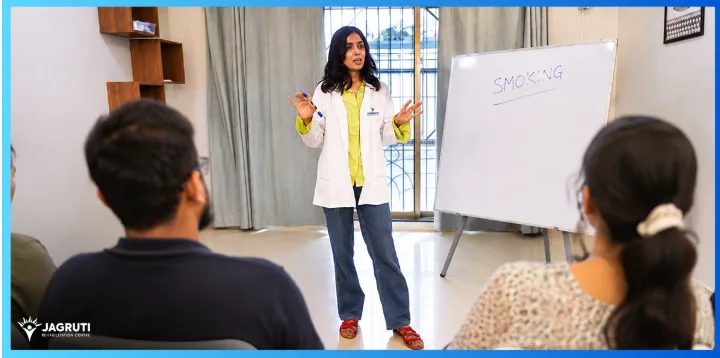
Every smoker in India has read the warning on the packet. The pictures are graphic. The text is blunt. And yet the hand reaches for the next cigarette anyway. Not because the person has not understood the message. They have. They understood it the first time, years ago. The cigarette after that one was not ignorance. Neither was the one this morning.
The gap between knowing something is harmful and actually stopping is wider than most non-smokers realise. It is not a gap filled by laziness or stupidity. It is filled by nicotine, by habit loops that have wired themselves into the structure of a person’s day, and by a brain that has quietly rewritten its reward system around a substance that arrived disguised as a stress reliever.
What Keeps Someone Smoking After They Have Decided to Quit?
Nicotine reaches the brain within ten seconds of inhaling. That speed is part of the problem. The brain registers the relief almost instantly, and over months and years of repetition, it builds a direct association: stress means cigarette, boredom means cigarette, chai means cigarette, phone call means cigarette. The chemical dependency is real, but the behavioural wiring runs even deeper.
Ask any smoker and they will tell you about the cigarettes that have nothing to do with craving. The one after lunch that is more ritual than need. The one on the balcony at 10 pm that marks the transition from the day being on to the day being done. The one smoked while waiting for someone, because standing without doing something with your hands felt strange.
These are not moments of weakness. They are habits so deeply embedded that the person barely registers making a choice. The brain made the decision before the conscious mind caught up. That is what years of repetition do. The neural pathway from trigger to cigarette becomes the fastest route in the system, and every alternative feels slower and less satisfying.
Then there is the social architecture around smoking in India. Chai breaks at offices where the smoking circle is also the networking circle. Wedding functions where stepping out for a cigarette is the only acceptable way to escape a conversation. College groups where someone who does not smoke gets left out of half the bonding that happens between classes. Quitting does not just mean giving up nicotine. It means stepping out of social rituals that have been part of your identity for years.
Families in Mumbai who have sought professional help at a rehab in Mumbai for a family member struggling with tobacco dependence describe the same cycle. The person quit for two weeks, maybe a month. Then a stressful day at work, a fight at home, or a gathering where everyone was smoking, and the habit came back overnight. Each failed attempt makes the next one feel less worth trying.
Why Does Willpower Alone Fail Most Smokers?
Because willpower is a conscious resource, and smoking operates largely below the level of consciousness. Telling someone to use willpower against a habit that fires automatically is like telling someone to manually override their reflexes. It works for a while, usually a few days, and then a moment arrives when the conscious mind is tired, distracted, or emotionally overwhelmed, and the old circuit takes over.
Nicotine withdrawal adds to the difficulty. Irritability, restlessness, trouble concentrating, disrupted sleep, increased appetite. These symptoms peak within the first week and can linger for several weeks. The person is not just fighting a habit. They are fighting a habit while feeling physically and emotionally worse than they did when they were smoking. The brain’s conclusion is obvious: smoking fixes this. And technically, in the short term, it does. That is the trap.
What actually works is a combination of approaches. Nicotine replacement therapy (patches, gum, lozenges), prescription medication that reduces cravings, cognitive behavioural therapy that helps the person identify triggers and build alternative responses, and in many cases, a structured environment where the first few weeks of withdrawal are medically supervised.
People who connect with a rehabilitation centre in Mumbai for tobacco or nicotine dependence often say the same thing afterwards. They had tried quitting on their own multiple times. What made the difference was having someone who understood the neuroscience of the habit, not just the health risks, and who could build a plan that addressed the triggers, the withdrawal, and the daily routines that kept pulling them back.
What Can Families Do?
Stop treating smoking as a character flaw. That is the single most useful shift a family can make. The person already knows it is harmful. Repeating the warnings does not add information. It adds shame, and shame is one of the most reliable triggers for smoking.
Instead, offer to help them find professional support. A conversation with an addiction psychiatrist can clarify what level of intervention the person actually needs. Some people manage with outpatient counselling and medication. Others need a short residential stay to break the cycle in a controlled environment.
The important thing is that the conversation happens without judgement. A person who feels supported is far more likely to try again than one who feels lectured.
Rehabilitation Support in Mumbai
If you or a family member needs professional support for tobacco or nicotine dependence in Mumbai, you can contact:
Jagruti Rehabilitation Centre in Mumbai
Address: Sushmita Building, Manchubhai Road, Ahead Fatima Devi School, Near Malad Subway / Railway Station, Malad East, Mumbai, Maharashtra 400097
Phone: +91-9822207761