Why Documenting Your Recovery Matters After an Injury
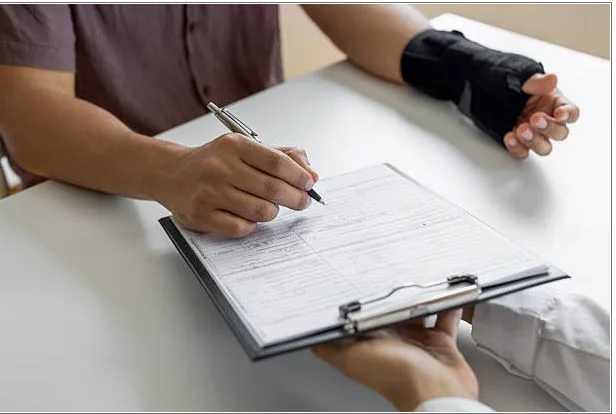
Documenting your recovery creates the record that decides what an injury claim is worth. Without it, an insurer values the injury by billing codes alone, which rarely reflects how the injury actually changed your daily life.
Las Vegas sits in a wide desert valley ringed by mountains in the southern part of Nevada. Its economy is built on tourism, hospitality, conventions, and entertainment, with distribution and warehousing growing alongside them. Much of the workforce holds physically demanding jobs that depend on standing, lifting, and long shifts.
When an injury limits any of that, the loss shows up in missed hours and tasks that can no longer be done. Anyone in that position can seek legal help from an experienced Las Vegas injury lawyer to understand which proof carries weight. What follows is how that proof gets built, day by day.
The Gaps That Quietly Shrink a Claim
Most of the damage comes from absence rather than from anything said. A three-week break in treatment reads as recovery, even when the real cause was a work schedule or a referral that never came through.
Vague reporting creates a similar problem. Telling a provider you feel about the same across six visits produces a chart showing no change, which is exactly what an adjuster will point to later.
Memory is the third gap. By the time anyone asks how that first month felt, the specifics have blurred into a general sense of having been unwell.
Why What You Tell a Provider Becomes Evidence
Statements made for medical diagnosis or treatment carry unusual weight. Federal Rule of Evidence 803(4) admits them as an exception to the hearsay rule, on the reasoning that people describe symptoms honestly when their treatment depends on it.
That reasoning cuts both ways. Saying you feel fine on a good day, or leaving out a symptom because it seems minor, lands in the same trusted record.
Getting Copies of Your Own File
You do not need anyone’s permission to hold your own records. Under 45 C.F.R. section 164.524, a covered provider must act on an access request within 30 days, with a single 30-day extension allowed if the delay is explained in writing.
Cost has limits as well. A provider may charge only a reasonable, cost-based fee for copies, which is useful to know when a records company quotes something higher.
Errors are common. Reading your chart early lets you request a correction before it hardens.
The Record Only You Can Create
Charts capture visits. They do not capture the days between them, which is where most of a recovery actually happens.
The Symptom Journal
Short entries beat long ones. A date, a pain level, what you could not do, and what medication you took build a pattern no chart can show.
Consistency matters more than detail. Entries written weekly from memory carry far less weight than brief ones written the same day.
Photographs and Video
Visible injuries change fast, so photograph them early and keep going as they fade. Include something for scale and save the original files rather than screenshots.
Video works better for movement. A short clip of climbing stairs, reaching overhead, or getting out of a car shows limitation more clearly than any description.
A Routine That Holds Up Over Months
Systems survive where motivation does not. Keep this small enough to manage on a bad day.
- Log symptoms the same day, in the same place, even when nothing has changed.
- Photograph visible injuries on a fixed schedule until they stop changing.
- Request records from each provider as you go instead of all at once later.
- Track every missed shift, canceled plan, and task someone else had to cover.
- Report every symptom at every visit, including ones that seem unrelated.
Key Takeaways
- Treatment gaps are read as recovery unless the record explains them.
- What you tell a provider becomes evidence under a hearsay exception.
- Saying you feel fine on a good day lands in that same record.
- Providers must act on a records request within 30 days.
- Copy fees are limited to a reasonable, cost-based amount.
- Same-day journal entries carry more weight than weekly recollections.
- Photos and video capture limits that written charts never record.